Get Full Government Meeting Transcripts, Videos, & Alerts Forever!
Get email alerts on the Attendance Policy topic
No spam. Unsubscribe anytime.
Board reviews attendance-policy revisions aimed at chronic absenteeism, emphasizes medical-excuse clarity
Summary
District staff presented revisions to policy JED on student absences to align with state accountability for chronic absenteeism, clarify medical-excuse procedures and reduce burdens on families; board members signaled support for the first read and for further refinement with medical partners.
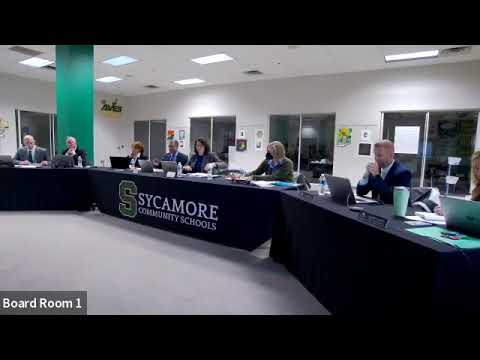
Sycamore Community Schools staff and board members spent the meeting’s policy segment reviewing proposed revisions to policy JED, which the district says are intended to reduce chronic absenteeism and clarify how medical excuses are handled.
The revisions respond to state attention to chronic absenteeism—defined in the presentation as any student who misses 10% of available instructional hours—and aim to make medical-excuse procedures less burdensome for families while preserving options for homebound instruction when medically necessary.
Lisa Zelvey, district staff who supports attendance and discipline, told the board the state will increasingly hold districts accountable for chronic absenteeism and that the district’s current rate remains below the state’s acceptable level but could face rising scrutiny. “Chronic absenteeism says whether it is medical, whether it is excused, whether it is unexcused, 10% of total hours missed is what every district is held accountable for,” Zelvey said. She described three categories that feed that measure: excused absences, unexcused absences and medically excused absences certified by a physician or medical provider.
Zelvey and other staff said the draft policy would allow physicians to provide a single, clarifying note for students with recurrent or pervasive conditions that outlines expected attendance impacts and anticipated supports. That single note, staff said, can allow the district to evaluate eligibility for supplemental or homebound instruction — services that, when granted, keep students from being counted as absent and protect them from truancy processes.
Board members asked about implementation details and outreach. One member said the focus on medical documentation is appropriate but urged that the district create clear procedures for families so they understand when a single physician note suffices and how to request homebound instruction. Staff said they have recently increased training for counselors and administrators to handle recurrent or anticipated absences and cited a case in which a single physician note allowed a high school student to receive homebound services and remain on track to graduate.
The policy committee’s work included consultation with the district’s legal counsel and local medical partners; the district said it used the Ohio School Boards Association (OSBA) model policy as a starting point and refined it after discussion with Children’s Hospital representatives and legal review. Staff emphasized the policy retains flexibility for unique circumstances — for example, elite training commitments — via administrator review.
Board members signaled support for advancing the draft and asked staff to bring procedural details and guidance for families to the next meeting or the policy committee for additional refinement. Several members praised Zelvey’s collaborative work with families and clinicians.
The item was presented as a first read; no final board action on JED was recorded during this segment. Staff said they will return with clarifications on timing, documentation templates, and the process by which families request review for homebound or other medical-based supports.