Get Full Government Meeting Transcripts, Videos, & Alerts Forever!
Get email alerts on the Road Maintenance Districts topic
No spam. Unsubscribe anytime.
Montana bill would let homeowners form road maintenance districts if county discontinues service
Summary
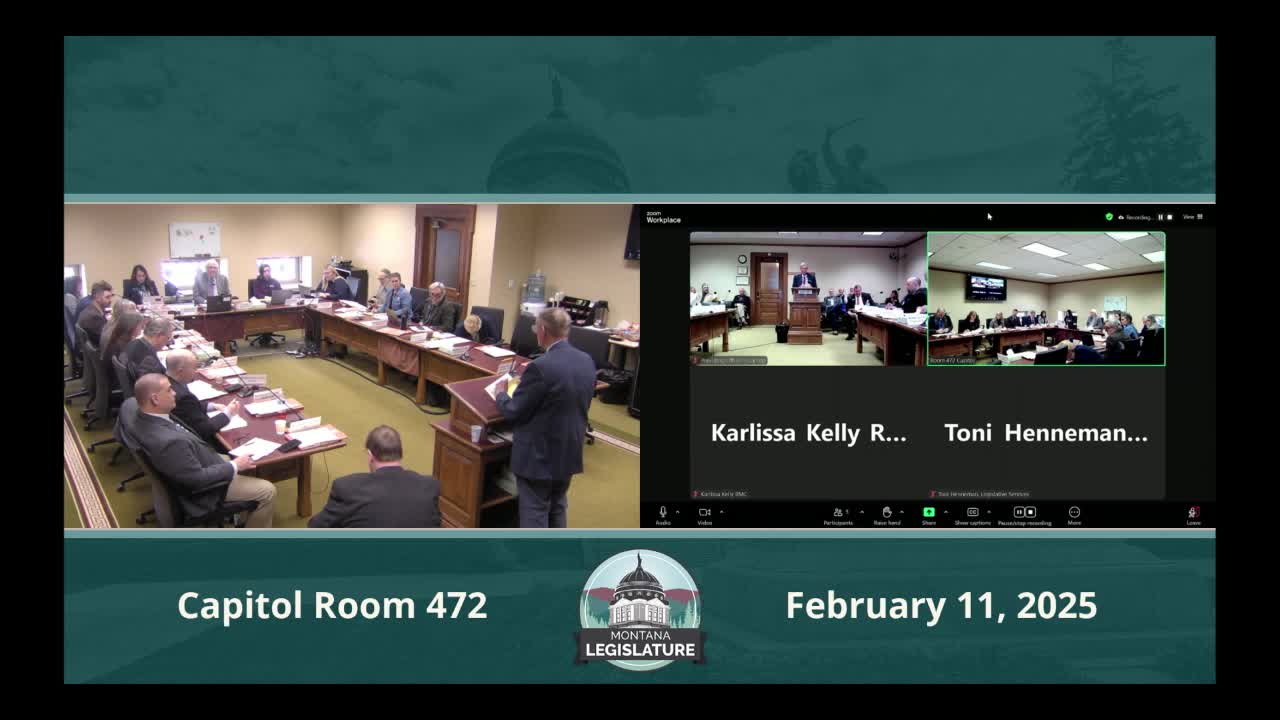
HELENA — A bill introduced in the Montana House would let homeowners form a road maintenance district without the county commission’s approval after the county publicly announces it intends to stop maintaining certain roads, sponsor Rep. John Fitzpatrick said during a House Local Government Committee hearing.
HELENA — A bill introduced in the Montana House would let homeowners form a road maintenance district without the county commission’s approval after the county publicly announces it intends to stop maintaining certain roads, sponsor Rep. John Fitzpatrick said during a House Local Government Committee hearing.
Supporters from the Georgetown Lake area told the committee they want a path to maintain roads now handled under a maintenance agreement between Granite County and the U.S. Forest Service. Opponents — including county attorneys and multiple county commissioners — argued the measure would conflict with existing state statutes, strip county discretion and could drain county road funds.
Rep. John Fitzpatrick, the bill’s sponsor, said the measure narrowly targets situations where a county publicly declares it will discontinue maintenance on roads it does not own. “This bill is very narrowly… it allows a group of homeowners the right to form a road maintenance district without the consent of the county commission only after the county makes an announcement that they plan to discontinue road maintenance services,” Fitzpatrick said. He emphasized the bill applies only to roads owned by another entity — for example, Forest Service roads — and not to county-owned roads.
The bill would require petitions signed by 66% of properties in a proposed district and would permit a created district to tax and raise money for maintenance. Fitzpatrick said the measure also allows district assessments to be subtracted from what property owners otherwise pay into county road funds so residents do not “pay twice” for the same service.
Brian Clark, president of the Georgetown Lake Homeowners Association, described deteriorating road conditions and said residents are willing to organize and pay for maintenance if given the legal authority. “We are willing to set up our own to do it ourselves. We are here to ask if you give us the tool to do so,” Clark said, testifying that Granite County road crews have become less present in recent years and that lake-area properties contribute a significant portion of the county’s tax base.
Opponents argued the bill conflicts with existing statutes governing rural improvement and road districts and would remove protections and oversight that currently exist. Roy Rost, a Fallon County commissioner, said he compared the measure to “Montana code 7 12 21 0 2,” which outlines how to establish rural improvement districts, and concluded the bill would bypass protest and oversight mechanisms. “This bill raises serious concerns about overriding existing law, limiting public input, and giving unchecked authority to a governing board with no clear accountability,” Rost said.
Blaine Bradshaw, Granite County attorney, told the committee the measure brings a local dispute to the Legislature and would remove bargaining power counties use when negotiating maintenance agreements with the Forest Service and other federal agencies. “Basically, this takes away all the county’s bargaining positions,” Bradshaw said, and he urged the committee to leave the matter for local resolution.
Multiple county commissioners and the Montana Association of Counties echoed concerns that the bill’s lower petition threshold (66% of properties) and the prohibition on county commissioners conditioning or denying petitions could be used broadly beyond the Georgetown Lake example. Cascade County Commissioner Joe Briggs and other speakers warned the bill could be applied to military, tribal or other special roads and noted statewide implications.
Jasmine Krotkov of the Montana Farmers Union said the bill would reduce the tax dollars available for maintaining county roads by allowing private districts to extract funds from county levies. “House Bill 369 will make it worse by reducing the tax dollars available to all county roads,” she said.
Residents who oppose the county’s handling of Georgetown Lake maintenance described several past episodes when Granite County declined to use or match federal monies — including a previously offered federal package of $1.3 million that Fitzpatrick and witnesses said the county declined because the county’s required match rose on later offers to about $400,000. Fitzpatrick and others testified that at one point the county’s combined balances in the general, road and bridge funds exceeded $3 million, an argument they used to say the county had resources but not the political will to pursue repairs.
Committee members asked whether the parties had used the existing petition processes under current law. Witnesses said no petition seeking a rural improvement district had been submitted to the county commission. Rep. Staffman suggested the sponsor and Granite County attempt to negotiate a local solution, and Fitzpatrick said he would be open to amendments that allow a period for county-level negotiation before the bill’s mechanism took effect.
The hearing closed without a committee vote on the bill. Several committee members signaled openness to conceptual amendments; Rep. Staffman explicitly asked whether an amendment could give the county time to resolve the issue before the bill’s authority would be available.
If the Legislature advances the measure, committee members and witnesses said it would likely draw amendments clarifying scope, petition thresholds, budget caps and procedures for how district assessments would interact with county budgets.