Get Full Government Meeting Transcripts, Videos, & Alerts Forever!
Get email alerts on the Driver Licenses Citizenship Marker topic
No spam. Unsubscribe anytime.
Committee hears testimony on bill to add citizenship marker to Montana driver—s licenses; tribal representatives oppose on cost grounds
Summary
Senate Bill 91, which would add a "citizenship" marker to driver—s licenses and ID cards, drew a mix of technical testimony and tribal opposition at a Senate Finance and Claims hearing. Lawmakers asked technical questions about cost, implementation and the federal SAVE verification system; no vote was taken.
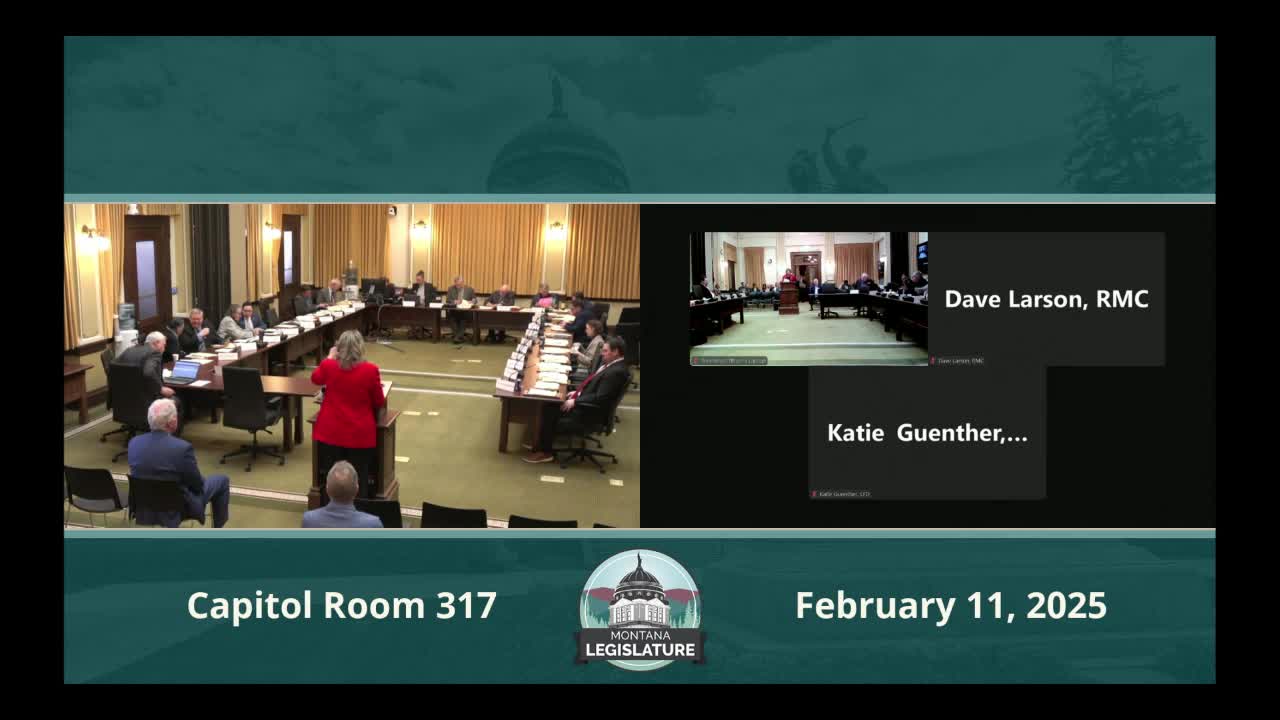
Senator Teresa Manzella opened a hearing on Senate Bill 91 on the proposed citizenship marker for Montana driver—s licenses and identification cards, saying a new licensing system and federal verification tools make the change possible and asking the committee to "pass" the bill. The sponsor said a pink fiscal note shows a $176,941 cost and that the state—s CARS system and the federal Systematic Alien Verification for Entitlements program (SAVE) would be used.
The bill drew technical witnesses from licensing and card contractor vendors and sharp opposition from tribal representatives who called the change unnecessary and costly. "Senate Bill 91 is an excessive measure and a financial burden on Montana taxpayers," a representative who identified themselves as speaking for the Blackfeet Tribe, Rocky Boy and Fort Belknap Indian Community said, citing the fiscal-note line items: roughly $116,941 for redesigning the card image and another $60,000 for programming and interface changes.
Why it matters: supporters said the state—s new CARS licensing system and federal SAVE checks enable a citizenship marker; opponents argued Montana—s existing document requirements already distinguish citizenship and warned of cost and workflow burdens for motor-vehicle offices and tribal communities.
Committee members focused questions on how the marker would be issued and when it would appear on a license. DMV-affiliated witnesses said the citizenship marker would be applied when a license-holder next renews; the marker would not require residents to come in immediately. "When you renew your license and you—re a citizen of The United States you would receive a citizenship marker when you renewed your license," a DMV representative said.
Tribal testimony urged a "do not pass" recommendation. The tribal witness said current Montana practice already requires proof of citizenship for certain credential types and that the bill would "fix" a system that does not need fixing. Licensing staff answered questions about card design costs and vendor roles; an informational witness said card producers (IDEMIA) supply designs and that both design and implementation cost components are reflected in the fiscal note.
No committee vote was taken on SB 91 at the session—s conclusion; the sponsor and at least one member later asked to hold the bill so they could work on details.
Speakers listed in the hearing included Senator Teresa Manzella (bill sponsor), Loy Chivilocheck (public proponent/intervenor), a tribal representative identified in remarks as Yawakie (representing Blackfeet Tribe, Rocky Boy and Fort Belknap), Lori Bacrigue (informational witness), and a DMV technical representative referred to in the transcript as Ms. Bakker. The hearing record shows substantive technical exchanges but no formal committee action on the bill that day.