Get Full Government Meeting Transcripts, Videos, & Alerts Forever!
Get email alerts on the Teacher Pay And Future Ready Incentives topic
No spam. Unsubscribe anytime.
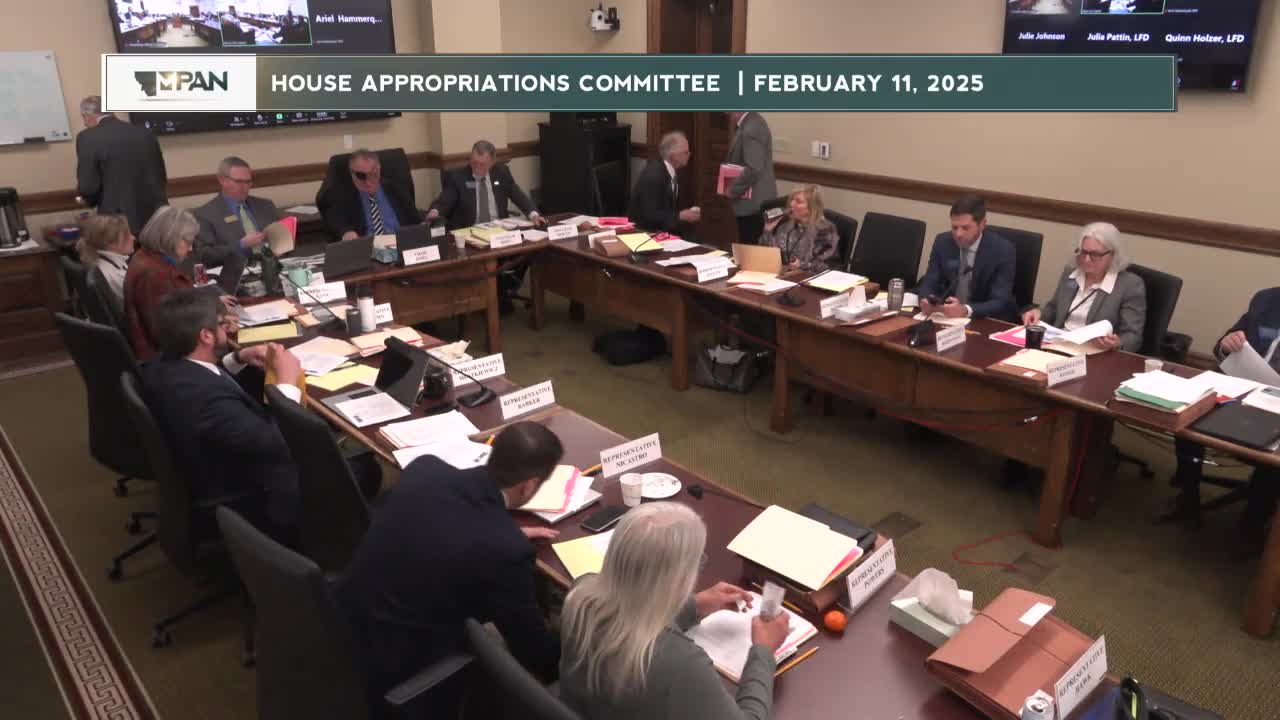
House Bill 252 hearing: sponsors, agencies and districts back targeted teacher-pay and credentials investments
Summary
Supporters said HB 252 would compress salary scales, boost starting teacher pay and fund incentives for dual credit and career-technical credentials; agencies described roles, timelines and IT needs to implement the plan.
Representative Lou Jones, sponsor of House Bill 252, opened the committee hearing by summarizing the bill's main goals: compress teacher salary scales to increase beginning teacher pay, direct significant funding toward early-career teachers, and create incentives for students to graduate with dual-credit and stackable career-technical credentials.
Supporters described the bill's funding and implementation mechanics. Jones said the matrix attached to the bill shows roughly $50 million intended for the teacher portion of the program, with about $20 million expected to be required initially to begin scale compression. Lance Melton of the Montana School Boards Association endorsed the bill as a necessary response to long-term wage declines among educators, told the committee that closing that gap requires targeted funding and noted that roughly 85% of K-12 spending is labor-related.
State agencies explained operational roles. Sarah Swanson, commissioner of the Montana Department of Labor and Industry, said her agency has already produced a teacher-pay analysis using cross-matched OPI wage records and the state's unemployment wage database and is prepared to maintain the analysis and help implement the bill's teacher-pay calculations. Swanson also described a planned statewide credential engine to track credentials, stackable credentials and labor-market connections. The fiscal note lists roughly $14 million for upgrades to PowerSchool and related tracking systems to enable timely reporting and automated uploads from districts.
Other supporters included the Office of Public Instruction, which submitted written support and described the bill as a step to increase teacher salaries, reduce housing pressures in some districts and expand work-based learning and dual-credit opportunities. Dylan Klapmeier, education and workforce policy advisor to the governor, confirmed the governor's support and noted that the bill's items are reflected in the proposed executive budget.
Committee members asked detailed technical questions about how payments would be calculated, the proposed timeline for rolling out credential-tracking functions, and emergency authorizations for schools with high numbers of emergency-certified teachers. Witnesses said some elements were delayed in implementation timelines to allow the relevant data systems to come online (the committee discussed phasing certain incentives beginning in later fiscal years and a December reporting deadline for analytic work). Several members said they wanted clarity about how incentive payments would be calculated at the local level and how enrollment transfers and nested elementary/high-school relationships would be tracked.
Representative Jones closed by emphasizing the bill's aim to compress the salary scale and direct funds to the classroom; he asked the committee to consider a technical amendment to ensure small, rural districts receive timely startup funds so they can meet the bill's requirements. The committee did not take final action on HB 252 at the hearing.