Get Full Government Meeting Transcripts, Videos, & Alerts Forever!
Get email alerts on the State Bar Audit topic
No spam. Unsubscribe anytime.
Committee Hears Arguments Over Audit of State Bar; Bar Opposes Redefinition as State Agency
Summary
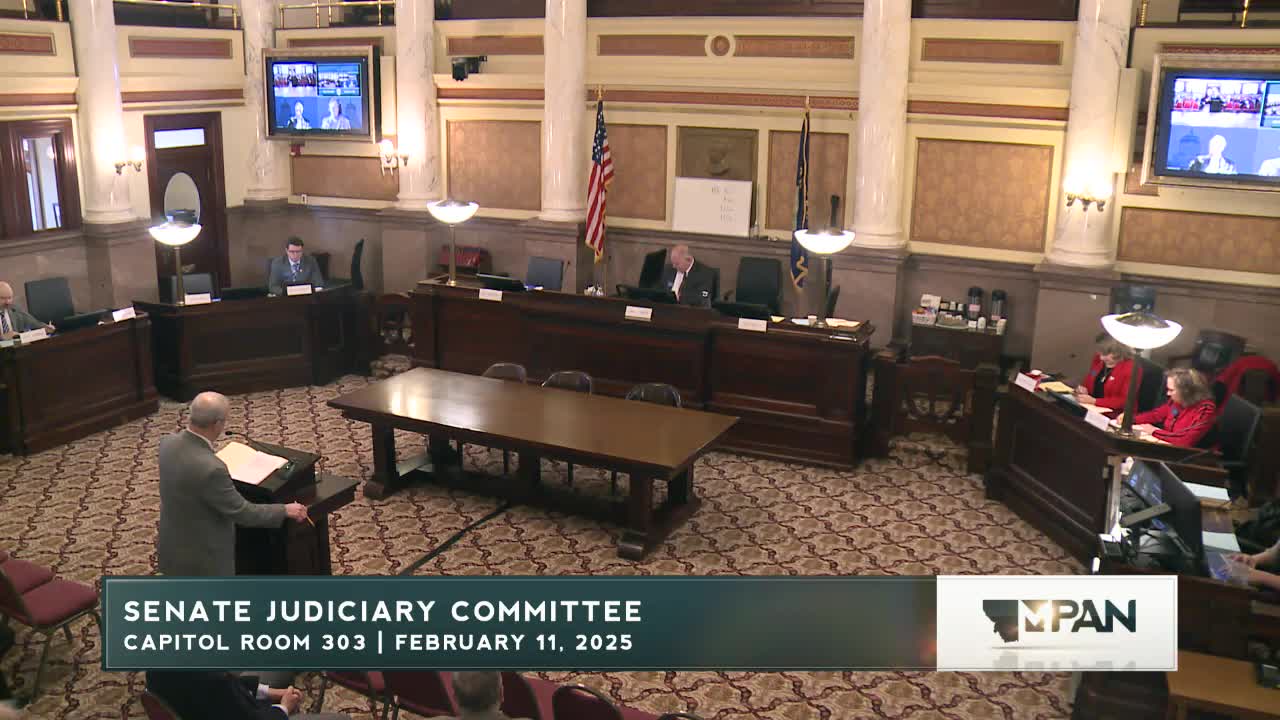
Senate Judiciary Committee members opened a hearing on House Bill 65, which would authorize a one-time financial audit of the State Bar of Montana and declare the bar a state agency for audit purposes.
Senate Judiciary Committee members opened a hearing on House Bill 65, which would authorize a one-time financial audit of the State Bar of Montana and, in section 2, declare the State Bar a "state agency" for purposes of the legislative audit.
Supporters said oversight is appropriate because the State Bar collects a $25 license tax on behalf of the clerk of the Supreme Court, but opponents argued the measure is unnecessary and constitutionally problematic.
Representative (sponsor) opened the hearing by saying HB 65 "authorizes a one-time financial audit of the state bar" and framed audit bills as routine tools for legislative oversight. Proponents in the room did not appear; one remote supporter, Lisa Bennett of Carbon County, told the committee she supports the bill because she sees a conflict in the bar's roles as a lobbying organization and as an organization that helps set standards for admission to the profession.
Opponents included Bruce Spencer, who identified himself as representing the State Bar of Montana. Spencer said the license tax collection is performed under a contract between the State Bar and the clerk of the Supreme Court and that the contract already permits the legislative auditor to review records related to tax collection. "You don't need this bill," he told the committee, arguing that the legislative auditor already has contractual authority to review those financial records.
Al Smith of the Montana Trial Lawyers Association opposed the bill as an individual member of the bar and asked the committee to consider whether extending audit authority to independent organizations with state contracts would set an undesirable precedent.
John Marshall also opposed the bill, saying he viewed it as politically motivated and an improper use of taxpayer resources. The Legislative Audit Division represented by a witness who identified a last name spelled "MacIver" testified that the bill as amended in the House raises operational problems for the audit division. MacIver said the bill originally required a performance audit — which the division could carry out — but House amendments converted it to a financial audit and added restrictions that could conflict with generally accepted government auditing standards. "When we talk about a financial audit, typically we're talking that would involve us having to ... gather financial statements for the State Bar of Montana going back 10 years," MacIver said, adding that the amended language and record restrictions would create practical and legal difficulties.
Committee members asked detailed questions about the distinction between mandatory contractor access to records under the clerk-of-court contract and the broader reclassification in section 2 of HB 65. Witnesses noted the State Bar already commissions annual financial audits by private, nationally recognized firms and that those audit reports are available to members on request. Spencer said the bar receives $7,500 per year under the collection contract and that the $25 license tax is separate from voluntary bar dues.
No final committee action on HB 65 was taken during the hearing. Committee staff said a formal, written amendment would be needed to alter the bill text; the chair asked counsel to prepare an amendment to restore a performance-audit requirement as originally drafted out of the House.
The hearing record shows detailed objections from the State Bar and concerns from the Legislative Audit Division about the amended, financial-audit language and confidentiality exceptions that could hamper independent audit work. Proponents and opponents urged either targeted statutory language or reliance on existing contractual audit authority rather than reclassifying the bar as a state agency.
Looking ahead, the committee asked staff to draft a written amendment to revert the measure to a performance-audit format for further consideration.