Get Full Government Meeting Transcripts, Videos, & Alerts Forever!
Get email alerts on the Homelessness topic
No spam. Unsubscribe anytime.
Partners for Home warns inflow outpaces rehousing; HUD funds drive programs and a federal freeze could be disruptive
Summary
Partners for Home, the Continuum of Care collaborative applicant, told the committee that inflow into homelessness outpaces their housing placements and that HUD funding supports most ongoing permanent supportive housing; the group warned a potential federal funding freeze could affect operations.
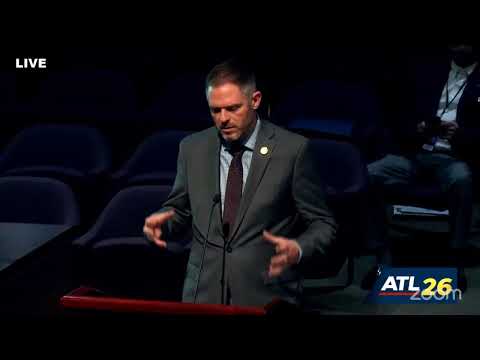
Catherine Vassell, chief executive officer of Partners for Home, gave the committee the Atlanta Continuum of Care quarterly update on Feb. 5 and framed the central problem plainly: “for every 1 household we house, another 2 and a half are becoming homeless in our community right now,” she said.
Vassell said HUD funds are the backbone of the continuum’s work. In fiscal year 2023 the Continuum received about $13,000,000 and the award rose to roughly $14.5 million for FY 2024, she said. Those HUD grants fund roughly 675 housing units across the community (the majority are permanent supportive housing), about 31 projects and an estimated per‑household cost “just under $20,000,” she said.
Partners for Home described the system’s performance and headwinds: limited new project awards from HUD mean capacity expands only incrementally; project turnover becomes the main driver of placements; and the system sees rapid inflow of newly homeless households, including a large share who are newly homeless for the first time. Vassell cited the Continuum’s operational aim of housing people with a low‑barrier, housing‑first approach and stressed that many people decline traditional shelter beds because of rules, safety concerns or personal preference.
Vassell summarized 2024 point‑in‑time and inflow findings: the Continuum’s recent counts show rising unsheltered numbers (the committee heard a 7% increase in one slide review) and Partners for Home’s cross‑checks with HMIS indicated a notable share of unsheltered people had not yet been recorded in the system, which the agency interprets as new inflow.
The presentation covered the Atlanta Rising campaign and a rapid housing initiative that includes modular and acquisition strategies. Vassell said the Rapid Housing Initiative has projects in the pipeline including Melody (already online), Waterworks (breaking ground in December with 100 units due by September to serve high‑acuity clients) and other acquisitions that aim to deliver more permanent supportive and rapid rehousing units this year. Partners for Home reported that since its inception its efforts have resulted in more than 14,000 people being rehoused.
Vassell also warned about federal uncertainty. She said a modeled federal funding freeze could affect nearly every provider and estimated a potential $38,000,000 financial impact and roughly 1,000 clients affected across service types. She said providers were briefly locked out of HUD and HHS drawdown systems after an executive order, requiring rapid coordination and contingency planning.
On data and operations, Vassell explained Partners for Home’s HMIS role: as collaborative applicant the organization operates HMIS, manages data submissions to HUD (including the annual NOFO), administers local ranking and review for renewal projects, and runs system performance reporting. She said Partners for Home pulled return‑to‑homelessness data on demand for a council member and reported returns of 4.5% for permanent supportive housing and 6.7% for rapid rehousing in 2024.
Council members asked detailed questions about point‑in‑time methodology, prevalence rates relative to city population, shelter availability and use, outreach and street‑feeding coordination, data requests, encampment closures and local funding. Vassell said Partners for Home is convening a downtown subcommittee to map street feeding and improve coordination, and she noted the organization is working with national technical assistance partners to refine unsheltered strategies.
Ending: Vassell said Partners for Home will share requested data and follow up with council members on specific compliance and dataset requests, and reiterated the group’s ask for stable local funding and expanded partnerships with healthcare systems to support the Waterworks and rapid housing initiatives.