Get Full Government Meeting Transcripts, Videos, & Alerts Forever!
Get email alerts on the Community Relations topic
No spam. Unsubscribe anytime.
Panama City mayor apologizes after NAACP members call remarks inappropriate; commission hears mixed public reaction
Summary
Mayor Michael Rowan apologized at the Feb. 11 city commission meeting for remarks he made during the Bay County NAACP Black History Month proclamation. The Bay County NAACP presented a formal letter demanding a public apology and written response; public commenters offered both criticism and support.
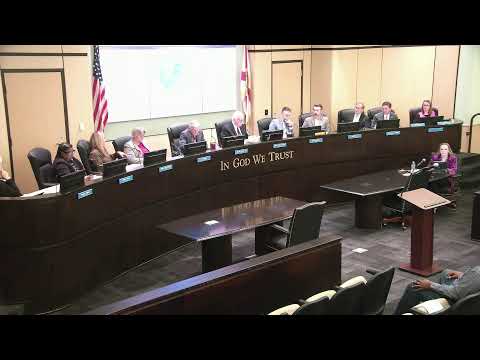
Mayor Michael Rowan opened the Feb. 11 Panama City Commission meeting by apologizing for remarks he made while addressing the Bay County NAACP’s Black History Month proclamation, saying he was not a racist and offering a public apology to anyone offended.
The apology followed a formal communication delivered during the meeting by the Bay County NAACP. NAACP leaders read a letter accusing the mayor of using phrases such as “those people” and “you people” at the Feb. 3 event and called those phrases “racial slurs” that were “incorrect and inappropriate.” The NAACP asked the mayor for a public apology and a written response to their concerns; the mayor apologized at the start of the Feb. 11 meeting.
At the meeting, NAACP leaders Rufus Wood (branch president) and Matthew Schack (first vice president) read the group’s letter aloud and asked for a written reply. Members of the public then used the audience-participation period to expand on the group’s concerns, describe past incidents and urge accountability. Several speakers described personal experiences of discrimination and asked the commission to take the matter seriously.
Commissioners and others spoke during the meeting in support of both the NAACP’s demand for accountability and of the mayor’s apology. Commissioner Lucas framed the episode as part of a broader history of disenfranchisement and representation, noting that dismissing the significance of Black History Month ignores that history. Other commissioners emphasized the need for education and reconciliation and thanked the mayor for apologizing.
Some residents who spoke defended the mayor, saying they did not believe he intended offense and describing his long local service. The commission allowed extended public comment on the letter during audience participation; members voted unanimously to grant brief extra speaking time twice during the comment period so community members could finish their remarks.
The discussion prompted several commissioners to call for better community outreach and clearer public processes for responding to such complaints. The commission did not take any binding formal action on the NAACP letter during the meeting beyond hearing the letter, allowing extended public comment and recording the mayor’s apology. Several commissioners asked city staff to preserve the NAACP’s written communication in the public record and to prepare any follow-up correspondence requested by the NAACP.