Get Full Government Meeting Transcripts, Videos, & Alerts Forever!
Get email alerts on the Energy Infrastructure topic
No spam. Unsubscribe anytime.
Con Edison project team outlines borefield plan, reports excavation incident at fire station
Summary
Con Edison updated council on a planned ground‑source (borefield) clean‑energy project and said drilling work struck an unmarked underground oil tank at the city fire station; crews removed the tank, provided a temporary fuel supply to restore heat and said remediation and replacement options will be presented to the city.
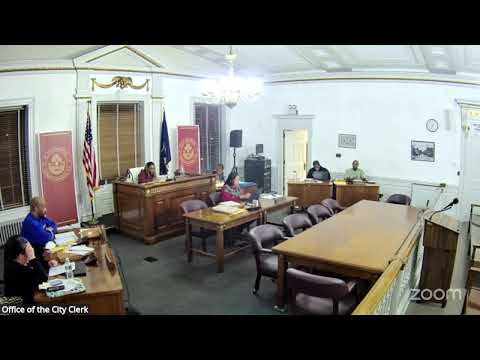
Con Edison and project partners briefed the City Council on Feb. 10 about progress on a planned ground‑source geothermal/energy center project and reported an incident in which a drill rig contacted an unmarked underground heating oil tank at the Mount Vernon fire station during subsurface testing.
Con Edison’s team said the project’s design has evolved as engineers modeled heating and cooling loads: additional borefields will be required, and the utility is prioritizing borefield locations on municipal property to maximize community benefit. Potential sites discussed included the Dole Center area, Fourth Street basketball court, South Ninth/Purdy Park courts and a small playground on Seventh Street; Con Edison said it aims to coordinate phasing so construction and community‑use projects do not conflict.
During geotechnical borings intended to inform the energy center design, the driller struck an unrecorded underground fuel oil tank near the fire station. Con Edison said crews initially believed the drill had merely grazed the tank and that no product was released; evacuation was not required. The contractor and Con Edison mobilized excavation crews and environmental consultants, provided a temporary above‑ground tank so the fire station heating could be restored quickly, and excavated to remove and assess the buried tank. Con Edison said the 40‑year‑old single‑wall tank will not be repaired in place and that engineers are preparing a memo with replacement options (above‑ground or new compliant buried tank), permitting steps with Westchester County and a cost/replacement plan; Con Edison said it will pay for removal and cleanup and coordinate permits with the city.
Council members pressed for details about liability, insurance, permitting timelines, and potential impacts if a buried tank had been breached. Con Edison replied that the company took responsibility for the incident immediately, worked to restore heat to the fire station using a temporary tank, and will coordinate remediation and replacement at no cost to the city; the utility said state and county permitting processes may affect timing. Council members also asked about schedule impacts to the broader borefield program; Con Edison said design submission to the state Public Service Commission is on a July 9 deadline and that major construction would not begin before calendar 2026 even if approvals proceed on schedule.
Con Edison representatives described typical construction impacts for borefields (drill rig spacing, phased work and estimated time per borehole). They said boreholes are relatively small in diameter (about 6–7 inches) but that a large borefield could require dozens of boreholes spaced 15–20 feet apart and that installation could take several months depending on site size and phasing. Con Edison said it will provide the council with scheduling information once project approval and customer commitments are secured.
Con Edison said it is prepared to reimburse costs associated with tank removal, temporary heating and any remediation necessary, and emphasized it would remain involved through permitting and completion of the energy‑center design.