Get Full Government Meeting Transcripts, Videos, & Alerts Forever!
Get email alerts on the Education Budget topic
No spam. Unsubscribe anytime.
Public Education Appropriations Subcommittee approves 15 motions shaping FY2025–26 education budget
Summary
The Public Education Appropriation Subcommittee unanimously approved 15 motions addressing federal fund receipts, fee schedules, reallocations, statutory changes and implementation directions for FY2025–26, including a $269.3 million reallocation and directives on the Utah Schools for the Deaf and Blind and the student information system.
The Public Education Appropriation Subcommittee unanimously approved 15 motions on Tuesday that together shape committee recommendations for the final FY2025 and FY2026 public education budget, including approval of federal fund receipts, several reallocations and statutory changes.
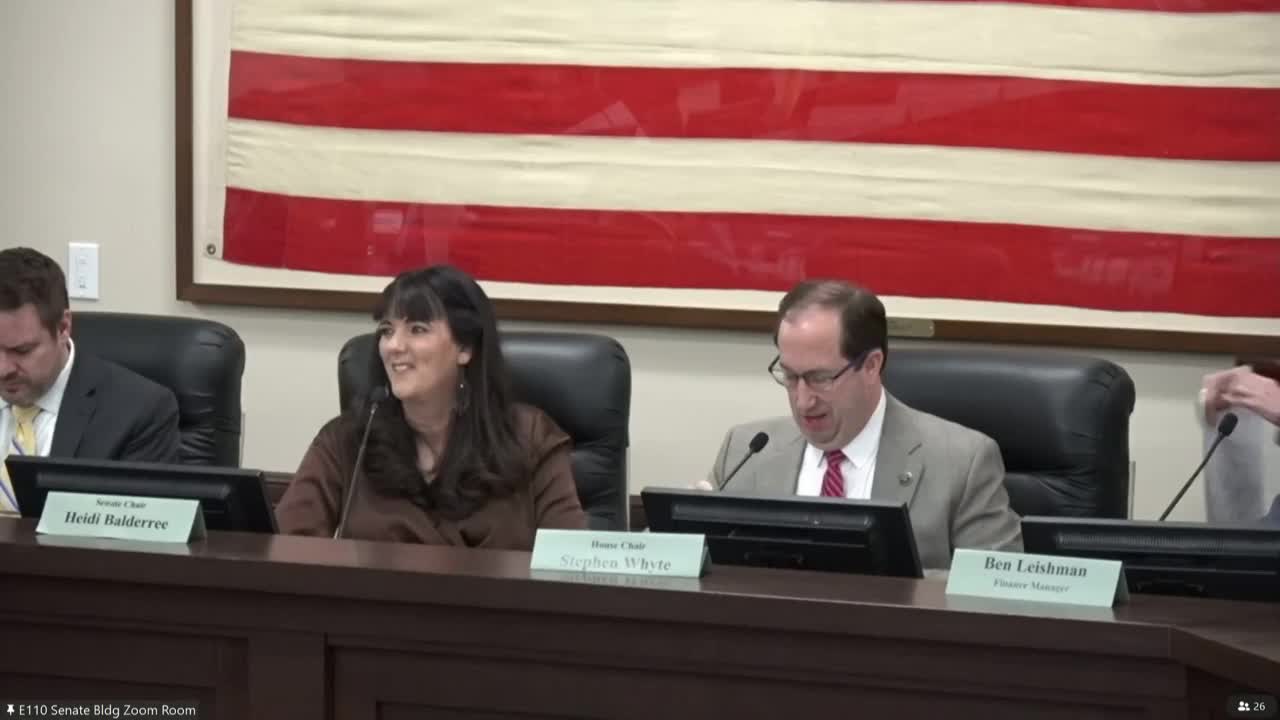
The actions affect the roughly $8.3 billion annual public education budget — about 30% of the state budget — and were adopted as the committee worked within a constraint of zero new ongoing dollars and limited one-time funding for the coming year. Senator Heidi Baldry, chair of the subcommittee, opened the meeting by praising Utah educators and reviewing recent outcome data, then asked staff and committee members to move through the proposed motions.
Key decisions approved by the committee include adoption of the State Board of Education’s estimated federal fund receipts for FY2025–26; approval of fee schedules (including fees for the schools for the deaf and the blind); technical line-item reallocations; and several pieces of intent and statutory language to guide distribution of one-time and ongoing funds.
Among the larger budget moves, the committee approved a motion to reallocate $269,269,300 appropriated for the Professional Staff Program (Senate Bill 1, item 27, 2025 General Session) into the Flexible Allocation Program in the Minimum School Program and to repeal the related statutory provision (53F-2-305). The committee also approved reversing a double appropriation and removing $50,700 from the education budget that now will be managed through the Tax Commission for the autism awareness account, and it approved a direct award intent for Utah State University Extension of $225,000 for the informal science education enhancement program.
The subcommittee adopted intent language and statutory drafting requests that affect how certain grants and programs are distributed. Representative Matthew McPherson (vice chair) moved the motion to approve the estimated federal funds for the State Board of Education. Representative Christin Lisonbee moved the reallocations item that restores specified funds and the student information system implementation plan motion.
The committee also moved to amend statute 53F-4-301 to stop the automatic annual increase to the original Carson Smith Scholarship program and to request statutory language changes to the career and technical education add-on program so local boards can prioritize formerly carved-out uses. On capital funding for the Utah Schools for the Deaf and Blind (USDB), the committee recommended combining two existing accounts into a single account and directing the Department of Government Operations to hold the funds until the Executive Appropriations Committee acts on recommendations from this committee and the Education Interim Committee.
Committee members repeatedly noted the constrained fiscal environment. Senator Baldry said the committee had no new ongoing dollars available and only limited one-time dollars, and asked members to prioritize within those limits. Ben Leishman, finance manager, provided the motion explanations and identified specific technical and reallocation changes in the issue briefs presented to the committee earlier in the session.
Votes at a glance
- Motion 1: Adopt estimated federal funds receipts for the State Board of Education as presented (mover: Representative Matt McPherson). Outcome: approved (unanimous). Vote tally: not specified. - Motions 2 & 3: Approve fee schedules, including schools for the deaf and blind fees. Outcome: approved (unanimous). Vote tally: not specified. - Motion 4: Approve technical line-item changes for the State Board of Education. Outcome: approved (unanimous). Vote tally: not specified. - Motion 5: Approve reallocations listed in issue brief 5A (restorations and transfers, including funding adjustments for student health/counseling and science outreach). Outcome: approved (unanimous). Vote tally: not specified. - Motion 6: Reverse appropriation for the autism awareness account (remove $50,700 from the State Board of Education appropriation since Tax Commission will manage it). Outcome: approved (unanimous). Vote tally: not specified. - Motion 7: Request staff draft intent language for rural school athletic facilities grants, annual inflationary adjustments to IC and POPs direct award grants, and priority order for Carson Smith Opportunity Scholarship funding. Outcome: approved (unanimous). Vote tally: not specified. - Motion 8: Amend statute 53F-4-301 to remove the automatic annual formula increase for the original Carson Smith Scholarship program and direct staff to draft statutory language. Outcome: approved (unanimous). Vote tally: not specified. - Motion 9: Reallocate $269,269,300 from the Professional Staff Program to the Flexible Allocation Program and repeal 53F-2-305. Outcome: approved (unanimous). Vote tally: not specified. - Motion 10: Include intent language for a $225,000 direct award in FY2026 to Utah State University Extension through the informal science education enhancement program. Outcome: approved (unanimous). Vote tally: not specified. - Motion 11: Recommend combining two USDB capital accounts into one and direct the Department of Government Operations to hold the funds pending Executive Appropriations action. Outcome: approved (unanimous). Vote tally: not specified. - Motion 12: If budget reductions are implemented, repeal statutes governing the Capital Outlay Enrollment Growth Program, CPR training grant program, and grants for professional learning. Outcome: approved (unanimous). Vote tally: not specified. - Motion 13: Direct staff to prepare statutory language to implement changes to the Special Education Impact Aid Program if the committee’s budget recommendations are enacted. Outcome: approved (unanimous). Vote tally: not specified. - Motion 14: Request staff draft statutory language to remove statutory carve-outs in the CTE add-on statute and allow local school boards to prioritize CTE add-on funding for student organizations, college and career readiness, and work-based learning. Outcome: approved (unanimous). Vote tally: not specified. - Motion 15: Request that the State Board of Education provide the subcommittee a detailed budget implementation plan for the student information system funding item (issues, proposed solutions, spending plan, participating LEAs and compliance dates) prior to expending funds. Outcome: approved (unanimous). Vote tally: not specified.
Context and next steps
Senator Heidi Baldry, chair of the subcommittee, said the committee has been deliberating across several weeks and that its recommendations will feed into the final public education budget bill and the Executive Appropriations Committee process. Several motions asked staff to work with subcommittee chairs to draft statutory or intent language to be included in the final bill. The committee recessed following adoption of motion 15; the subcommittee’s recommendations will move forward to the Executive Appropriations Committee and be reflected in final budget legislation as drafted.
Closing note
Committee members and staff repeatedly emphasized the limited availability of new ongoing funds; most actions were reallocations, intent language, or requests for statutory drafting and implementation plans rather than new ongoing appropriations.