Get Full Government Meeting Transcripts, Videos, & Alerts Forever!
Get email alerts on the Ticketing Consumer Protection topic
No spam. Unsubscribe anytime.
Debate over immediate electronic ticket delivery highlights fraud, bot and venue concerns
Summary
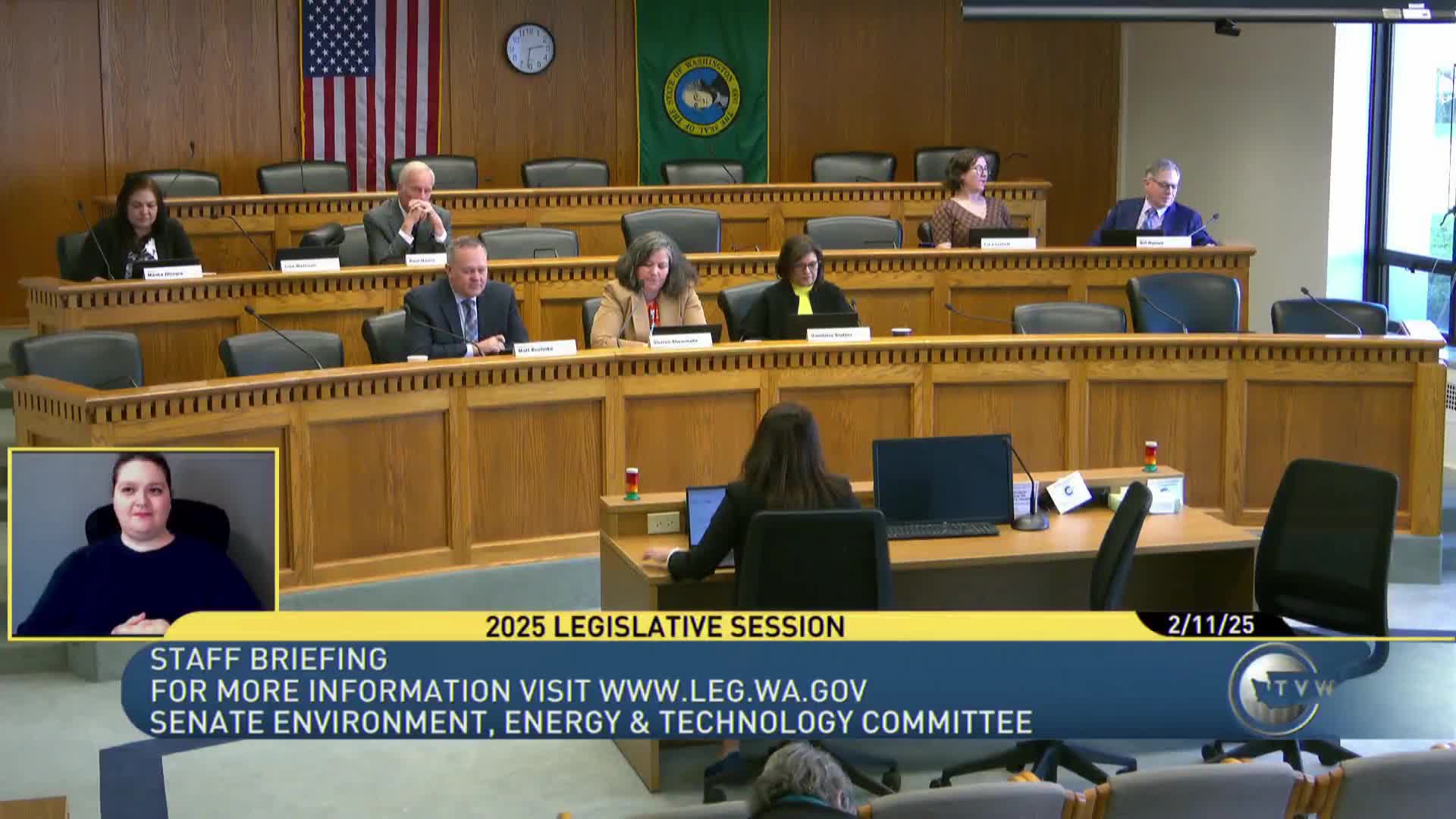
The Senate Environment, Energy & Technology Committee heard competing testimony on Senate Bill 5,676, which would require ticket sellers to immediately deliver electronic admission tickets after payment confirmation.
The Senate Environment, Energy & Technology Committee heard testimony on Senate Bill 5,676, which would require a ticket seller to immediately deliver an electronic admission ticket upon receiving confirmation of payment.
Proponents framed the bill as a consumer-protection measure that reduces uncertainty for buyers and makes transfers easier. Brian Hess of the Sports Fans Coalition urged immediate delivery and told the committee, “Fans shouldn't have to cross their fingers, refresh their email, or pray for their tickets to actually arrive. They should get it when they pay for it.” Scott Hazelgrove of StubHub said immediate delivery aligns with consumer confidence and that bots and other bad practices are already illegal.
Opponents — including venues, primary ticketing companies, cultural nonprofits and live-event operators — argued the requirement would undercut venues’ ability to detect fraud and speculative sales, and could hand fraudulently obtained tickets to resellers with no recourse for customers. Several venue representatives and ticketing providers said delayed delivery windows (commonly 24–72 hours, and sometimes up to two weeks in practice) are used to detect suspicious purchase patterns, prevent sales made with stolen credit cards, and block large automated purchases. Julie Krenz Welch of Seattle Opera said immediate electronic delivery could force audiences to present tickets for shows that do not exist when speculative listings appear on resale sites.
Ticketing and venue testimony noted operational complexity: primary ticketing companies and venues often issue immediate receipts but delay final ticket activation to let fraud-detection systems, promoter requirements or artist stipulations run. Multiple witnesses asked the committee to consider tailored exceptions for season tickets, account-to-account transfers, and nonprofit venues; several proposed clearer definitions to distinguish primary sellers from resellers. Industry witnesses also raised deceptive third-party websites and search-engine practices that mislead consumers.
Consumer advocates and fan groups said the bill addresses real confusion and harms that frequently affect less tech-savvy customers. Several witnesses asked for a comprehensive ticketing solution rather than a single-sentence mandate; venue and nonprofit witnesses urged more robust enforcement of existing anti-bot and consumer-protection laws before changing delivery requirements.
No committee vote or adoption of amendments occurred; testimony closed with requests for further stakeholder engagement to reconcile consumer protections with fraud and bot mitigation practices.