Get Full Government Meeting Transcripts, Videos, & Alerts Forever!
Get email alerts on the Public Guardian Supports topic
No spam. Unsubscribe anytime.
Public guardian seeks authority to provide voluntary, less‑restrictive decision supports
Summary
The Oregon Public Guardian told the Senate Human Services Committee that Senate Bill 794 would let the office offer voluntary decision‑making supports as alternatives to guardianship and help people without family or resources navigate hospital discharge and benefit access.
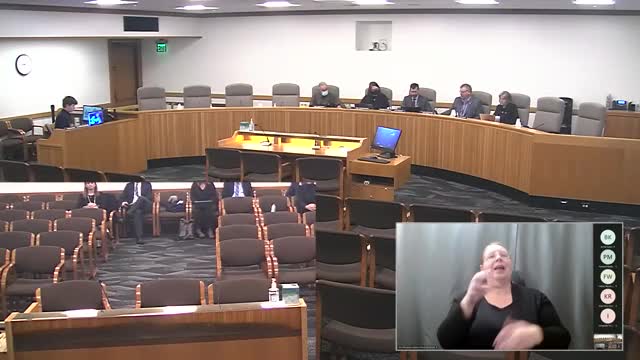
The Oregon Public Guardian and Conservator testified Feb. 11 in support of Senate Bill 794, which would expand the office’s authority to provide voluntary, less‑restrictive decision‑making supports to highly vulnerable adults who lack family or other options.
Chris Rosen, the Oregon Public Guardian and Conservator, told the committee that the office is currently statutorily limited to court‑appointed guardianship and conservatorship, which are the most restrictive options. “Guardianship is the most restrictive form of decision making support… It is an intensive and expensive process,” Rosen said, and added that SB 794 would allow the office to be “the provider of decision making supports of last resort” for people who would agree to voluntary help while keeping their rights.
Rosen described a recent case of a 72‑year‑old woman — described in testimony only as “Jackie” to protect privacy — who became unable to safely return to an uninhabitable trailer and lacked family or local supports. Rosen said the office assessed the case but could not accept it because Jackie did not meet the statutory definition of incapacitated, even though she needed help navigating Medicaid, housing and discharge planning. “If we had the options available in SB 794, we would have been able to help Jackie navigate the barriers that were preventing her Medicaid application, help her move to a care facility of her choosing, and help her get her life back,” Rosen said.
Senators asked whether the office currently has latitude to act; Rosen said the office can provide technical assistance but has no statutory authority to deliver the voluntary supports SB 794 proposes. Rosen and other witnesses said the bill would align with recommendations from a task force on hospital discharge challenges by creating alternatives that allow safe discharge without resorting to unnecessary guardianship.
Committee members discussed removing a supported decision‑making provision from the bill and pursuing that concept in a separate measure; Rosen said that amendment would resolve the main point of contention. The committee closed the public hearing with no vote taken.