Get Full Government Meeting Transcripts, Videos, & Alerts Forever!
Get email alerts on the Corrections topic
No spam. Unsubscribe anytime.
Timothy Lang outlines drug interdiction, staffing and solitary-reduction priorities as DOC secretary nominee
Summary
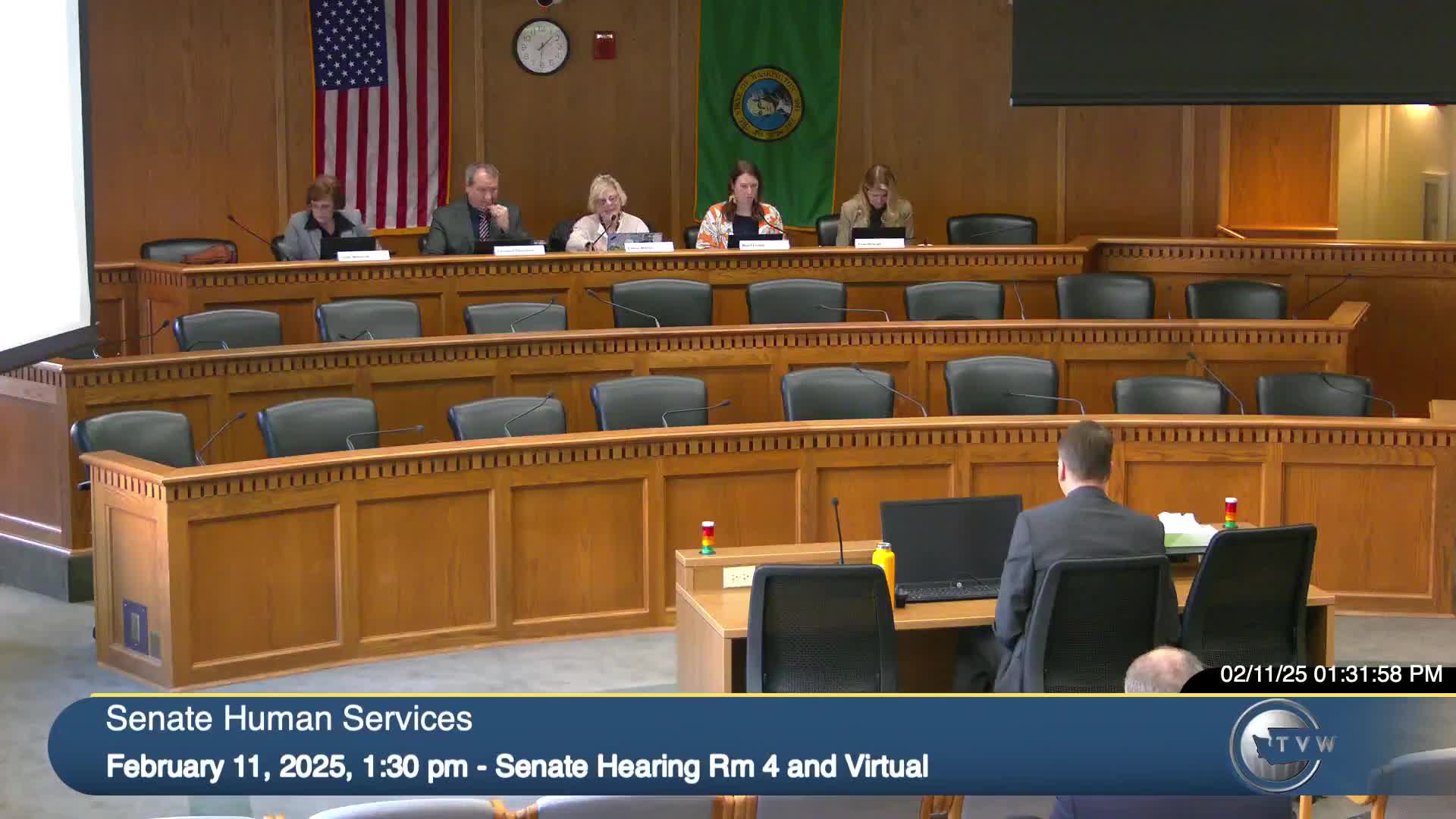
Timothy Lang, nominee for Secretary of the Department of Corrections, testified under oath Feb. 11 before the Senate Human Services Committee and told senators his immediate priorities include stopping drugs in prisons, revising how visitation funds are used, addressing staffing shortfalls and continuing a solitary-confinement reduction effort.
Timothy Lang, nominee for Secretary of the Department of Corrections, testified under oath Feb. 11 before the Senate Human Services Committee and told senators his immediate priorities include stopping dangerous drugs entering prisons, better use of the Incarcerated Individual Betterment Fund to support family visitation, bolstering community corrections staffing and continuing a project to sharply reduce solitary confinement.
Lang opened his remarks by describing his background and values. “Honesty and integrity” and “professionalism,” he said, are his “North Star,” and he described a leadership style he called servant leadership. He told the committee he gained most of his corrections experience as chief counsel to the Department of Corrections while serving in the Attorney General’s Office.
Why it matters: Lang framed his priorities around staff and public safety and reentry outcomes. He described drugs smuggled into facilities as a near-term threat that increases violence and undermines programming intended to reduce recidivism, and he asked for legislative support for screening equipment.
On drug interdiction, Lang said the department will assemble a comprehensive strategy that includes a body-scanner program. He thanked Senator Christian for sponsoring Senate Bill 5499, which Lang said “would significantly support that program.” He also described work to expand access to medications for opioid use disorder, saying the legislature provided proviso funding last session and DOC is working with OFM and fiscal staff to increase flexibility in how that funding is used.
Lang described the Incarcerated Individual Betterment Fund (IIBF) — revenues derived from commissions on incarcerated-technologies such as phone services — and said the Federal Communications Commission last year ruled that those commission schemes will be prohibited beginning next January. Lang said the fund currently holds a significant balance and that DOC will convene a work group including family members to design an objective, fast process to reimburse travel costs for families who cannot wait long for reimbursement.
On staffing, Lang described a custody-relief funding gap that he said forces high overtime: “We’re funded at a custody relief factor of, I think, 0.16. So every 1 FTE we’re funded 1.16. And, in actuality, it should be 1.26,” he said, adding that in fiscal year 2024 DOC recorded more than one million hours of overtime and about 70,000 hours of mandatory overtime. He said the department is also under-resourced in community corrections relative to modern supervision practices and cited a recent workload study showing staffing shortfalls.
Lang also emphasized operational needs: DOC lacks an electronic health record for its health services division, forcing reliance on paper records, and he said continuing to expand educational and vocational programming and the 1115 Medicaid waiver handoff work are important reentry efforts.
On solitary confinement, Lang summarized the department’s transformation project launched in 2023 that aims to reduce use of solitary by 90% over five years and identify resources needed to do that safely. He said a proof-of-concept pilot at Stafford Creek Corrections Center produced an encouraging report released last month and that, with sufficient resources, the reduction goal is achievable.
Committee members pressed Lang on suicide prevention, staffing and training. Senator Christian asked how Lang would reduce suicide and overdose rates; Lang said DOC has consulted a national expert and plans additional reviews and steps to mitigate obvious risks and increase provider attention. Senator Orwell asked about staff training and referred to therapeutic approaches such as dialectical behavior therapy; Lang said DOC hopes to expand the “Washington Way” initiative, modeled on Norwegian correctional principles, to normalize human interactions across more facilities.
Lang concluded by saying he was pleased to answer questions and the committee chair said the committee will exec the gubernatorial appointments the following day with the goal of moving the nominations to the Senate floor.
Ending: The Senate Human Services Committee held the public hearing Feb. 11 and planned to executive the gubernatorial appointments on Feb. 12; no confirmation votes occurred during this hearing.