Get Full Government Meeting Transcripts, Videos, & Alerts Forever!
Get email alerts on the Probate And Estates topic
No spam. Unsubscribe anytime.
Senate approves technical updates to Oregon probate law after extended floor questioning
Summary
Senate Bill 168 makes several technical and clarifying changes to Oregon probate law (including correction of prior drafting errors and a clarification of the harmless‑error will rule) and was carried and passed on the Senate floor after extended questioning.
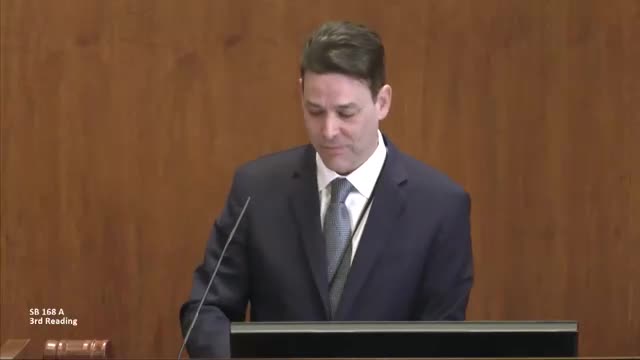
Senator Anthony (Steve) Broadman carried Senate Bill 168, describing it as a package of targeted, practical updates to Oregon probate law intended to lower cost and increase clarity for smaller estates.
On the floor Broadman said the bill corrects an oversight from 2023 that affected when a simple estate affidavit (formerly called a small estate affidavit) may be used for decedents whose will places most assets into a trust; it fixes a 2017 drafting error that made it harder for children of unmarried parents to prove parentage for intestate succession; it clarifies aspects of Oregon—s harmless‑error rule (cited in committee as ORS 112.238 on the floor) to explain when a writing may be treated as a will despite formal defects; and it adds ORCP 45 (requests for admission) to the rules that can apply in probate proceedings.
The floor discussion was lengthy and wide‑ranging: multiple senators asked detailed questions about the bill—s wording, readability scores provided in committee documents, and whether committee consideration had explored every likely situation. Senators raised concerns about the bill—s labels (for example, use of the term "simple" for the simple estate affidavit) and about whether the committee had fully reviewed written testimony; the sponsor and others repeatedly confirmed that the bill came out of the judiciary committee and that committee concerns had been addressed in committee work.
Senator Broadman urged passage on policy grounds of cost and clarity for Oregonians; after closing remarks the Senate voted and the clerk declared Senate Bill 168 A passed with a constitutional majority.
Votes at a glance: the clerk recorded 28 ayes for SB 168 A when it was declared passed on the floor; one or more senators were recorded as voting no on the roll call during the session as reflected in the public roll calls.
The bill will proceed to the next steps required by Senate procedure for enrolled measures.