Get Full Government Meeting Transcripts, Videos, & Alerts Forever!
Get email alerts on the Supported Decision Making topic
No spam. Unsubscribe anytime.
Oregon committee hears plan for statewide Center for Decision‑Making Supports
Summary
Advocates and state ombuds officials outlined a proposal to create a centralized, non‑legal resource that would help Oregonians and families navigate alternatives to guardianship and access decision‑making supports.
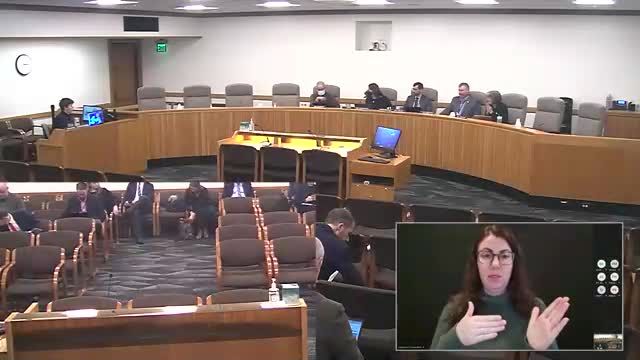
The Oregon Senate Committee on Human Services held an informational hearing Feb. 11 on a proposal to create a Center for Decision‑Making Supports to help adults with disabilities and older adults access less‑restrictive alternatives to guardianship.
Supporters told the committee the center would act as a one‑stop resource to explain tools such as power of attorney, supported decision making, conservatorship alternatives and referrals to attorneys, legal aid and community services. “When people have that choice and support to make those decisions then they have control and autonomy over their lives,” said Matt Sears, Public Policy Director with the Oregon Council on Developmental Disabilities.
Proponents said families and individuals currently encounter a confusing landscape when they seek help, particularly at transitions such as turning 18 or following a new diagnosis. Leslie Sutton, the Residential Facility Ombudsman, said the center would provide technical assistance, outreach to culturally specific communities and promote cross‑agency collaboration among the Department of Human Services offices, the Oregon Health Authority, the Oregon Judicial Department and community partners. “It will be a good vehicle for bringing together different agencies and community partners,” Sutton said.
Self‑advocate Felicity Woods described how decision‑making can take days or weeks to process and said access to supports gave her peace of mind. “...it would give a lot of individuals a peace of mind in their life to have a guardian or a 1 on 1 provider to help an help out with decisions,” Woods said.
Matt Droscher, director of the Umpqua Valley Disabilities Network, said centers for independent living would likely partner with the proposed center and provide education to help people move out of unnecessary guardianships. He urged that the center be a permanent, statewide resource. “We run into a number of individuals walking in our door confused, frustrated, not able to navigate the system as well as they could,” Droscher said.
Presenters emphasized the center would not provide court representation or act as attorneys, nor would it directly intervene in active guardianship or conservatorship cases. Instead the proposal envisions housing the center within the Office of the Long Term Care Ombudsman to provide programmatic stability and ties to existing ombudsman programs. The presenters said similar pilots have been run elsewhere, and an advisory board would be part of the governance structure.
Committee members asked procedural questions and were told the committee expects to see legislative language returned as a bill. “We had hoped to have the actual concepts back…we will be hearing more when the measure comes back,” the chair said before closing the information hearing.
Supporters provided lists of community partners they had consulted, including Disability Rights Oregon, the Human Services Coalition of Oregon, Centers for Independent Living and the Systems of Care Advisory Council. The proposal’s next step is return of the legislative concept as a committee measure for formal consideration.