Get Full Government Meeting Transcripts, Videos, & Alerts Forever!
Get email alerts on the Property Tax Cap Change topic
No spam. Unsubscribe anytime.
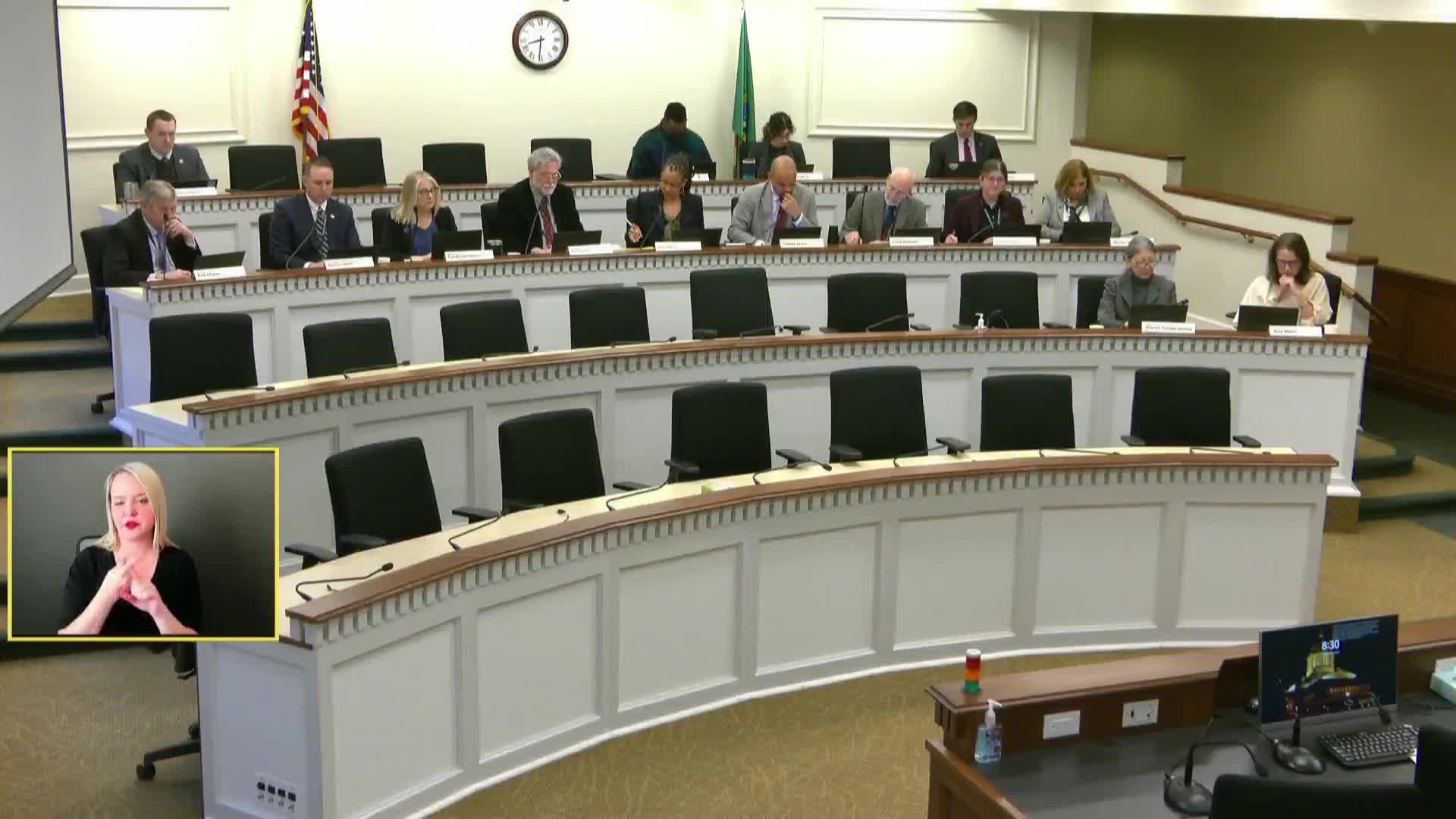
Representative Paulett proposes raising property tax revenue growth limit to reflect population and inflation; bill draws broad support and opposition at House‑
Summary
House Bill 13‑34 would change the revenue growth limit on state and local property taxes to a formula tied to population growth plus inflation (capped at 103%); sponsors said the change is needed to fund schools and local services, while opponents called for spending reforms and warned about higher property tax burdens.
House Bill 13‑34, sponsored by Representative Jerry Paulett, would replace the current 1% annual revenue growth limit on regular state and local property taxes with a new limit factor equal to 100% plus population change plus inflation, capped at 103% (effectively allowing up to 3% growth when population and inflation are not greater than that cap). Committee staff presented preliminary revenue impact estimates and the prime sponsor framed the bill as necessary to meet the state’s constitutional duty to fully fund basic education and to provide local governments with resources to sustain critical services.
Staff described substantial estimated revenue impacts: approximately $200 million to state general fund revenue in the first biennium and $618 million in the second (a four‑year total of roughly $818 million). Local revenue increases were also estimated in preliminary numbers presented to the committee.
Representative Paulett said his primary mission is to fund schools and argued the 1% cap is inadequate to support inflationary costs for staff and services. "Our legislative primary duty established by the state constitution, paramount duty under the state constitution is to fund our schools amply," he said. He presented illustrative figures showing larger revenue availability if the cap were raised to 3%.
Opponents and questioners pressed for clarification. Representative Jacobson asked whether the same outcomes could be achieved by changing the state's share rather than raising the total pool; Paulett replied that increasing local retention would not meet statewide school funding needs and would create inequities. Representative Orcutt asked whether new construction would be treated within the new growth factor; staff clarified that new construction remains separate and is treated as an add‑on outside the growth cap.
Supporters of the bill that later testified included county and city elected officials and associations. King County Council Member Jorge Barón said that prolonged low inflation years masked structural deficits but recent high inflation and population growth have created steep shortfalls; he described a projected need to cut $150 million from King County’s general fund in 2026‑27 under current law. Snohomish County Council Member Megan Dunn and Paul Jewell of the Washington State Association of Counties also testified in support, saying counties rely heavily on property tax revenue and face growing deficits.
Opponents, including representatives of taxpayer groups and business associations, argued the legislature should prioritize more efficient spending of existing revenues and warned of the cumulative burden of multiple tax increases. Testimony reflected a split between local governments seeking predictable revenue and some business and taxpayer groups urging restraint.
The committee suspended the hearing on HB 13‑34 to take up other items; no committee vote occurred on this bill at that session. Staff and lawmakers discussed that changes would take effect for taxes levied for collection in 2026 and thereafter if enacted.