Get Full Government Meeting Transcripts, Videos, & Alerts Forever!
Get email alerts on the Commute Trip Reduction topic
No spam. Unsubscribe anytime.
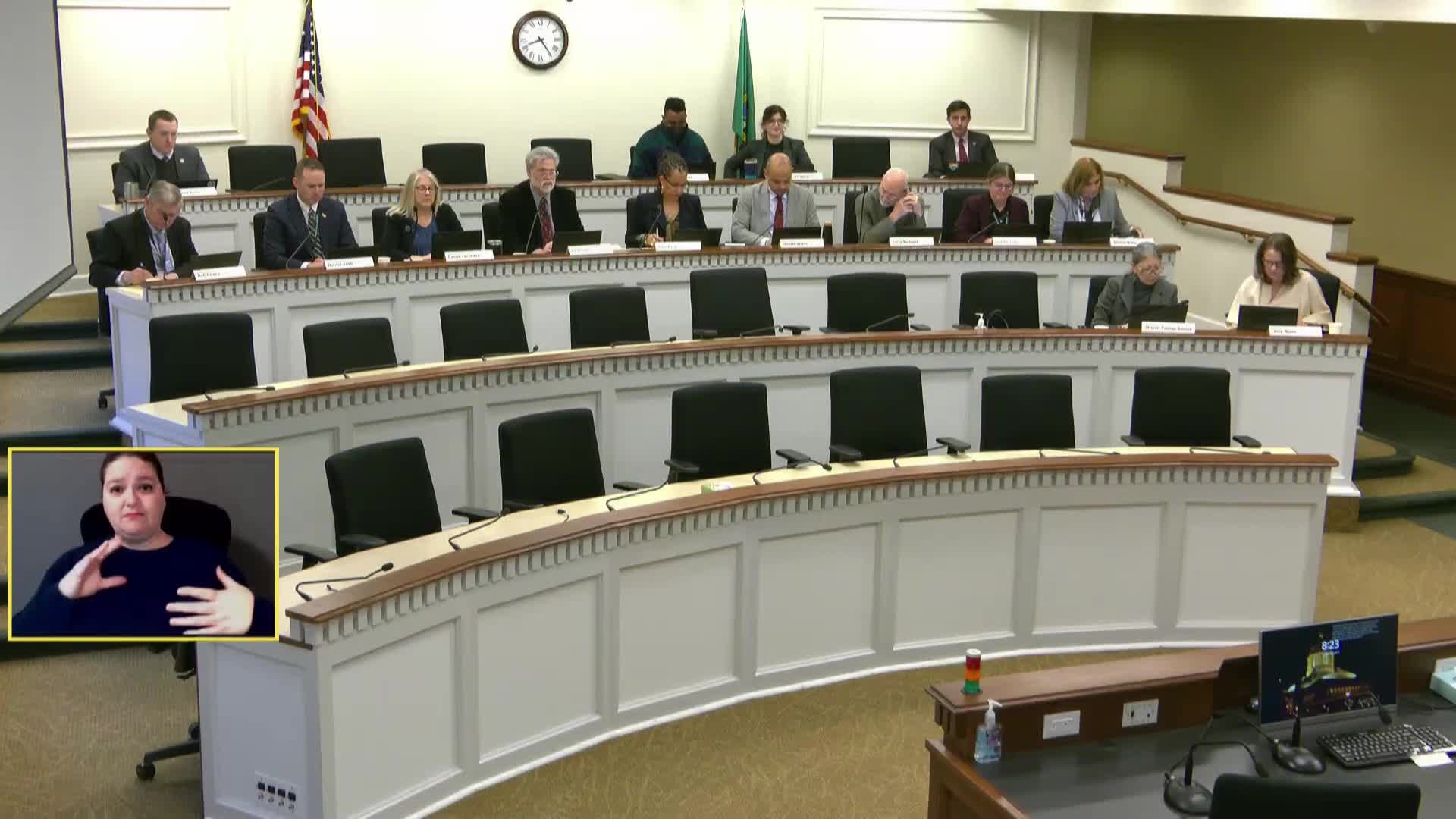
Committee hears testimony supporting expansion of Commute Trip Reduction tax credit
Summary
House Bill 10‑43 would revise limits and eligibility for the Commute Trip Reduction (CTR) tax credit; staff presented fiscal estimates and supporters including regional planners and employer groups urged passage to keep commuter programs affordable.
Staff briefed the committee on House Bill 10‑43, which modifies the Commute Trip Reduction (CTR) tax credit that allows employers to claim a credit against business and occupation (B&O) or public utility tax liability for incentives encouraging non‑single‑occupancy commute options.
Committee staff explained key changes: raising the per‑employee credit cap from $60 to $100, lowering the per‑employer cap from $100,000 to $50,000, and increasing the statewide cap from $2.75 million to $4.3 million. The bill extends the allowed use of non‑motorized commuting incentives to Jan. 1, 2035, sets the program expiration to July 1, 2035, and includes an emergency clause to take effect July 1, 2025. Staff noted an estimated general fund revenue reduction of $5.5 million in the 2025‑27 biennium and $6.0 million in 2027‑29, with system and program management costs in the hundreds of thousands.
Representative Wiley, the bill's prime sponsor, described the credit as a small investment to encourage employers to support alternative commuting methods. Supporters from regional planning organizations and transportation management associations testified in favor. Veronica Jarvis of the Thurston Regional Planning Council called the credit "an incredible tool in the toolbox for employers to help their employees get to work in a sustainable way." Michael Leach from Move Redmond and members of Evergreen Health highlighted that the credit helped keep ORCA transit pass costs low for employees and kept commute programs accessible.
No opposing testimony was recorded at the hearing; the committee set one‑minute testimony limits due to the number of testifiers and encouraged written testimony for longer comments. The hearing on HB 10‑43 concluded and the committee moved on to the next agenda item.