Get Full Government Meeting Transcripts, Videos, & Alerts Forever!
Get email alerts on the Insurance Guarantee topic
No spam. Unsubscribe anytime.
Bill would raise payout cap for Oregon Insurance Guarantee Association to $600,000
Summary
House Bill 2130 would modernize the Oregon Insurance Guarantee Act, raise the statutory cap on covered property and casualty claims from $300,000 to $600,000 and clarify coverage for lines such as cybersecurity; the association said changes reflect inflation and market shifts since 1971.
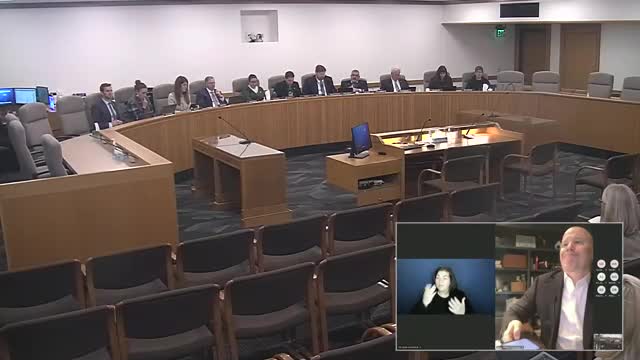
The House Committee on Commerce and Consumer Protection heard testimony on House Bill 2130 on Feb. 11, a measure to update the Oregon Insurance Guarantee Act, increase the statutory payout cap for covered property-and-casualty claims and add clarifying language for modern lines such as cybersecurity.
Representatives of the Oregon Insurance Guarantee Association (OIGA) said the association was created by statute in 1971 to pay covered claims when an insurer becomes insolvent and that the statute has had minor changes since. Kathy Broughton Bezant, OIGA administrator, said the current cap on non‑workers'‑comp property and casualty claims is $300,000 and that the association proposes raising the cap to $600,000: "The cap, the maximum we would pay on a covered claim currently is $300,000 … We have put into House Bill 21 30 raising that statutory cap to $600,000." Broughton Bezant said the cap dates back more than 40 years and the increase is intended to better protect consumers while balancing practical limits on OIGA's resources.
Sean Miller, testifying for OIGA, described the association's funding sources: assessments against member insurers licensed in Oregon, reimbursement from liquidated assets of insolvent insurers and special deposits filed for workers' compensation lines. OIGA said it has not needed to issue an assessment since 2002 and that insolvencies occur irregularly; workers' compensation claims are not subject to the $300,000 cap. When asked about why the association chose $600,000 rather than a full inflation adjustment, Broughton Bezant said the board selected $600,000 in part to align with Oregon Fair Plan policy limits and to balance consumer protection with the operational and assessment capacity of OIGA and the industry.
Committee members asked several clarifying questions about funding, the frequency of insolvencies and the association's recent activity; OIGA staff said insolvencies vary by region and event type (for example, hurricane‑driven insolvencies in the Southeast) and that wildfire remains a principal regional risk for Oregon insurers.
Ending: Testifiers asked the committee to support the modernization package. No votes were taken; the public hearing was closed and the committee adjourned its Feb. 11 session.