Get Full Government Meeting Transcripts, Videos, & Alerts Forever!
Get email alerts on the Apprenticeship Programs topic
No spam. Unsubscribe anytime.
Apprenticeship bill draws fierce pro and con testimony over standards, competition and tribal inclusion
Summary
House Bill 1777 would change how the Washington State Apprenticeship and Training Council approves programs and handles competitor objections; supporters said it would remove barriers to new programs, while unions and trades warned it would weaken state standards.
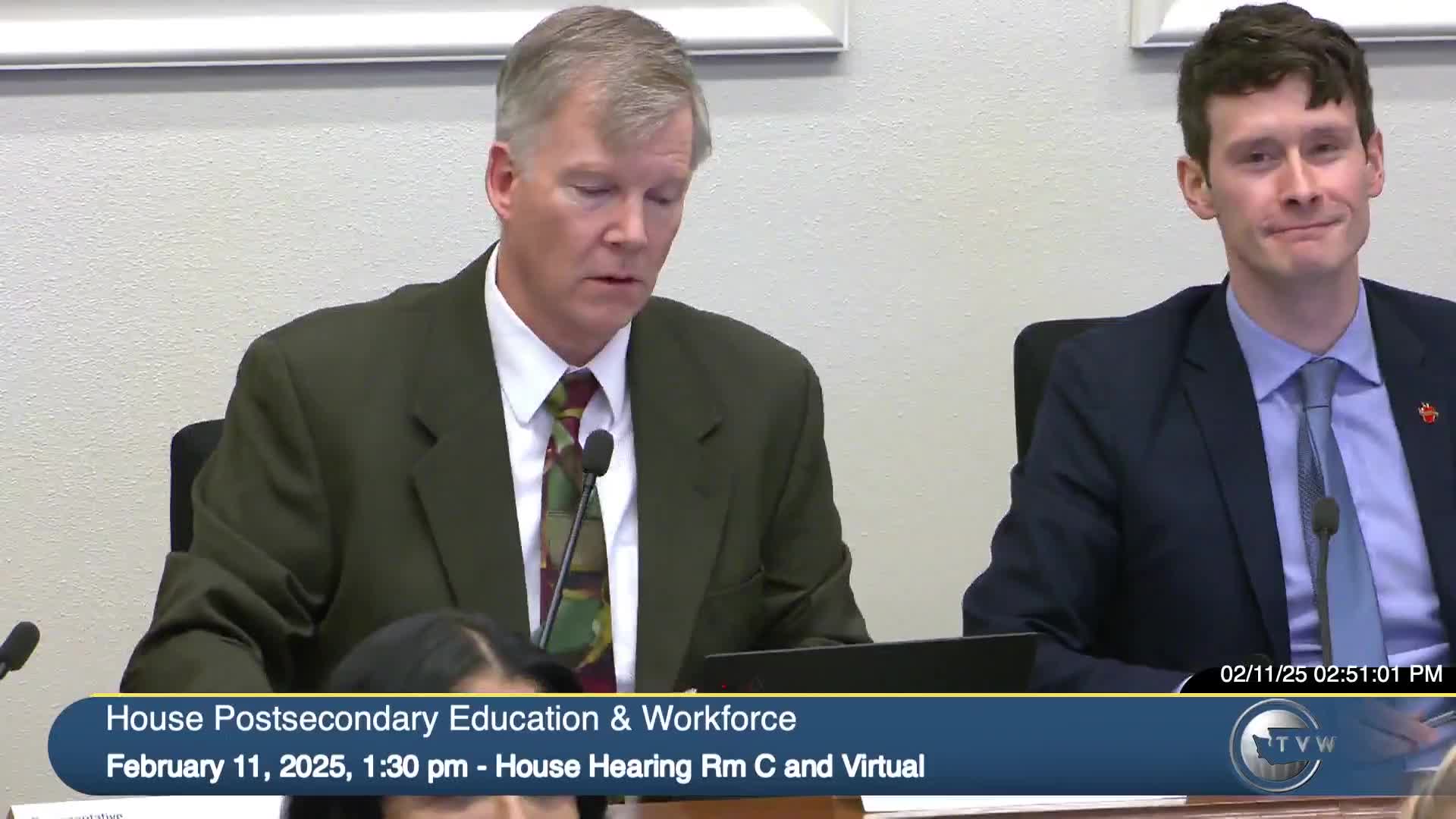
The House Postsecondary Education & Workforce Committee on Feb. 11, 2025, heard extensive testimony on House Bill 1777, which would modify the process by which the Washington State Apprenticeship and Training Council approves apprenticeship programs and resolves competitor objections. Staff described the bill as requiring the council to approve programs that meet statutory and council-adopted standards, providing provisional 12‑month registration (extendable), expediting federal approvals and permitting sanctions for frivolous objections.
Sponsor Representative Suzanne Schmidt (4th District) framed the bill as a response to a persistent workforce shortage and to obstacles that prevent new apprenticeship sponsors from getting programs registered quickly. Schmidt said delays and legal costs — she cited industry testimony estimating up to $200,000 and two to three years for some approvals — discourage sponsorship and cost state workforce capacity. Schmidt argued the bill would reduce bottlenecks, help convert interest generated by high school outreach into training seats and expedite federal programs where state requirements are not materially different.
Proponents included trade associations, employers and tribal leaders. Carolyn Logue of Associated Builders and Contractors Inland Pacific emphasized access for small and rural nonunion employers. Emily Whitman of the Association of Washington Business said competitor objections are a major bottleneck, adding procedural boxes that can delay approval. Lummi Nation representatives asked for explicit recognition of tribal-sponsored apprenticeship programs and noted delays for tribal programs such as industrial maintenance apprenticeships.
Opponents included major building-trades unions and organized labor, which said Washington’s higher state standards protect safety, worker training quality and long-term employability. Joe Kindo of the Washington State Labor Council said the bill risks substituting federal standards that may favor corporate interests over local safety and training outcomes. Heather Kurtenbach of the Washington State Building and Construction Trades Council and Matthew Hepner of the Certified Electrical Workers of Washington argued that state standards are a national model and that the competitor-objection process is a necessary check; they urged more time to assess L&I’s revised mediation pilot before changing the law.
Several testifiers described the existing process. Keeley Friesen (Vertical Options Elevator Services) and Paul Briganti (Associated Builders and Contractors of Western Washington) described cases where programs met technical reviews yet faced multiple objections and lengthy legal processes. Opponents said mediation and recent council rule changes should be allowed to operate before statutory revisions are made.
Questions from members covered federal-vs-state standards, the definition of “competitor,” timelines for mediation and adjudication, and potential sanctions for frivolous objections. Staff noted a fiscal note had been requested and was not yet available. The committee did not take a final vote during the hearing; members asked for additional information and indicated willingness to continue negotiations with stakeholders.
Ending: The bill drew sharply divided testimony from employers, tribal leaders and labor unions. Committee members asked staff to track implementation of recent administrative changes and to provide any outstanding fiscal analysis before additional action.