Get Full Government Meeting Transcripts, Videos, & Alerts Forever!
Get email alerts on the Law Enforcement Education Engagement topic
No spam. Unsubscribe anytime.
Committee hears bill to let off-duty officers accept honoraria when speaking in college classrooms
Summary
House Bill 1783 would permit off-duty law enforcement officers to accept honoraria from colleges and technical schools for classroom presentations; staff cited RCW 42.52.120 and the Ethics in Public Service Act during questioning.
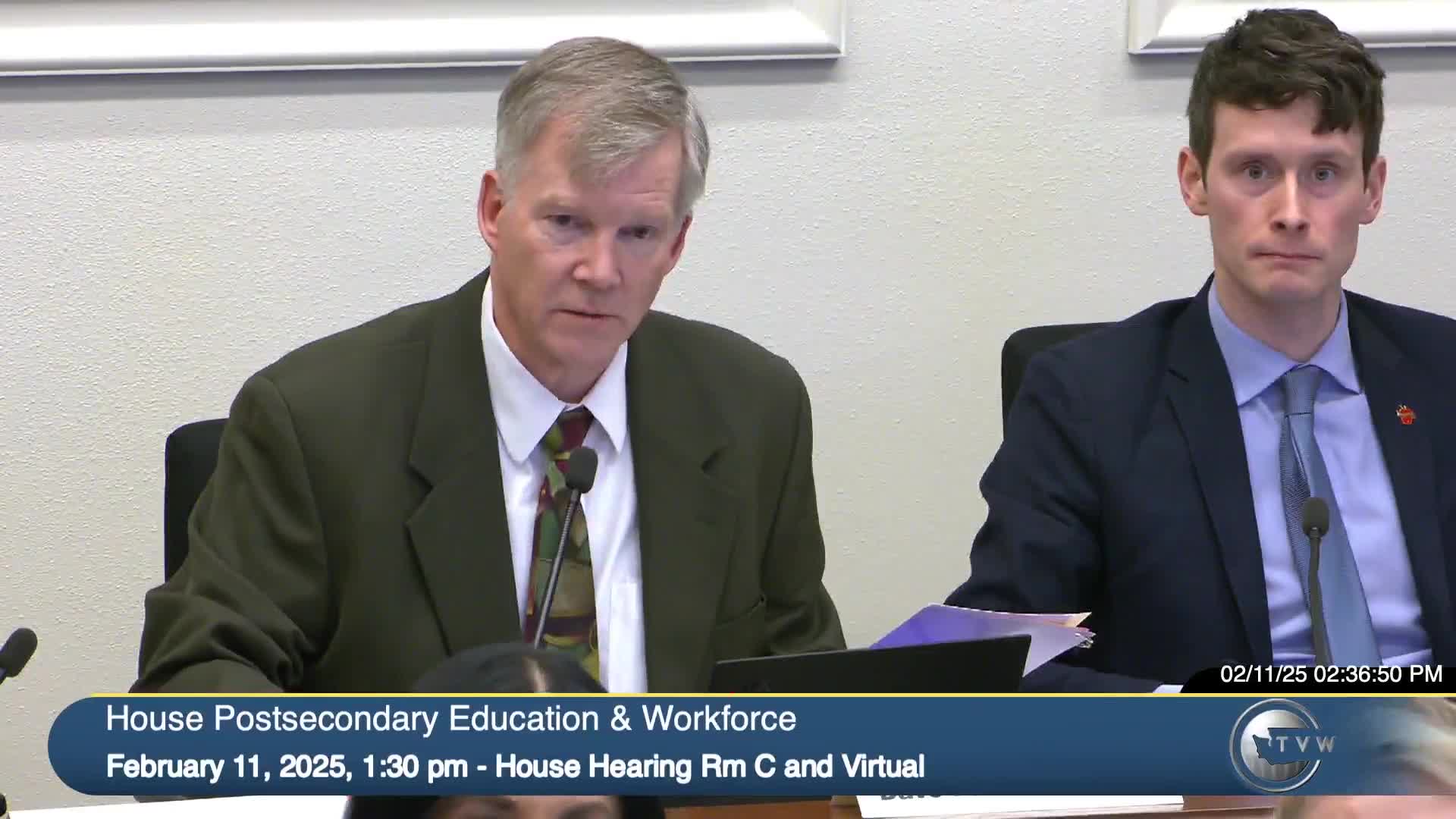
The House Postsecondary Education & Workforce Committee held a public hearing on House Bill 1783 on Feb. 11, 2025. The bill, sponsored by Representative Gloria Mendoza, would allow off-duty law-enforcement officers to receive honoraria from institutions of higher education for delivering presentations as part of criminal justice, police science, forensic, or related coursework.
Staff briefed the committee on current prohibitions affecting state officers and employees. Elizabeth Allison, committee staff, said the governing statute is RCW 42.52.120 and noted the Ethics in Public Service Act contains definitions for honoraria and gifts. Allison told members the bill would permit officers to receive honoraria for presentations that are outside the scope of their official duties.
Sponsor testimony emphasized recruitment and relationship-building. Rep. Gloria Mendoza (14th District) said the measure would strengthen ties between colleges and local law enforcement, let officers share real-world experience with students and help address recruitment shortfalls; she told the committee that Washington ranks low on law enforcement per capita and cited a Washington State Board for Community and Technical Colleges report on recruitment and retention challenges. Mendoza said the change would also allow colleges and technical schools to offer a modest thank-you — college apparel or coffee cards were mentioned during questioning — without running afoul of state prohibitions.
Members asked about existing limits and definitions. Representative Steve Thomas and Representative Julie Reed (questions paraphrased from transcript) asked whether officers may volunteer without payment now and whether small consumable thank-you items (mugs, coffee cards, swag) are distinguishable from an honorarium. Staff said volunteers are not prohibited, but the statutory prohibition is on receiving compensation in some circumstances; Allison said she would circulate relevant statutory language and an Ethics in Public Service Act definition of honorarium and gift to the committee. Representative Pollet asked if the sponsor would consider defining “gifts of minimal value” in lieu of the open term “honoraria”; Mendoza asked staff for guidance and did not commit to a definition on the floor.
Public testimony: The committee recorded 63 people registered in support and one person registered in person; Cal Fuller (law-enforcement officer, testified remotely) supported the bill, describing the honorarium as a modest “thank you” and noting some colleges have easy access to off-duty officers while others do not.
Outcome and next steps: The committee closed the hearing on HB 1783; no committee vote was recorded during the meeting. Staff said they would email statutory language and guidance about definitions for honoraria and gifts to the committee.
Ending: The committee moved on to other agenda items after the hearing; members asked staff to follow up with statutory citations and any applicable gift/compensation caps for legislators or staff.