Get Full Government Meeting Transcripts, Videos, & Alerts Forever!
Get email alerts on the Environmental Justice Sepa topic
No spam. Unsubscribe anytime.
Committee rejects amendment but reports House Bill 1303 on SEPA and environmental justice, 12-7
Summary
House Bill 1303, a measure to add environmental-justice considerations to state SEPA review, was reported out of committee with a due-pass recommendation. An amendment to require cumulative-impact review of large-scale renewable development was defeated before the bill passed the committee by the same 12-7 margin.
The House Environment & Energy Committee voted to report House Bill 1303 out of committee with a due-pass recommendation; staff announced the vote as 12 ayes, 7 nays, 2 excused.
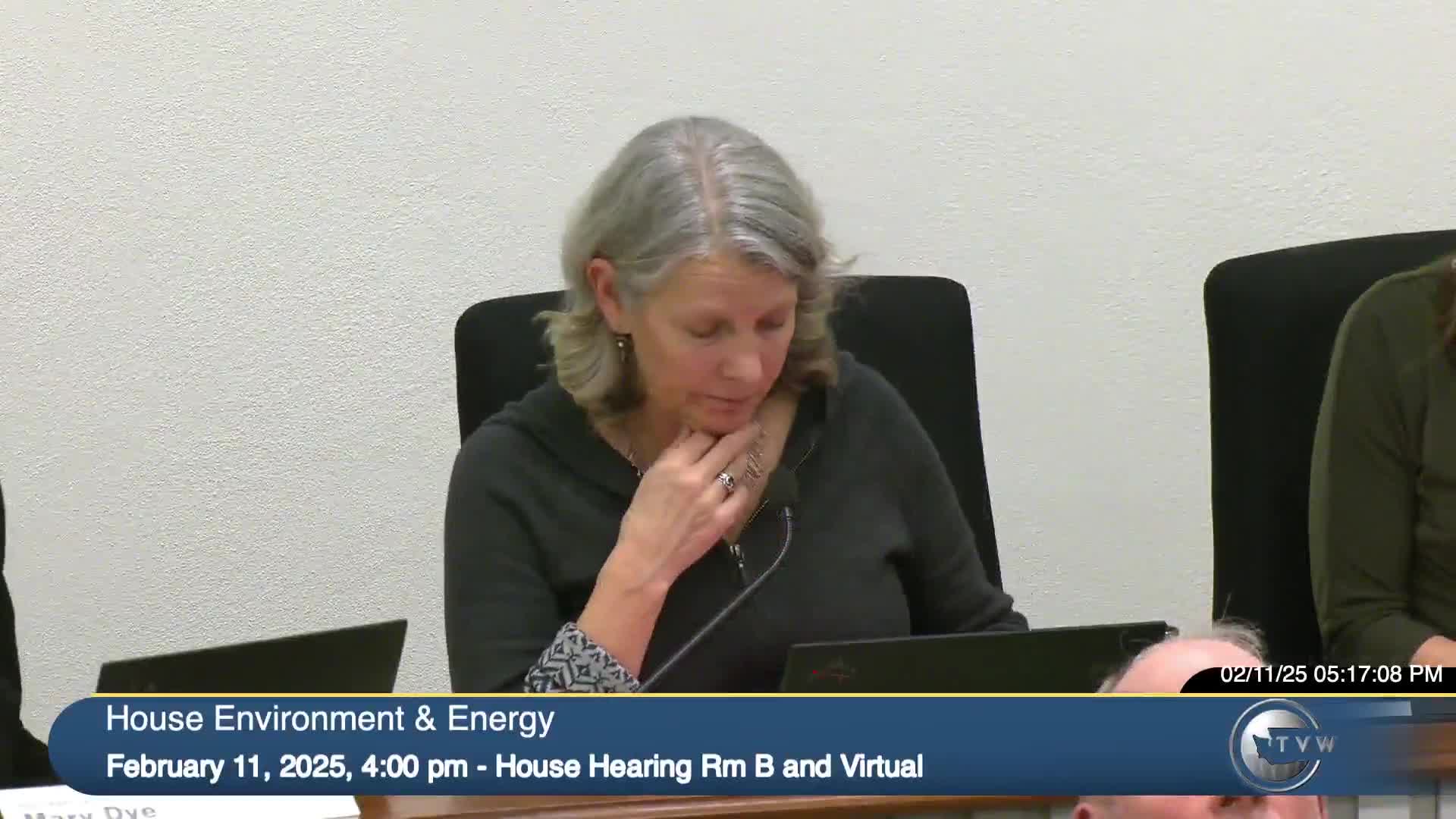
An amendment (H1330.1) that would have required cumulative-impact consideration of large-scale wind and solar development on open space, farmland and rural communities failed on a voice vote and then in the recorded vote. Representative Dye, who moved the amendment, argued that land-use disruptions from large renewable projects have caused economic distress in rural communities and asked for SEPA to include cumulative-impact and environmental-justice review. "This amendment simply asks us to consider the cumulative impacts of large scale development of wind and solar across open space, wildlands, and farmlands," Representative Dye said, describing lease-driven land-price effects and concerns about long-term decommissioning.
Representative Bridal (opposing the amendment) and other members urged a data-driven approach. Bridal said the amendment was not the right vehicle and asked the committee to reject it while continuing to pursue environmental-justice questions through other means.
After the amendment failed, committee members debated the underlying bill. Representative Mena, a supporter, characterized the bill as a step toward recognizing harms pollution causes and said the measure would mark "the first time that we really stop to look at the impacts on people in the SEPA process." Opponents including Representative Abel expressed concern about additional burdens on local jurisdictions and urged a no vote.
Staff called a roll and announced the final tally as 12 ayes, 7 nays, 2 excused. By that vote, House Bill 1303 was reported out of committee with a due-pass recommendation.
The committee record shows both substantial policy debate and competing perspectives on whether SEPA changes should focus on data-driven statewide processes or include localized cumulative-impact reviews for rural communities and renewables siting.