Get Full Government Meeting Transcripts, Videos, & Alerts Forever!
Get email alerts on the Probation topic
No spam. Unsubscribe anytime.
13th Circuit probation report lists caseloads, juvenile residential placements and incoming fee-standard changes
Summary
Susan Dobbs, director of probation for the 13th Judicial Circuit, presented January caseloads and fee-and-bill totals Feb. 12 and described two juvenile residential placements (one ongoing) while warning that new probation fee standards from the Administrative Office of the Illinois Courts will take effect this month.
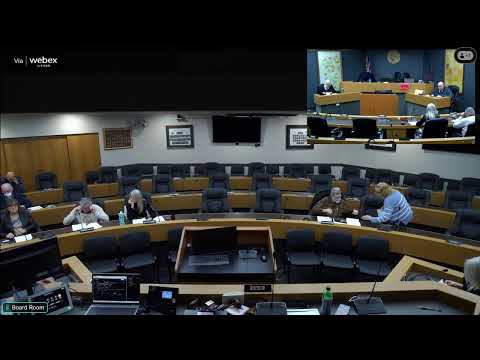
Susan Dobbs, director of probation for the 13th Judicial Circuit, presented January 2025 statistics and reviewed department bills at the circuit-wide meeting Feb. 12, which represents LaSalle, Bureau and Grundy counties.
Dobbs opened with adult probation figures, saying that in LaSalle County probation fees newly ordered in January totaled $10,950, with $11,730 ordered to date and $6,506.89 collected for the month (collected to date: $11,136.75). For Bureau County she reported $2,400 collected in January and $3,600 collected to date (individual monthly breakdowns not specified). Grundy County showed $6,025 ordered in January, $9,950 ordered to date, and $2,203 collected in the month (collected to date: $3,893).
Dobbs said active adult caseloads were 527 in LaSalle County, 116 in Bureau County and 138 in Grundy County; administrative adult caseloads were 274 in LaSalle, 64 in Bureau and 200 in Grundy. She defined administrative cases as supervisees who live out of county or out of state and are supervised elsewhere. Total active adult caseload for the 13th Circuit was 781; total administrative adult cases were 538; total adults on probation across the circuit was 1,319.
For juvenile cases in January, Dobbs reported LaSalle County had 121 active juvenile cases and 9 administrative juveniles; Bureau County had 16 active and 6 administrative juvenile cases; and Grundy County had 16 active and 1 administrative juvenile case.
Dobbs described an ongoing court-ordered residential placement for a juvenile who has been at Focus House (Ogle County) since approximately October 2024. She said the placement was for a court-ordered treatment program that the juvenile is attending; the facility’s per-day cost for this placement is $250, and the payment is charged to the counties’ children’s fund (part of local general-fund accounting for court-ordered placements). Dobbs said counties monitor placements and attempt all local, less-restrictive options before residential placement.
On placements Dobbs explained: “There’s an evaluation that was done by a professional psychologist and they made a recommendation for residential placement and then the court made that determination to follow that recommendation and order them to that placement with the agreement with the parents.” She added that placements require evaluation by the receiving facility and that facilities perform their own interviews and assessments.
Dobbs said the circuit contracts for specialized psychological evaluations; she described the evaluator involved in this case as a local psychologist who also works with other county juvenile probation offices and who is contracted — not employed — by the circuit. She said the circuit performs due diligence to avoid conflicts of interest.
Dobbs noted that if treatment is unsuccessful and the facility recommends further action, probation staff and the facility meet to discuss exit strategy and may bring the juvenile back to court for judge review. “At some point if they get unsuccessfully discharged, perhaps their only other option is some of the state IDJJ, the Illinois Department of Juvenile Justice,” she said, adding courts are required to exhaust local options under the Juvenile Court Act of 1987.
On department expenditures, Dobbs reviewed bills presented for each county. Reported totals were: - LaSalle County bills: $11,929.04 (listed categories included drug test kits, software maintenance, mileage, cell phones, three psychological evaluations and new laptops); Dobbs also noted the existing residential placement billed at $250 per day and paid from the children’s fund. - Grundy County bills: $2,857.53 (items listed included drug testing supplies, bottled water, cell phones, training, membership dues and office supplies). Dobbs said Grundy moved its county phone plan from AT&T to Cricket in December to reduce monthly costs and that the six-line plan would cost roughly $33 per line. - Bureau County bills: $1,431.36 (usual items plus vehicle maintenance); Dobbs also reported a January payment of $2,890 to McLean County Detention from the Aid to Dependent Children fund and said that fund’s current balance was $241,782.09.
The meeting chair called for and received a motion to accept the previous meeting minutes; the chair then called for a motion to accept the bills for payment. Both motions passed on voice vote (ayes; no roll-call tallies were provided). The chair closed the bills item and opened county business.
Dobbs alerted the gathered county representatives that the Administrative Office of the Illinois Courts (AOIC) — under Supreme Court oversight — has issued new probation fee standards that are to go into effect this month. She said the prior standards dated to 2012 and that the new AOIC standards will change how probation fees may be expended. Dobbs said the circuit’s probation budgets have been largely funded by probation fees and that the office will meet with AOIC for clarification and then brief the county board chairs. “We’ll meet with the board chairmans to go over to some, as best we can with what information we have,” she said.
No formal decisions were recorded regarding the AOIC standards at the meeting; Dobbs said she expected follow-up meetings and more information to be shared with county board chairs. The chair announced the next circuit meeting is scheduled for March 12.
Ending: The meeting adjourned after the chair called for a motion to end; a second was given, a voice vote approved adjournment and the meeting closed.