Get Full Government Meeting Transcripts, Videos, & Alerts Forever!
Get email alerts on the School Funding topic
No spam. Unsubscribe anytime.
Racine Unified superintendent urges approval of $190 million, five-year operating referendum on April 1
Summary
Superintendent Kaiasky asked district residents to approve a five-year, $190 million nonrecurring operating referendum on the April 1 ballot to cover day-to-day costs, citing decade-long shortfalls in state funding and recent local budget cuts.
Superintendent Kaiasky of the Racine Unified School District on Monday asked district residents to approve a five-year, $190 million nonrecurring operating referendum that will appear on the April 1 ballot.
Kaiasky said the proposed operating referendum would pay for day-to-day expenses including educational programs and staff salaries rather than construction projects. “Vote April 1, because strong schools build strong communities,” he said.
The superintendent emphasized the difference between this measure and a 2020 referendum the district approved for capital needs. He said the 2020 referendum was a capital referendum and “that money only can be used to pay for construction projects, including building new schools, additions and renovations.” The current measure, he said, would fund recurring operational needs that state aids and property taxes alone have not covered for more than a decade.
Kaiasky told listeners the district has made cuts to balance its budget, trimming about $34 million in the last year. He also cited statewide trends in 2024, saying “more than 200 districts asked their communities to approve a referendum and 145 of them were approved.”
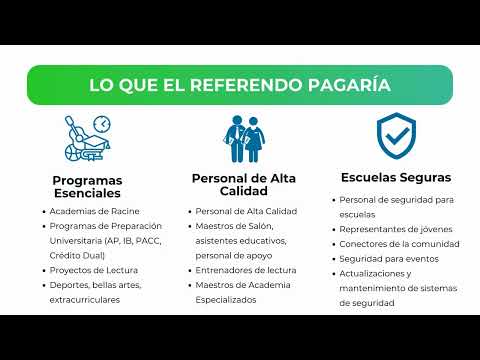
On tax impact, Kaiasky said the proposal would cost approximately $35 per $100,000 of property value — roughly $70 a year for a home valued at $200,000. He framed the request as a way to maintain programs the district called essential, including academies, reading programs and efforts to retain teachers and other staff, as well as investments in school security and class-size preservation.
The message was delivered as a public communication from the superintendent; the transcript does not record any formal school board vote or motion on the referendum during this recording. The district’s statement identifies the measure as nonrecurring and operating-focused; it does not specify implementation details such as the ballot language, exact tax levy mechanism, or how proceeds would be allocated between schools and programs beyond the categories the superintendent named.
Election day is April 1. The superintendent said approval would allow the district to avoid deeper cuts that, he warned, could “drastically” affect the quality of education provided to students and have negative community effects.