Get Full Government Meeting Transcripts, Videos, & Alerts Forever!
Get email alerts on the Language Access topic
No spam. Unsubscribe anytime.
Spokane adopts language‑access ordinance to recruit bilingual and multilingual city staff
Summary
The City Council approved an ordinance to strengthen language access and to recruit bilingual and multilingual applicants for city positions, following extensive public testimony and a pilot of translation technology.
Spokane City Council passed an ordinance amending municipal code to expand language access and to encourage recruitment of bilingual and multilingual applicants for city jobs.
Council and staff described the ordinance as a step to improve access to city services for residents who are not proficient in English. Council highlighted past difficulties during pandemic relief distribution and permitting processes when language barriers arose, and cited a technology pilot the city is testing to provide live translation to the public.
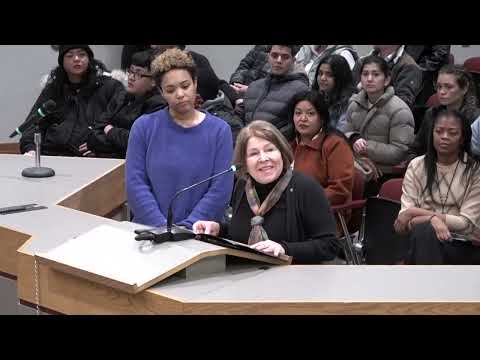
Supporters urged the council to act to reduce barriers for residents and to improve public safety and access to services. David Brookbank, Justice Sprawl, Amy DeRas (community programs director at Latinos in Spokane), Councilmember Navarrete and other speakers said better language access will help immigrants, limited‑English residents and working families to interact with city agencies, access services, and participate in civic life. Councilmember McAfee described situations where family members, including children, had previously been forced to interpret for parents during permitting or other city business and said the lack of access slows critical public processes.
Opponents during public comment included speakers who argued hiring should be merit‑based and that English should remain the primary language for official city business (public commenters Will Hewings and Justin Haller voiced those views). Several commenters pressed that language skills should not automatically result in pay differentials unless the language skill is a core job requirement.
Implementation details discussed at the meeting included a language‑access pilot using live translation equipment (presented earlier in the session by Alex Gibleisco) and a focus on priority languages identified in local data: Spanish, Vietnamese, Ukrainian and Marshallese were cited as among top languages of concern. Councilmembers said they intend to leverage technology where possible to broaden access while saving costs, and to use in‑person bilingual staff where necessary. The ordinance text includes provisions for recruitment priorities and procedures; the council voted to adopt the ordinance after public testimony.
Outcome: The ordinance (identified in the agenda as Ordinance C36630 in the meeting record) was approved by council vote. Councilmembers urged ongoing implementation, staff training, and use of technology to expand services.