Get Full Government Meeting Transcripts, Videos, & Alerts Forever!
Get email alerts on the Homelessness topic
No spam. Unsubscribe anytime.
Marathon County panel extends homelessness task force and recommends county match of Wausau shelter funds
Summary
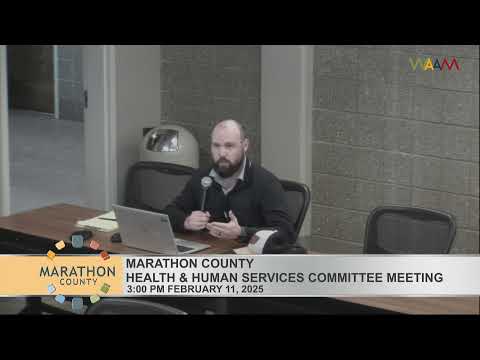
The Marathon County Health & Human Services Committee voted to extend the joint City of Wausau–Marathon County Homeless Task Force charter through April 1, 2025, and recommended the county match or exceed the City of Wausau’s recent shelter funding commitment.
The Marathon County Health & Human Services Committee voted to extend the charter for the joint City of Wausau–Marathon County Homeless Task Force through April 1, 2025, and approved a recommendation that the county match or exceed the City of Wausau’s recent funding commitment for year‑round emergency shelter.
The task force, composed of city and county representatives and community partners, has tracked local homelessness and recommended both near‑term and longer‑term actions. Committee members stressed the immediate risk that shelter capacity will lapse in April if funding and operational plans are not in place.
Task force members and county staff told the committee that an estimated “over 200 people and families” are currently experiencing homelessness in Marathon County, including many who are not visible on the street because they are couch‑surfing or staying in vehicles. Chief Matt Barnes, Wausau police chief and a task force member, described current shelter capacity: “The current capacity of the Catholic Charity Shelter is 30 beds per night. And then when the temperature gets below 10 degrees, they up it to 40. When it's 10 below, or colder, they activate community on call, which then adds another 15 beds.” He added his estimate that a practical shelter capacity target for the community is “somewhere between 50 and 60.”
Administrator Leonard summarized the task force’s actions: the group answered in the affirmative that “a mechanism is needed to engage surrounding communities” where people seek resources; it recommended collaboration between the city and county on short‑term shelter needs; and it recommended developing a long‑term strategic plan modeled in part on La Crosse’s Pathways Home program. Leonard also described the city’s prior action: the City of Wausau allocated $400,000 over two years toward shelter services, which staff and supervisors discussed as roughly $200,000 for 2025.
On the specific agenda items, the committee approved three actions brought forward by the task force. First, the committee approved extending the task force charter through April 1, 2025 (resolution 6B2 on the meeting agenda). Second, the committee approved an amendment to the charter to add a business community representative and a member with lived experience of homelessness (6B3). Third, the committee approved a recommendation that Marathon County “match or exceed the commitment made by the city to address the need for 3‑65 shelter,” with a committee motion proposing $200,000 per year for the next two years and asking county finance staff to identify the funding source. Each item passed by voice vote; no roll‑call tally was recorded in the committee minutes.
Members repeatedly emphasized uncertainty about the exact cost of expanded shelter services and said a request for proposals (RFP) being prepared by the City of Wausau would better define operational expectations and costs. City staff said there is currently no contract in place beyond April; the city intends to issue an RFP that will define measurable outcomes and capacity expectations before a final contract is awarded. County members asked that any county funding decision consider the RFP’s details and that county finance staff identify the most appropriate funding source—options discussed included general fund/levy sources, one‑time reserves, or grants including opioid settlement funds if allowable.
Committee members and task force participants said a joint city‑county approach is necessary because many people who use shelter and support services come to Wausau for existing resources. Task force members also noted the group needs more time to finalize long‑term recommendations and deliverables, especially outreach to surrounding municipalities and business community engagement. The task force formally asked to extend its charter to complete that work.
Looking ahead, county staff and task force members said the next steps are to finalize the city RFP, identify precise monthly costs for enhanced shelter capacity, confirm potential county funding sources, and present a funding recommendation to the full county board. The committee’s approval instructs county staff to prepare those details for board consideration.