Get Full Government Meeting Transcripts, Videos, & Alerts Forever!
Get email alerts on the Planning Services 2025 topic
No spam. Unsubscribe anytime.
Auburn planners lay out 2025 agenda: housing rules, battery storage, SEPA thresholds and downtown plan
Summary
Planning staff told the City Council on Feb. 10 that the 2025 work program will focus on implementing recent state housing laws, writing rules for battery energy storage systems, updating SEPA thresholds and completing a downtown plan and related design standards.
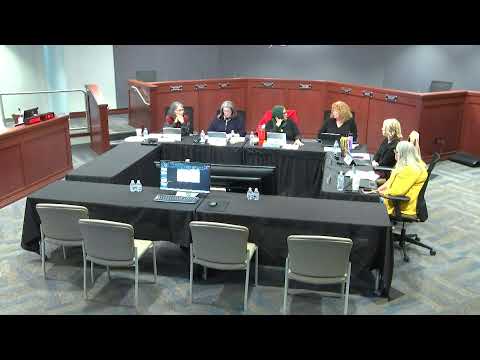
Alexandria Tighe, planning services manager in Auburn’s Department of Community Development, told the City Council at its Feb. 10 study session that the department’s 2025 work program will emphasize implementing state housing law changes, producing critical-area updates, drafting local rules for battery energy storage systems and advancing a downtown plan and design standards.
Tighe said the city will revise use tables and definitions required under the state law often referenced as House Bill 1220 (cited in the presentation as RCW 35 21 6 83) so that permanent supportive housing (PSH) and indoor emergency housing cannot be prohibited in zones where residential dwelling units or hotels are allowed. “We cannot prohibit permanent supportive housing in any zone in which residential dwelling units or hotels are allowed,” she said, noting the code changes will include reasonable standards for occupancy, spacing and intensity of use.
The work program also includes drafting supplemental standards to implement recent state guidance about religious organizations hosting people experiencing homelessness (presentation citation: RCW 306-61290) and creating local rules for battery energy storage systems (BESS). Tighe described BESS as devices that range from small home battery packs to grid-scale systems and said Auburn currently lacks specific development rules for them. “We will work with Valley Regional Fire Authority, our building official,” Tighe said when asked how the city will address public-safety and emergency-response concerns for BESS proposals.
Staff proposed raising the SEPA (State Environmental Policy Act) exemption thresholds to the maximum allowed for fully planning GMA counties under WAC 197-11 to streamline review of minor projects, while retaining city authority to require SEPA when a responsible official finds a reasonable likelihood of a moderate adverse environmental impact.
Tighe said the city will also update its critical areas regulations to reflect best available science and state agency guidance; those rules were last updated in 2018 and adopted in 2019. She said the downtown plan refresh — funded by a Washington State Department of Commerce grant — has selected Alternative 3 in the final EIS and would direct higher growth, including taller building areas, and will be submitted to Commerce and Puget Sound Regional Council ahead of planning commission and council review with a target of June 2025 for adoption. “Alternative 3 represented the highest growth among the three alternatives,” she said, adding it includes increased building heights in portions of downtown.
Tighe also described plans to update mixed-use and multifamily design standards (last updated in 2010), incorporate “middle housing” guidance for 2–6 unit residential types, and finish a Climate Action Plan this spring with public engagement events and an open house planned for Feb. 19.
Council members pressed staff for specifics: Council member Baldwin asked whether BESS standards will consider siting near schools and the need for specialized fire response; Tighe and staff said they are consulting with Valley Regional Fire Authority and other jurisdictions. Council member Boseman asked whether updated design standards will incorporate climate-resilient, passive design; Tighe said the current standards include a section for green building design and the update will review new technology and opportunities to incorporate sustainable features. Council member Tracy Taylor asked whether window operability and building-code fall-protection rules limit openable windows in taller buildings; a staff member explained building code fall-protection requirements can restrict how far windows may open above certain heights.
The presentation covered the city’s annual amendments process under the Growth Management Act (cited as RCW 36 70 A) and noted staff expect cleanup items from the recent periodic update, with a likely inclusion of the critical areas code in this year’s annual docket.
Staff emphasized that most items will require planning commission recommendation and council adoption and invited public and stakeholder engagement during code updates, planned action authoring, and the SEPA/planned-action EIS process.