Get Full Government Meeting Transcripts, Videos, & Alerts Forever!
Get email alerts on the Education Graduation topic
No spam. Unsubscribe anytime.
St. Vrain reports 94.3% on-time graduation rate, outlines interventions aimed at raising rates further
Summary
District staff presented official December Colorado Department of Education results showing a 94.3% on-time graduation rate for St. Vrain Valley School District No. Re1J and a 90% on-time rate for Hispanic students; the board heard a review of a multi-tiered set of interventions the district uses to keep students on track.
St. Vrain Valley School District No. Re1J officials reported on results released by the Colorado Department of Education showing a 94.3 percent on-time graduation rate for the district and a 90 percent on-time rate for Hispanic students.
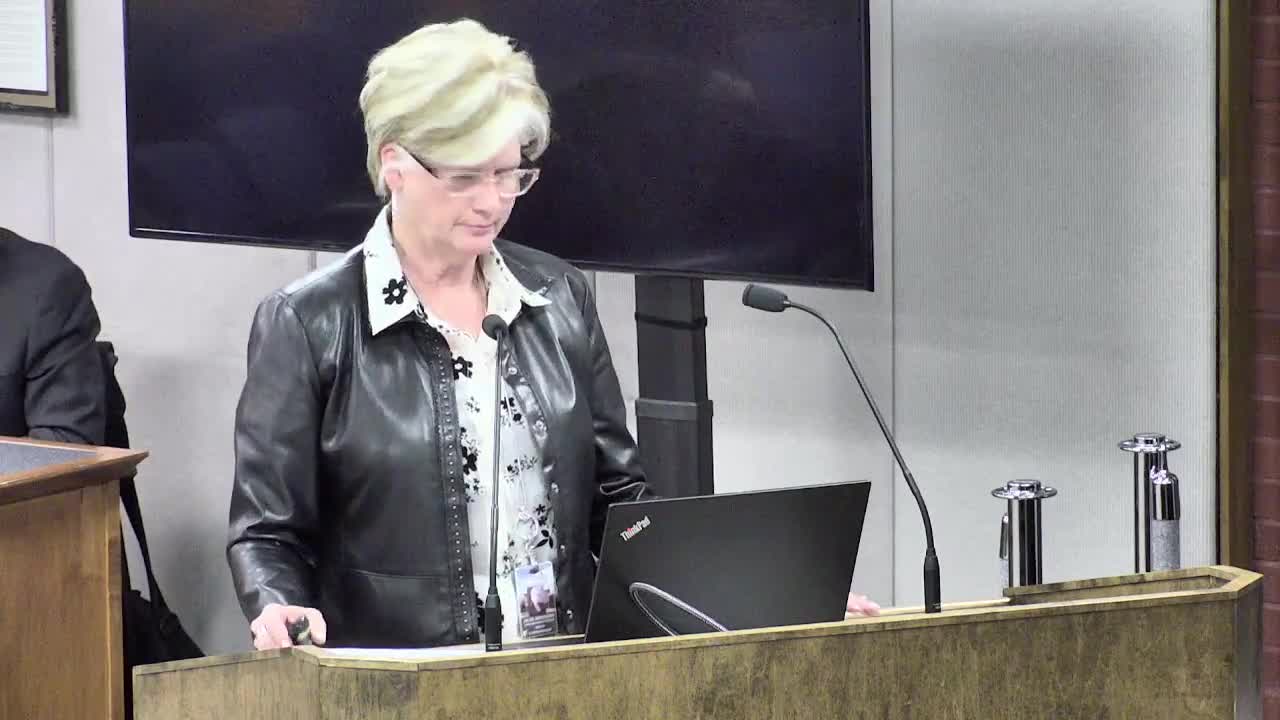
The presentation to the Board of Education on Jan. 22 came from Jackie Capuchin and included a review of districtwide strategies the administration said are driving the results, including a daily student-tracking tool, extended learning offerings and targeted recovery opportunities.
District Superintendent Don Haddad opened by noting the official December results and called out the district’s comparative performance in the metro area. "Saint Vrain once again has the highest graduation rate in the metro area of all of the large school districts at 94.3 percent on time," Haddad said.
Jackie Capuchin, who led the detailed briefing, said the district combines systemwide monitoring with school-level interventions. "Innovation at its core is about solving problems," Capuchin said. She described Grad Tracker, a district-built tool that staff use to monitor credits earned, attendance and course failures "on a daily basis," and an after-school academic assistance program (AAA) that runs two to three times per week at each high school.
Capuchin reviewed a suite of strategies the district cited as contributing to the results: regular meetings of area assistant superintendents with principals and counselors to review at-risk students, after-school and summer recovery ("e-credit" and short intensive units in January and June), transition programming for incoming sixth- and ninth-graders, and career- and technical-education pathways including P TECH sites that allow some students to earn an associate degree at no cost.
The presentation included data on dropout rates: the district’s overall 0.4 percent dropout rate for 2023–24 compared with the state’s 1.9 percent, and a Hispanic dropout rate of 0.7 percent compared with the state’s 3.1 percent. Capuchin said the district requires 24.5 credits to graduate, including three years of math and three years of science, and highlighted efforts to give students earlier exposure to higher-level math in middle school.
Board members asked for clarification about elementary-level growth measures and district plans to address areas that lagged on state growth indicators. Capuchin acknowledged uneven elementary scores and described additional elementary supports the charter and district schools are using, including a literacy teacher, a full-time English‑learner specialist and targeted Read Act supports.
Capuchin also said the district is exploring optional military-pathway supports, such as offering the ASVAB test to interested students and potential ROTC program partnerships aligned to local postsecondary options.
Board members praised the systemwide focus on both supports and high expectations and highlighted the district’s effort to make extra learning opportunities broadly available to students who want them. Capuchin said the district will continue refining interventions and monitoring results.
The presentation was informational only; no board action was taken on the graduation report.