Get Full Government Meeting Transcripts, Videos, & Alerts Forever!
Get email alerts on the Corrections topic
No spam. Unsubscribe anytime.
Kentucky Correctional Industries reports surplus, outlines sentence‑credit payouts and job programs
Summary
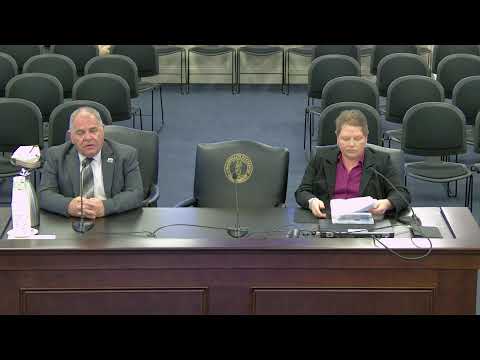
Hillary Daley, deputy commissioner of support services for the Kentucky Department of Corrections, told the House Committee on Justice, Public Safety and Judiciary subcommittee that Kentucky Correctional Industries operates 15 industries across 11 institutions and that, through Jan. 31, revenues exceeded expenditures by about $1 million.
Hillary Daley, deputy commissioner of support services for the Kentucky Department of Corrections, told the House Committee on Justice, Public Safety and Judiciary subcommittee that Kentucky Correctional Industries (KCI) is operating 15 industries across 11 institutions and employing more than 400 incarcerated people and 37 department staff.
Daley said KCI — "established in 1954" and described by her as the department’s longest‑running reentry program — includes four farms and plant operations that produce clothing, license plates, furniture, embroidery, metal work and other products. "Employing over 400 inmates and 37 department staff, KCI operates 15 industries in 11 of our institutions," Daley said.
The deputy commissioner told the committee that, through Jan. 31, KCI’s expenditures were about $5.8 million and that the program’s revenues were roughly $1 million greater than expenditures to date. She said most KCI funds are restricted and that the General Assembly provided a modest general‑fund appropriation this fiscal year. "We greatly appreciate the general fund support in investing in this highly important program for our department," Daley said.
Daley also reviewed the sentence‑credit program authorized in the biennial budget, which pays county jails for program completions and attendance. She told the committee the department recorded 37,113 program completions for fiscal year 2024 across prisons, jails and community supervision. For the current fiscal year, Daley said payments to jails through January included amounts the transcript records as $66,128,000 for 90‑day sentence credits and $1,654,800 for 60‑day sentence credits; she also said total expenditures through January for attendance and program completions for county jails were about $8.1 million. Daley said 67 county jails were participating as of the January report.
Committee members asked for clarifications about program finances and individual wages. Daley said pay for incarcerated workers varies by job: manufacturing positions are paid hourly "ranging from 68¢ an hour to $1.28 per hour" while farm work is paid a daily rate, "either $3.02 a day or $1.51 a day depending on whether they are eligible for work‑for‑time credit." She told the committee that inmates employed through the Prison Industries Enhancement Certification Program (PICEP) at the Kentucky Correctional Institution for Women earn a prevailing wage and cited an $11.18 per hour prevailing rate for PICEP work.
Lawmakers asked how inmate earnings are handled and whether deductions are taken for obligations such as child support. Daley said each incarcerated person has an individual inmate account in the offender management system where earnings are recorded and that court‑ordered deductions are processed automatically: "Our system is programmed to deduct that before the inmate actually receives the money in their account," she said. She added that deductions for child support or other obligations occur when court ordered.
On recidivism, a committee member cited a department figure that recidivism was 30.8 percent and noted that figure had declined about one percentage point; Daley said she did not have a multi‑year trend chart with her but offered to provide trend data and any available analysis showing potential cost savings tied to recidivism reductions.
Committee members also pressed for more documentation on how inmate wages are set and whether the department reviews rates annually; Daley said the department reviews wages when budget allows and agreed to produce additional details to the committee about the methodology behind current pay rates and any statutory or policy constraints.
The subcommittee requested that department staff provide follow‑up materials, including: a breakdown of KCI revenues and expenditures in the current fiscal year, the methodology for setting inmate pay rates, recidivism trend data, and clarifications on the county jail payments for program completions. The committee adjourned with a planned reconvening on Feb. 18.
Ending: The department committed to return the requested data to the subcommittee; no formal votes or policy changes were taken at the meeting.