Get Full Government Meeting Transcripts, Videos, & Alerts Forever!
Get email alerts on the Agriculture topic
No spam. Unsubscribe anytime.
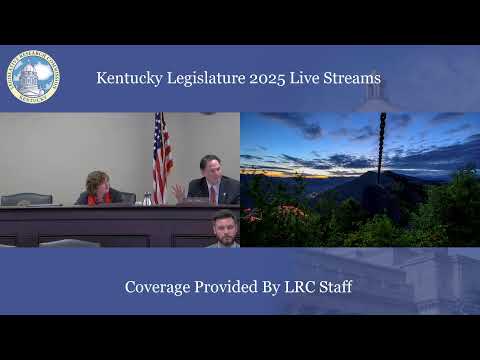
Senate Agriculture committee debates licensure for equine dental providers; committee substitute adopted, final vote postponed
Summary
The Senate Committee on Agriculture heard testimony for and against Senate Bill 69, a proposal to create a licensed credential for equine dental providers; the committee substitute was adopted, but a planned vote on final passage was rescinded and the bill was left for further consideration.
Senator Robin Webb, a member of the Senate Committee on Agriculture, introduced Senate Bill 69 on behalf of a working group seeking to create a licensed pathway for equine dental providers and chiropractors.
The bill would revise the Veterinary Practice Act to define a scope of practice for non‑veterinarian equine dental providers, establish credentialing and oversight by the Kentucky Board of Veterinary Examiners, and create disciplinary procedures and continuing education requirements for those providers, proponents told the committee.
The issue matters to rural horse owners and to veterinarians because it touches on access to basic equine dental care, professional accountability and the handling of sedatives and other controlled substances used in oral exams.
Proponents said the bill creates a legal pathway, insurance access and oversight for individuals who have long performed basic equine dental work. Justin Talip, identified in committee testimony as an IED‑certified equine dental provider from Lawrenceburg, Kentucky, said, “this bill does not change the way we do business here in Kentucky and have for generations.” Talip described the bill’s scope as limited: it “simply allows us to float and balance molars and incisors, remove caps, which are deciduous or baby teeth, and wolf teeth. Anything basically anything beyond that stays veterinary medicine and we then refer to veterinarians.”
Deborah Hamelback, executive director of the Kentucky Veterinary Medical Association, told the committee the measure was developed through the modernization of the Veterinary Practice Act and a multi‑stakeholder working group. “We wanted to have a way to have them be accountable,” she said, and noted many practitioners already hold certification and continuing education.
Michelle Shane, executive director of the Kentucky Board of Veterinary Examiners, said the board considers the bill the strongest compromise possible that carves out equine dental practice while preserving veterinary medicine. “Related to disciplinary actions, there is a regulation in place that would be followed, in order to have due process procedures,” Shane said.
Opponents, including veterinarian William (Beau) Rainbow, urged stricter standards and objected to parts of the bill they said would permit long‑time lay practitioners to be grandfathered in without testing. Rainbow, owner of Kentucky Equine Veterinary Dental Specialists, said he was “against SB 69 firmly, for a number of reasons,” and argued that oral exams and many dental procedures require the training and oversight of licensed veterinarians. He criticized a proposed grandfather clause and expressed concern about permitting people who have not taken veterinary‑technician‑level training to perform work that often requires sedation and comprehensive oral exams.
Committee members pressed proponents and opponents on education, continuing education and how sedatives would be handled. A witness with the International Association of Equine Dentistry told the committee that IAED certification requires formal training (described in testimony as at least 240 hours), submission of clinical case logs (150 cases cited), passing written and practical exams with an 80 percent pass rate, and about 12 hours of continuing education per year.
The committee first approved a committee substitute for the bill on a motion by Senator Webb, seconded by Senator Yates; the chair announced, “Ayes have it,” and the committee substitute was adopted. The committee noted a fiscal note had been requested but not yet received and said it would be added once available.
Later in the hearing Senator Yates moved to take the bill up for a final vote; Senator Wilson seconded and a roll call began. Several senators voiced concerns or indicated they would vote no pending amendments or answers to testing and certification questions. The motion to proceed to a vote was then rescinded and the chair said the item was “just for discussion only at this point” and requested more time to revisit the bill with members and witnesses available.
The committee did not take a final vote on SB 69 during this session; senators asked for more time to review testing, grandfathering language and discipline procedures before advancing the measure.
Votes at a glance: - Committee substitute for SB 69 — Moved by Senator Robin Webb; seconded by Senator Yates; outcome: adopted (chair announced “Ayes have it”). Fiscal note requested but not received. - Motion to proceed to a final vote on SB 69 — Moved by Senator Yates; seconded by Senator Wilson; roll call begun and then rescinded; outcome: postponed/returned to discussion.
Looking ahead, committee members and witnesses agreed to meet individually or in future committee time to resolve questions about certification and disciplinary procedures before bringing the bill back for a formal vote.