Get Full Government Meeting Transcripts, Videos, & Alerts Forever!
Get email alerts on the Ems Funding Medicaid topic
No spam. Unsubscribe anytime.
Committee approves bill letting public EMS agencies opt into Medicaid supplemental payment program
Summary
House Bill 152 cleared committee after proponents — including local fire/EMS chiefs — said the bill allows public EMS agencies to voluntarily use intergovernmental transfers to draw down federal Medicaid funds, increase reimbursement for Medicaid runs and place no requirement on the general fund.
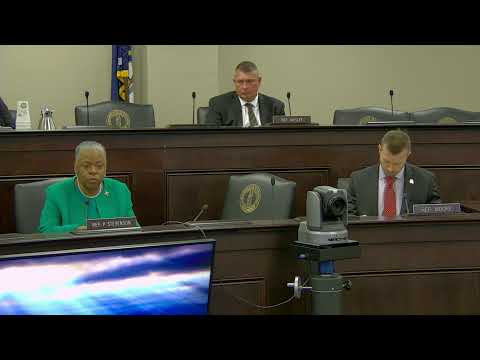
The House Standing Committee on Veterans, Military Affairs and Public Protection on Feb. 2025 reported House Bill 152 favorably after testimony from lawmakers and local fire and EMS officials that the measure allows public EMS agencies to voluntarily opt into a Medicaid supplemental payment program.
State Representative Michael Meredith sponsored the bill and described the mechanics: a public EMS agency may make an intergovernmental transfer (IGT) to the state Medicaid department; the state then draws down additional federal funds to supplement Medicaid payments. The substitute amendment approved by the committee adjusts the program's start date, caps the administrative fee at $200,000, and specifies that no state general fund dollars would be used to run the program.
Chief Nick Clark of Saint Matthew's Fire and EMS in Jefferson County and Todd Early, deputy chief of Fern Creek Fire and EMS, testified about local fiscal impacts. Clark said that for Medicaid medical runs in February 2023 his agency's total costs were about $2,100,000 and that collections were about $336,000 (approximately 16.5 percent of costs). He said passage of the program would have allowed his agency to draw an additional roughly $1,100,000, bringing Medicaid-related collections to about $1,400,000 (about 68 percent of costs), with the agency voluntarily supplying a state-match payment of about $31,000 to draw down an additional $80,000 in federal funds in the example he gave.
Committee members asked how agencies determine a Medicaid run (answer: determination comes after the run when insurance/payment is processed) and whether changes to Medicaid matching rates could affect the program (answer: yes, changes to match rates would change the federal/state draw-downs). The committee recorded a motion and second, and the bill passed committee with a favorable recommendation as amended.
House Bill 152 now proceeds to the full House with committee endorsement.