Get Full Government Meeting Transcripts, Videos, & Alerts Forever!
Get email alerts on the Aquaculture topic
No spam. Unsubscribe anytime.
Florida clam and oyster producers describe storm damage, ask lawmakers to broaden aid and infrastructure support
Summary
Producers from Cedar Key and Wakulla County told the Committee on Agriculture about Hurricane damage, storm-driven production losses and limits in existing farm recovery programs, and asked the Legislature to adapt programs and support local nursery and workforce development.
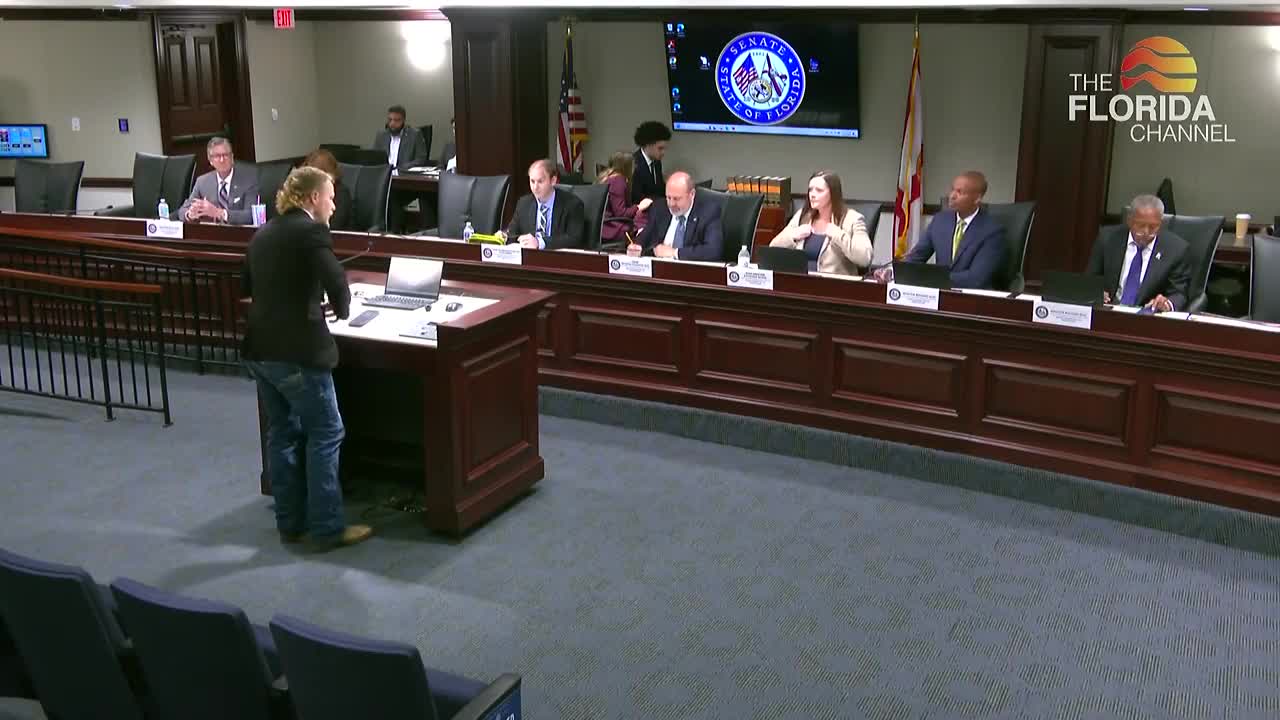
The Committee on Agriculture on an unspecified date heard from clam and oyster producers who described major storm damage to gear and stock, steady market growth, and difficulty accessing some existing agricultural recovery programs.
Timothy Solano, a second-generation clam farmer and secretary of the Cedar Key Aquaculture Association, told the committee that clam farming supports a wide regional supply chain and that Cedar Key accounts for the vast majority of the state’s production. "We service 60%...of the Costco stores, nationwide here in The United States with clams," Solano said. He told lawmakers the sector reported $33,000,000 in sales in 2023 and shipped more than 200 million clams that year, with roughly 90% of that production coming from Cedar Key.
Solano described repeated storm damage since 2023 that lengthened production cycles and destroyed equipment and product. He said storm tides exceeded what his facilities normally experience, and that Hurricane Adalia and other storms carried dock and building debris across clam leases, sweeping away clam bags that cost about $10 each. "We lost about 6,000 in Adalia...We're at about 8,000 bags we're missing. So in a total, we have over a hundred thousand dollars just in material that we've lost from the 2 storms," Solano said. He also credited a February 2024 dislocated workers program with helping farmers pay crews to clean and repair farms.
Kane Grama, owner-operator of Pelican Oyster Company in Wakulla County, described a similar pattern for oyster growers: severe losses to Hurricane Michael and later storms, limited access to traditional agricultural compensation, and financial barriers to recovery and infrastructure upgrades. Grama said he holds five state leases totaling about 7.5 acres and that local leases are generally about 1.5 acres each. He described investing in more resilient gear after Hurricane Michael and said the investment paid off during later storms. "For the first time, I had access to low interest funding opportunity...which has always been a significant barrier," Grama said, and he called for state support for business-recovery and low-interest loan programs tailored to aquaculture.
Both producers asked lawmakers to make existing agricultural aid and cost-share programs more clearly available to aquaculture operations (clams, oysters and other shellfish) and to expand in-state seed and nursery capacity. Grama said establishing an oyster seed nursery in Florida would reduce dependence on out-of-state supply and help sustain future production and restoration efforts. He also urged incentives for student internships and workforce training so farms can hire locally.
Committee members thanked the presenters and asked questions about lease sizes, the number of farms and typical production cycles. Senators noted the industry’s resilience and signaled support for adapting state programs to include aquaculture where eligible.
The committee did not take formal legislative action on the presentations; the session concluded later with a procedural adjournment.