Get Full Government Meeting Transcripts, Videos, & Alerts Forever!
Get email alerts on the Dhs Budget Medicaid topic
No spam. Unsubscribe anytime.
DHS presents $575 million savings package: telehealth extension, pharmacy carve‑out and HMO surcharge increase
Summary
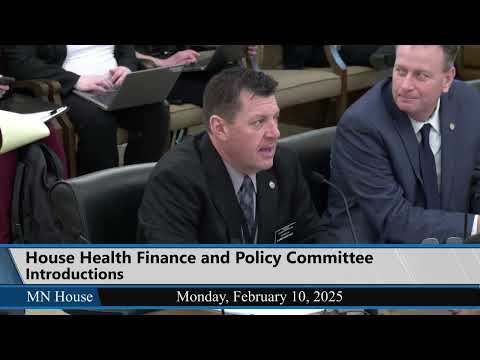
Interim Commissioner Shereen Gandhi and DHS Budget Director Elise Bailey outlined the Department of Human Services’ budget proposals to the House Health and Finance Policy Committee on Feb. 10, describing roughly $575 million in projected savings over four years and multiple operational and program changes.
Interim Commissioner Shereen Gandhi and DHS Budget Director Elise Bailey outlined the Department of Human Services’ budget proposals to the House Health and Finance Policy Committee on Feb. 10, describing roughly $575 million in projected savings over four years and multiple operational and program changes.
"At DHS, our mission is that in collaboration with community and partners, we support people to thrive in community and live their healthiest, fullest lives," Gandhi told the committee as she framed the department's role and the scale of programs under its jurisdiction.
DHS overview and scale
Elise Bailey told lawmakers DHS’s FY26 budget is about $24 billion in all funds, with roughly 54% from federal sources and about $9.4 billion from the state general fund. The department said it directly impacts more than a quarter of Minnesotans in its programs; in FY24 DHS served about 1.3 million Medicaid enrollees and 42% of Minnesota children receive health coverage through public programs.
Major proposals presented
- Pharmacy carve‑out: DHS proposes carving prescription drugs out of managed care for Medical Assistance (Medicaid), moving them to fee‑for‑service so the state can access Medicaid prescription-drug rebate revenue and realize savings (DHS estimated roughly 30% savings on drugs affected by 340B interactions). DHS said the savings result from accessing federal rebate programs and reducing managed‑care administrative costs.
- Extend audio‑only telehealth access: the governor proposes extending authorization for audio‑only telehealth services in Minnesota Health Care Programs through July 1, 2027. DHS said the 2024 study by MDH and DHS found continued benefit for populations with transportation or technology barriers, particularly in Greater Minnesota.
- Increase HMO surcharge: the governor proposes increasing the HMO surcharge from 0.6% to 1.25% of premium revenue with a corresponding adjustment in the Healthcare Access Fund appropriation for Medical Assistance (a $25 million shift to the Healthcare Access Fund was noted in testimony).
- Non‑emergency medical transportation (NEMT): DHS proposed administering NEMT through a single statewide administrator to improve oversight, negotiate rates and gain efficiencies; DHS estimates vendor administration costs in the proposal and expects improved uniformity of access.
- Eliminate optional chiropractic benefit: the governor’s package includes removing the chiropractic benefit from Medical Assistance as a discretionary savings item; DHS described it as an optional service under federal rules (not required to meet federal Medicaid conditions).
- Extend the drug formulary committee and preserve supplemental rebate access: DHS proposed preventing the sunset of the drug formulary committee (through June 30, 2027) so the state continues to gain supplemental rebates through the preferred drug list process.
- Technical clarifications: statutory clarifications for federally qualified health center (FQHC) rate methodology upon mergers and ownership changes.
Savings and impacts
Bailey and Assistant Commissioner Conley presented estimates showing approximately $575 million in four‑year savings across several proposals with the pharmacy carve‑out and NEMT restructuring identified as significant drivers. DHS emphasized the federal match component—about 54% of DHS funding comes from federal sources—and warned that federal-level changes remain the largest uncertainty for long-range forecasting.
Committee feedback and concerns
Members asked for additional data and raised concerns about access and implementation. Representative Keeler and other Greater Minnesota lawmakers asked DHS to disaggregate telehealth use to show where audio‑only services fill provider gaps versus substituting for available in‑person care. Several members urged caution on a single NEMT administrator, citing past problems with brokered NEMT models and the logistical complexity of transporting people with medical needs.
Representative Franson and other members pressed DHS on fraud prevention and the department’s use of resources to detect improper payments; DHS pointed to its Office of Inspector General and ongoing efforts but offered to follow up with more detailed materials.
Questions were raised about the proposed elimination of chiropractic coverage and what optional services could be targeted instead; DHS staff said chiropractic is optional under federal Medicaid rules and offered to provide a list of other optional benefits.
No formal votes were taken at the hearing. DHS staff offered to provide additional data on enrollment trends after the Medicaid unwinding, regional telehealth usage, and clarifications on vendor and operational assumptions.
Ending note
Gandhi and DHS budget staff closed by inviting continued work with the committee to refine assumptions and provide requested data. Bailey said DHS has formed internal teams to monitor federal developments that could affect the department's funding and would update lawmakers as changes occur.