Get Full Government Meeting Transcripts, Videos, & Alerts Forever!
Get email alerts on the Youth Programs topic
No spam. Unsubscribe anytime.
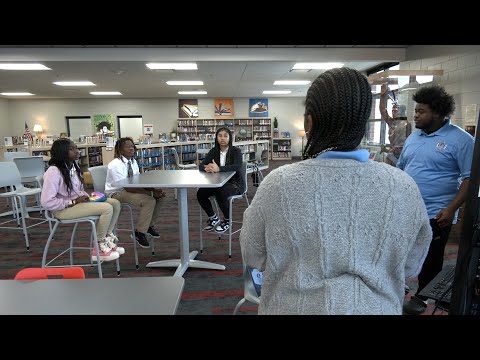
Students say Positive Peer Influencer program helps middle-schoolers prepare for high school
Summary
Students and a Savannah-Chatham County Public School System representative described the Positive Peer Influencer program, a partnership with the Mediation Center of the Coastal Empire, as teaching leadership skills and helping middle-school students navigate the transition to high school.
Students and a district representative described the Positive Peer Influencer (PPI) program as a way for middle-schoolers to learn leadership skills and prepare for high school.
The program, presented as a partnership between the Savannah-Chatham County Public School System and the Mediation Center of the Coastal Empire, was described by student participants as offering candid conversations with high-school peers and practical guidance about academics and relationships.
"It inspired me to be a better person, not a follower, but a leader," said a student. Another student said the program "really gives us a space to... open up," and described being able to "ask them real questions because I know they're experiencing, like, right now in this day and time." A separate student said the talks "go a long way" and called the program a "domino effect" for leadership.
Ken Slatz, a representative of the Savannah-Chatham County Public School System, described the PPI program as "one example of the partnership between SCCPSS and the Mediation Center of the Coastal Empire, working to help our youth navigate the path from middle school to high school." Slatz said the program aims to give students leadership skills early so they can connect with scholarships and leadership-based programs when they reach high school.
Participants emphasized that peer-to-peer advice can provide practical insight that adult advisors cannot replicate. "It's nothing hearing from your peer who's actually there living it because they can give you the insight, give you the scoop," one student said. Students described specific outcomes they expect, such as avoiding peer pressure and resisting drugs or contraband.
Remarks in the recorded transcript named individual student participants (Jeriah, Janessa and Draymond) as examples of youth taking part in peer-influence activities; the transcript did not identify which anonymous speaker lines correspond to those named students.
No formal actions, votes or funding amounts were recorded in the transcript provided. The remarks recorded focused on describing program goals and student experiences rather than policy or budget decisions.
The comments were brief and limited in scope: four distinct speakers appear in the recording (three students and one SCCPSS representative), and the total recorded excerpt covers roughly two and a half minutes of remarks. There was no discussion of program budget, formal evaluation metrics, or implementation timeline in the provided transcript.