Get Full Government Meeting Transcripts, Videos, & Alerts Forever!
Get email alerts on the Housing Rehabilitation topic
No spam. Unsubscribe anytime.
Neenah recap of 'Houses into Homes' shows 20 projects in 2024; citywide expansion planned for 2025
Summary
The City of Neenah reported 20 completed projects under its Houses into Homes program in 2024, funded by tax-increment financing (TIF) extension revenue; staff told the council the program will be opened citywide in 2025.
Neenah community development staff told the Common Council on Feb. 5 that the Houses into Homes program completed 20 projects in 2024 and will expand citywide in 2025.
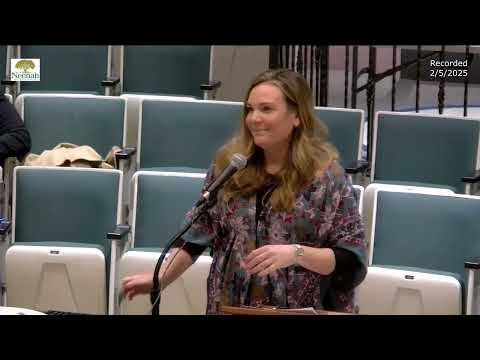
"We had a wonderful time in 2024 administering the Houses into Homes program," Community Development Specialist Samantha Jefferson said in a presentation to council members, summarizing project types and funding. Jefferson said the program’s funding came from tax-increment financing (TIF) extensions that allowed the city to capture increment when TIFs 5 and 6 closed.
The program has two components: a curb-appeal grant for exterior work and a larger "refresh and renew" loan program for more comprehensive exterior and interior work. Jefferson said both are matching programs: owner-occupied properties supply 50% of project costs and investment properties supply 75%.
In 2024 the city reported 16 curb-appeal projects and four refresh-and-renew projects. Jefferson told the council the city invested about $87,000 in the program last year; roughly $45,000 of that was issued as loans that will be repaid to the program when homes sell or owners repay sooner. One additional project is under contract and would add about $15,000 in pledged loan funds when completed.
Jefferson showed before-and-after photos and said the program worked with partners including Habitat for Humanity on several projects. She said the program’s pilot area on Doty Island produced manageable demand and that the city will open eligibility to the entire city in 2025.
Council members followed with questions about outreach, eligibility and whether the program could be used to increase housing quantity as well as quality. Jefferson said the first year relied mostly on organic interest and a Doty Island newsletter; the council agreed to expand marketing in 2025. On the question of increasing housing supply, Jefferson and other staff said the TIF funds are available for affordable-housing projects but cautioned the $850,000 captured from TIF extensions is a limited pool and would be used selectively.
Alderman Weber asked how many more parcels would become eligible under the citywide expansion; staff estimated roughly four to five times as many eligible parcels in 2025 compared with 2024, based on an internal parcel map of eligibility.
Jefferson told the council the city budgeted $200,000 last year and again in the current year to support the two programs.
The presentation concluded with Jefferson saying staff will watch demand as the program opens citywide and will refine outreach and eligibility details as needed.