Get Full Government Meeting Transcripts, Videos, & Alerts Forever!
Get email alerts on the Contract Law topic
No spam. Unsubscribe anytime.
Appellate panel reviews partial-summary-judgment win in off-the-books property sale dispute
Summary
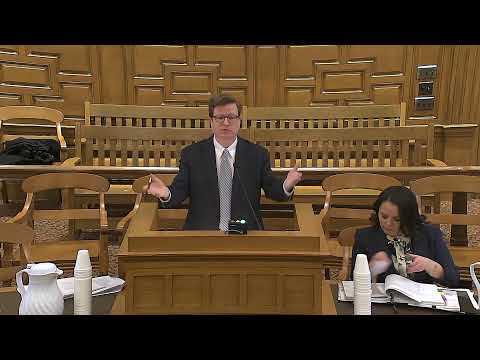
The Massachusetts Appeals Court on Feb. 11, 2025 heard argument in Perez v. Diaz over whether a signed installment-sales letter for a Dorchester commercial building was fully integrated or whether extrinsic evidence and course-of-performance create triable issues preventing summary judgment.
The Massachusetts Appeals Court on Feb. 11, 2025 heard argument in Perez v. Diaz, a commercial dispute over the meaning and enforceability of a signed installment-sales letter for a three-unit commercial property in Dorchester.
Plaintiff-appellant Jose Perez operates an auto-body business in one unit and said he and defendant Orlando Diaz negotiated a sale documented in a signed instrument. Perez argued the signed document was not a fully integrated agreement because: (1) an earlier draft contained additional terms (including an express prepayment provision) that were omitted from the final typed version; (2) the parties’ post-formation course of performance and long-running conduct filled missing terms; and (3) summary judgment was granted without properly assessing integration, ambiguity, and course-of-performance evidence.
Appellee Diaz said the signed, witnessed agreement reflected the parties’ finalized terms. Counsel told the panel that Perez testified at deposition that the signed instrument was the operative contract and that the unsigned draft was only a sample. Appellee argued Massachusetts law requires an express contractual right to accelerate or prepay an installment sale of land; absent that, the buyer cannot unilaterally accelerate the transaction and force conveyance.
The panel questioned whether a nonlawyer-drafted, witnessed instrument without a merger clause must be read as a complete integration and whether extrinsic evidence (the December handwritten draft, course-of-performance payments, and communications about paying off the purchase) could create triable issues. The court also asked about the remaining claims (quantum meruit and unjust enrichment) that the trial court left for later determination, and about whether the implied covenant of good faith and fair dealing had been adequately considered below.
The panel took the case under advisement. If the court reverses, factual disputes about prepayment, payments made, and the parties’ post-signature conduct would likely proceed to trial; if the grant of partial summary judgment stands, several contract counts remain resolved in the appellee’s favor and related equitable claims proceed.