Get Full Government Meeting Transcripts, Videos, & Alerts Forever!
Get email alerts on the Child Welfare topic
No spam. Unsubscribe anytime.
Appeals Court hears ICWA challenge after parental-rights termination; parties disagree on post-trial enrollment impact
Summary
In a termination appeal the panel considered whether a father's later-enrolled tribal membership and resultant Indian Child Welfare Act (ICWA) protections require reopening the termination case. Father and mother argue the post-trial enrollment triggers ICWA protections and remand; the Department of Children and Families and the child's guardian-
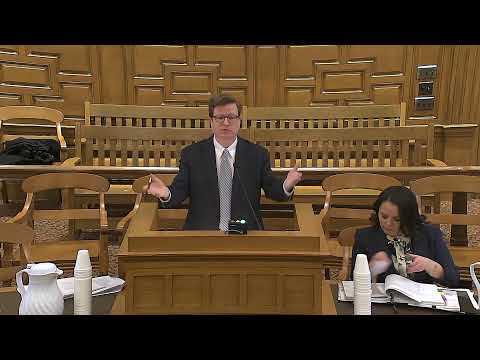
The Massachusetts Appeals Court on Feb. 11, 2025 heard argument in Department of Children and Families v. Mother & Father, a termination-of-parental-rights appeal that raises the question whether post-trial tribal enrollment can require retroactive application of the Indian Child Welfare Act (ICWA).
Father’s counsel argued that the child now qualifies as an "Indian child" because the father enrolled in his tribe after the termination trial concluded, and that the ICWA statute and implementing regulations are sufficiently broad to require remand for the trial court to apply ICWA protections (including the active-efforts standard and expert testimony). Counsel said the trial court and the single justice did not have the benefit of the father’s tribal membership status at trial and that the statute’s purpose—to preserve tribal connections—supports reopening the proceedings.
The Department of Children and Families (DCF) and the child’s attorney opposed retroactive relief. DCF counsel said the trial court applied the statute and notice rules that were in effect at the time of the termination proceeding; DCF argued ICWA can apply to different proceedings going forward (for example an adoption), but there is no authority to retroactively void a termination based on post-trial enrollment. DCF emphasized deferential standards for single-justice decisions denying leave to reopen and cited a Michigan decision and other authorities treating post-trial enrollment as insufficient, by itself, to require a new trial.
Counsel and the justices discussed procedural pathways, including filing motions under federal statute 25 U.S.C. §1914 (relief from final orders affecting Indian children) and whether a single-justice denial was an abuse of discretion. Father’s counsel said tribal enrollment rolls had been closed when the trial occurred and only opened later, limiting the father’s ability to establish membership earlier; counsel said he filed a motion for leave to return to the trial court once membership was established and the single justice denied leave.
The child's counsel told the court that ICWA claims were not properly presented for relief in this forum and urged affirmance of the termination and the single-justice decision. The panel took the matter under advisement.
The issue—whether post-trial tribal enrollment can require vacatur or remand—presents questions about retroactivity, federal statutory remedial mechanism, and how state courts should treat membership obtained after a final order.