Get Full Government Meeting Transcripts, Videos, & Alerts Forever!
Get email alerts on the Traffic Law topic
No spam. Unsubscribe anytime.
Appeals court hears dispute over whether retail parking lot can be a "public way" for DUI charge
Summary
In Commonwealth v. Alexander de Jesus Dominguez Ortiz (docket 24P67), defense counsel argued that a parking lot reserved for customers is a private way and that evidence was insufficient to prove the defendant drove while intoxicated on a public way; the Commonwealth urged the court to let the jury decide. Court took the matter under advisement.
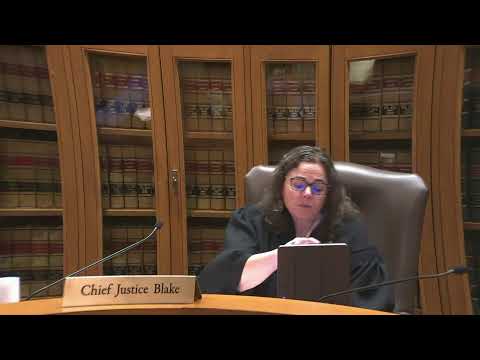
At argument on Commonwealth v. Alexander de Jesus Dominguez Ortiz (docket 24P67), the appeals court considered whether a parking lot attached to a retail establishment is a "public way" for purposes of a driving-under-the-influence charge when the lot is signed for customers only and the incident occurred at night.
Appellant counsel Matthew Moll argued the record equally supported two inferences: that the defendant drove onto the lot while already intoxicated or that he arrived sober, later became intoxicated, and then operated the vehicle only within the lot. Moll emphasized features of the lot's layout and signage and said there was "no other reason for a person to be in that parking lot unless they're patronizing that business," arguing that, under those facts, the evidence was insufficient to support conviction for operating a vehicle under the influence on a public way.
Assistant District Attorney Helly White Spade for the Commonwealth countered that the lot had no physical barriers to access, there was no sign forbidding entry or through passage comparable to cases cited for private ways, and the evidence supported submission to a jury. "There is no sign forbidding entry or through passage as there was in Bellavo," Spade told the court, and urged the panel to affirm the conviction.
The panel questioned counsel about precedents the attorneys relied on, including Bellavo, Wurzburger, and other cases the parties cited, and about factual features such as whether the lot provided any other amenity or through access. The Commonwealth noted that appellate review requires drawing all reasonable inferences in favor of the prosecution; defense counsel argued the "equal and opposite inferences" doctrine applied because the evidence allowed competing, reasonable reconstructions.
After argument the court took the matter under advisement; no ruling was announced at the hearing.