Get Full Government Meeting Transcripts, Videos, & Alerts Forever!
Get email alerts on the Criminal Procedure topic
No spam. Unsubscribe anytime.
Appeals court hears dispute over phone-call evidence and prosecutor remarks in stabbing prosecution
Summary
At oral argument in Commonwealth v. Alexis Gonzales (docket 24P473), defense counsel argued the trial court erred by treating a victim's phone call as an excited utterance and by allowing the prosecutor's closing to imply the defendant's failure to testify; the Commonwealth urged the panel to affirm. The court took the case under advisement.
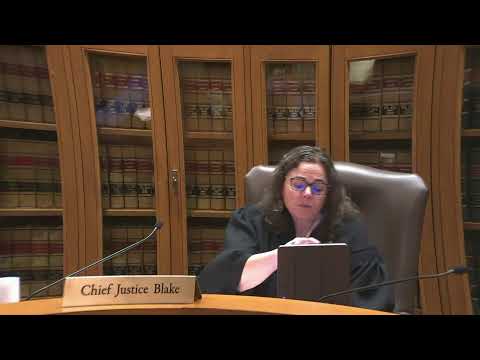
A three-justice panel of the appeals court heard competing arguments on whether a victim's out-of-court phone statement was admissible and whether the prosecutor's closing argument impermissibly commented on the defendant's choice not to testify.
Defense counsel Joseph Hasson told the court the phone call "was just a phone call where the woman picked up the phone, the victim, and said, you know, I've been stabbed. You need to pick your son up," and argued the trial judge applied a subjective, rather than the required objective, "primary purpose" test to find the statement nontestimonial and then admitted it as an excited utterance. "I believe the judge in deciding the case uses the subjective part of the test where he should have used the objective part," Hasson said.
Hasson also argued the prosecutor's closing crossed the line, saying the prosecutor's remarks amounted to a comment on the defendant's decision not to testify: "The defense opened and closed with the victim isn't here to tell you what happened. And then the Commonwealth says there are other people that can tell you what happened." He told the court that, by process of elimination, the prosecutor's remarks were "necessarily and naturally a comment on the defendant's not testifying." He asked the panel to reverse on those grounds or otherwise to find the evidentiary rulings prejudicial because the Commonwealth's case relied heavily on a single out-of-court statement.
Assistant District Attorney David O'Sullivan for the Commonwealth responded that the controlling test is the "primary purpose" test as interpreted post-Ohio v. Clark and Michigan v. Bridal (as counsel cited it) and that, under that rubric, the victim's call had the primary purpose of securing immediate help rather than producing evidence for prosecution: "Her purpose . . . was not to offer a substitute for trial testimony . . . but rather, to tell a friend that she had an ongoing emergency that required her help." O'Sullivan further argued the prosecutor did not make a prejudicial or direct comment on the defendant's silence and that any complained-of phrasing referred to alternative witnesses the defense itself had emphasized.
The panel asked clarifying questions about the primary-purpose standard, the timing of the phone call relative to other events at the scene, and the limits of the excited-utterance exception. The court took the case under advisement; no decision was announced at argument.
The record shows the victim did not testify at trial, police and medical evidence of injury were presented, and the trial court admitted the phone call as an excited utterance while applying the primary-purpose analysis. The appeals argument focused on whether the judge applied the correct objective test and whether the prosecutor's closing remarks were an improper comment on the defendant's refusal to testify.
The court did not issue a ruling at the argument. The matter remains under advisement before the three-justice panel.