Get Full Government Meeting Transcripts, Videos, & Alerts Forever!
Get email alerts on the Evidence Law topic
No spam. Unsubscribe anytime.
Panel weighs admissibility of "prior bad acts" evidence in sexual-assault appeal
Summary
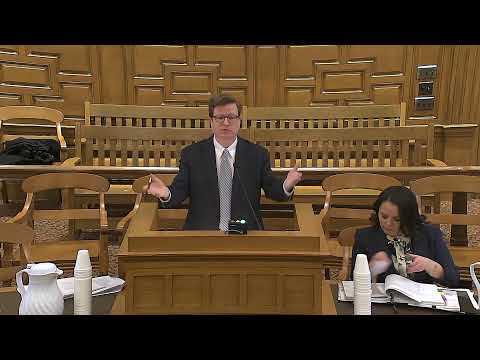
The Massachusetts Appeals Court on Feb. 11, 2025 heard argument in Commonwealth v. Joseph Rodriguez about whether testimony from a severed complainant was admitted at trial merely to show criminal propensity or for a permissible purpose such as common scheme, intent, or corroboration.
The Massachusetts Appeals Court on Feb. 11, 2025 heard argument in Commonwealth v. Joseph Rodriguez about the admissibility of prior-bad-acts evidence in a sexual-assault prosecution.
Defense counsel argued that the Commonwealth had introduced testimony from a severed complainant solely to show propensity, arguing that the exceptions to the long-standing rule barring propensity evidence “have swallowed the rule.” Counsel described the second complainant’s testimony as prejudicial and unnecessary because, the defense said, the Commonwealth already had DNA and other corroborating evidence and the testimony’s only logical effect was to invite the jury to infer guilt from prior conduct.
The court asked whether any purpose other than propensity—such as explaining an unusual event (an "unintelligible" exception), demonstrating pattern or common scheme, or corroboration—supported admission. Counsel for the Commonwealth replied that the trial judge narrowed the reasons for admission to pattern-of-conduct, common scheme, intent, state of mind, and corroboration and invoked case law permitting admission in sexual-assault cases when similarity and timing make prior acts probative of a central issue such as consent.
The panel discussed whether the trial judge made the required on-the-record balancing of probative value versus unfair prejudice and whether the judge’s citations to controlling precedent (including D'Orazio, Pillai, and Samia) were sufficient to preserve the ruling. Defense counsel emphasized the danger of asking jurors to treat an accused "as who he is" rather than evaluating evidence of the charged event.
The Commonwealth argued that jurors are presumed to follow limiting instructions, and that in this case the trial court had narrowed the purposes for which the evidence was admitted. The Commonwealth also pointed to the judge’s written rationale in the record and argued that the defense had not shown an abuse of discretion in admitting the testimony.
After argument the panel submitted the case for decision.
The dispute raises familiar appellate issues about the scope of exceptions to the bar on propensity evidence, the trial judge’s obligation to explain a balancing analysis on the record, and the interplay between probative similarity and prejudice in sexual-assault prosecutions.