Get Full Government Meeting Transcripts, Videos, & Alerts Forever!
Get email alerts on the Criminal Procedure topic
No spam. Unsubscribe anytime.
Appeals Court hears Miranda custody challenge after driver crashed into house
Summary
The Massachusetts Appeals Court on Feb. 11, 2025 heard argument in Commonwealth v. Acilio Ventura dos Santos, an appeal focused on whether officers crossed into custodial interrogation after a driver crashed a car into a house and, relatedly, whether probable cause to arrest for negligent operation was so obvious as to affect Miranda analysis.
The Massachusetts Appeals Court on Feb. 11, 2025 heard argument in Commonwealth v. Acilio Ventura dos Santos, an appeal focused on whether officers crossed into custodial interrogation after a driver crashed a car into a house and, relatedly, whether probable cause to arrest for negligent operation was so obvious as to affect Miranda analysis.
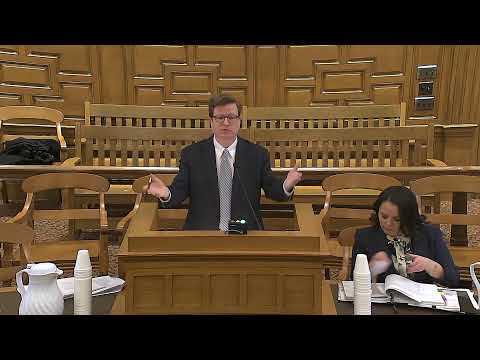
Defense attorney John Maddox, arguing for Acilio Ventura dos Santos, told the panel that "Everyone is presumed to know the law and a reasonable person who drives a car into a house would know without being told, that there was probable cause to arrest him for the crime of negligent operation." Maddox described the facts as "clear cut" for negligent operation and said the crash manifestly showed a lack of due care under the circumstances.
Presiding Justice Greg Massing, joined by Justices Hirschfang and Tannen, pressed Maddox on whether other explanations (for example, a medical event) could negate probable cause and whether a reasonable-person custody test would be workable in practice. The court also raised the relationship between probable-cause findings and the prophylactic purpose of Miranda warnings.
Assistant District Attorney Melissa Johnson, arguing for the Commonwealth, said the custody inquiry turns on what police did to create a coercive, police-dominated environment, not on the defendant's subjective belief. "What Miranda was concerned with...was how law enforcement was creating an environment by their actions... that is so coercive, so police dominated, that this person needs to be reminded that...they have a right to remain silent," Johnson said. She urged the court to focus on officer conduct and whether initial questioning was the noncustodial, preliminary investigatory questioning courts allow in ordinary accident scenes.
The parties debated related appellate standards, including whether the harmless-error test under Chapman applies where Miranda warnings were omitted and whether the record supports preservation for appellate review under Vargas. Maddox said he had offered a primary argument about custody and a fallback challenge to the sufficiency of evidence for negligent operation if the court rejected his principal point.
The court asked whether the allegedly dispositive evidence—the defendant's later statements and any booking video—would be cumulatively harmless; both sides acknowledged the record contains other evidence concerning operation and impairment. The case was submitted for decision after questioning.
The panel did not announce a ruling at argument.
The appeals argument covered constitutional custodial analysis and the interplay of probable cause, Miranda protections, and harmless-error review.
The case is submitted.