Get Full Government Meeting Transcripts, Videos, & Alerts Forever!
Get email alerts on the Cra 5 Year Cip topic
No spam. Unsubscribe anytime.
CRA directors outline projects and funding; board urges safety, trees and measured approach
Summary
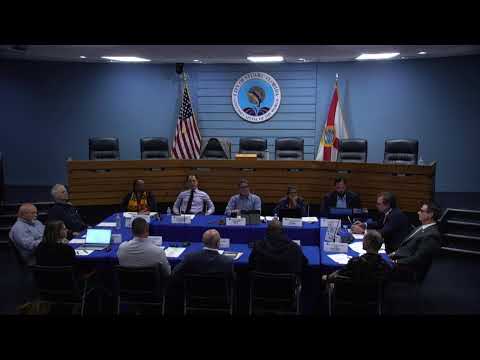
City of Stuart staff on Jan. 27 presented a draft five‑year capital improvement plan for the Community Redevelopment Agency and asked the joint boards for direction on prioritizing projects ranging from streetscape and parking to pedestrian bridges and underground utilities.
City of Stuart staff on Jan. 27 presented a draft five‑year capital improvement plan for the Community Redevelopment Agency and asked the joint boards for direction on prioritizing projects ranging from streetscape and parking to pedestrian bridges and underground utilities.
Pinal Gandhi Savdas, CRA director for the record, summarized the plan, the purpose of a CRA and recent projects funded by tax‑increment financing. Savdas told the meeting the CRA received about $6,300,000 in TIF revenue in fiscal year 2025 and expects $6.5 million to $7.0 million in the next fiscal year; staff said roughly $3,000,000 would be available for redevelopment projects next year and that the CRA has about $3,000,000 in fund balance.
A nut graf: The presentation covered a broad set of potential projects and grant opportunities; board members asked staff to prioritize safety and smaller, distributed investments rather than committing large sums now to system‑wide undergrounding or single large projects without more public engagement.
Staff listed candidate projects that have appeared in past CRA plans: Osceola Street extension and downtown activation near Flagler Park; a potential downtown parking garage (current Sailfish surface lot is about 0.7 acres and holds 67 spaces; a proposed three‑story garage could provide about 200 spaces); continued undergrounding of overhead utilities in parts of downtown; Triangle District streetscape improvements; a proposed pedestrian bridge (Bayou pedestrian bridge) that has an available grant with a March 5 application deadline; the potential redevelopment or RFP for the city maintenance facility site as an opportunity for housing; and quiet‑zone applications at four railroad crossings that would require engineering upgrades to exceed Federal Railroad Administration safety standards.
Board members pushed staff on near‑term priorities. Board member Moser and board member Breckbill urged that safety and connectivity work—sidewalks, shade trees and safer crossings—be prioritized. “If we're gonna join it, let’s actually make the effort, get working, try to make these safety and connectivity improvements,” Moser said of trail and walkability goals. Board member Breckbill highlighted recurring congestion and safety problems at the downtown circle and railroad crossings and suggested tactical fixes such as an additional signal to prevent vehicles from stacking on tracks.
Board member Collins urged distributed, visible investments across the CRA rather than concentrating all funds in downtown projects or expensive undergrounding work. Collins said the CRA should favor resurfacing streets, adding sidewalks where feasible, tree plantings and drainage fixes that benefit neighborhoods across the CRA boundaries. Collins also suggested the city explore acquiring the parcel adjacent to an existing parking lot (the Acacia Lodge parcel near Haney Circle/Osceola) to secure downtown green space and consider a modestly sized parking garage rather than large commercial redevelopment on that parcel.
Savdas and staff described the underground refuse system concept (examples shown from Kissimmee and Clearwater) and provided estimated costs referenced by video materials and staff commentary: an automated collection truck shown in one video priced at about $475,000, an estimated $14,000 per below‑ground unit and roughly $3,000 for the above‑ground interface unit; staff noted those figures were presented as examples and would require further study. The staff also said quiet‑zone applications for four crossings (including Confusion Corner and the intersection at MLK and Dixie) would require engineering drawings and coordination with county and federal authorities; the county’s participation may be necessary in some locations.
Other topics raised included: downtown undergrounding and its high cost and tradeoffs; pop‑up kiosks and small retail to serve trail users; potential kayak launches and river access as part of a Trail Town strategy; and a proposed pedestrian bridge linking neighborhoods to hospitals and Ocean Boulevard. Several board members recommended convening workshop sessions to dive deeper into large items rather than trying to resolve priorities in a single meeting.
Staff asked specifically whether the board wanted staff to pursue available grants (for example the pedestrian/bridge grant with the March 5 deadline); Savdas said he could pursue a grant application if the board directed him to do so. Several board members and the mayor encouraged staff to provide more detailed proposals and hold workshops; no binding decisions or funding allocations were made during the meeting. The discussion closed with a request that staff return with prioritized recommendations, costs and funding sources for the board and commission to review during upcoming budget and CRA sessions.