Get Full Government Meeting Transcripts, Videos, & Alerts Forever!
Get email alerts on the Environment Plastics topic
No spam. Unsubscribe anytime.
Commission approves first reading to repeal city’s expanded‑polystyrene/plastics regulation
Summary
The City Commission voted on first reading to repeal the local ordinance that regulated expanded polystyrene and certain single‑use plastics.
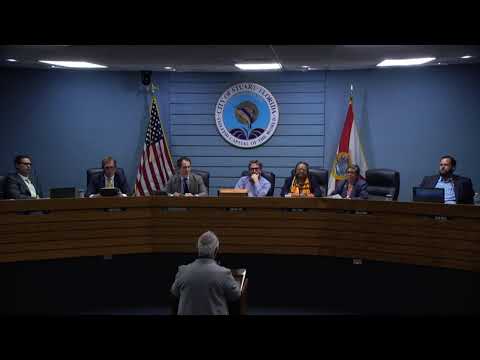
The City of Stuart City Commission on Monday voted on first reading to repeal its Article 9 regulation addressing expanded polystyrene and some single‑use plastics.
City Attorney Lee Baggett summarized how the city arrived at the proposed rescission and reminded commissioners that state law has long constrained local regulation of certain consumer containers. ‘‘The original intention was that it was to ban plastic bags in grocery stores,’’ Baggett said, and that subsequent legal analysis and state preemption limited what local governments can require. Baggett also told the commission that businesses faced higher costs for nonplastic alternatives.
Vice Mayor Collins moved approval of the rescission ordinance and Commissioner Gioby seconded. During public comment, local business owner and others urged repeal on the grounds that the regulation placed a competitive disadvantage on city businesses and increased costs; environmental advocates and residents urged the commission to keep local measures to reduce plastics, noting marine debris and recycling contamination concerns.
On roll call the first‑reading motion passed: Commissioner Reid — yes; Commissioner Gioby — yes; Commissioner Clark — no; Mayor Rich — no; Vice Mayor Collins — yes. Staff said the measure is on first reading and the commission may revisit the matter at second reading.
Commission discussion included suggestions that the city could pursue voluntary incentives for businesses that reduce single‑use plastics and that any future efforts be coordinated with county or regional programs to avoid uneven rules across neighboring jurisdictions.