Get Full Government Meeting Transcripts, Videos, & Alerts Forever!
Get email alerts on the Urban Forest And Environment topic
No spam. Unsubscribe anytime.
Residents urge stronger tree protections at Seattles 1 Seattle plan hearing, warn of heat and runoff harms
Summary
Scores of speakers argued the draft 1 Seattle plan and the 2023 tree ordinance would allow broad tree removal, reduce canopy for decades and worsen heat-island and stormwater impacts. Tree advocates called for rewriting the ordinance, shifting enforcement, and pausing some upzoning until protections are ensured.
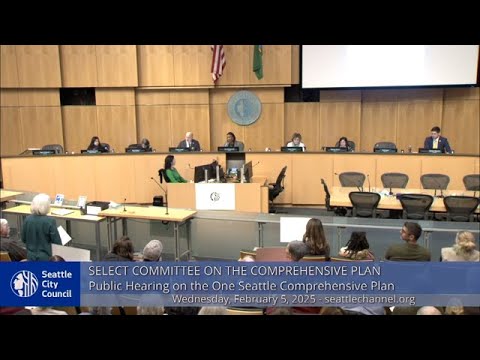
A large group of residents and environmental advocates used Wednesdays comprehensive-plan public hearing to press Seattle councilmembers for far stronger protections for the citys urban forest, saying the mayors draft plan and a recently passed tree ordinance would not stop widespread mature-tree removal.
The core claim from multiple speakers: lot-coverage changes and reduced setbacks in the draft plan allow up to 90% of many residential lots to be covered with buildings and pavement, which critics say will make it impossible for mature trees to survive new development.
Key evidence presented: Don McFarland, speaking for Maple Leaf volunteers, said a neighborhood tree survey counted 784 trees in a proposed neighborhood-center area and highlighted the number of "tier 2" (large) trees. Similar local inventories were cited elsewhere. Sandy of Tree Action Seattle told the committee that Seattle has lost more than 2,000 mature trees in the last year and that replacement saplings take decades to offer the same ecological and public-health benefits.
Environmental and public-health concerns: Speakers linked tree loss to urban heat islands and public-health effects. One speaker noted the 2021 heat wave, when hundreds of people died in the region, and cited research tying chronic heat exposure to increased cardiometabolic markers and worse mental health. Others connected greater impervious surface area to increased polluted stormwater runoff that harms salmon and the southern resident orcas; the NOAA Southern Resident Killer Whale recovery plan was invoked by witnesses asking the city to take stronger action.
Policy requests: Tree advocates urged the council to amend the draft plan and the tree ordinance so that: - large, heritage or "tier 2" trees receive stronger protection; - enforcement and ordinance drafting be moved out of SDCI to the city arborist or Urban Forestry Commission; - the city require meaningful open space, shared yards, or design alternatives so developers can retain legacy trees; - the council pause neighborhood-center upzoning in places with significant mature canopy until stronger protections are in place.
Quotes: "Please amend this plan now to include trees for everyone," said Sandy of Tree Action Seattle. "We need trees to mitigate heat and clean our air and water," said multiple residents. Don McFarland said, "These large trees... will be decades before replacement trees offer the same benefits."
What the city said (via testimony): Committee members did not adopt amendments during the hearing. Several speakers asked staff for clearer modeling of canopy loss and stormwater impacts; staff will provide additional analyses during the committee process.
Ending: Tree protection became a central flashpoint in public testimony, raising technical and equity questions that councilmembers will need to resolve as they balance housing, climate resiliency and neighborhood character.