Get Full Government Meeting Transcripts, Videos, & Alerts Forever!
Get email alerts on the Comprehensive Plan Public Hearing topic
No spam. Unsubscribe anytime.
Hundreds of Seattle residents press council on 1 Seattle plan; housing and tree protections dominate public hearing
Summary
At a public hearing on the mayors "1 Seattle" comprehensive plan, speakers voiced strong and competing views: many urged bold upzoning and new neighborhood centers to address a housing crisis, while many others warned the plan would strip tree canopy, increase stormwater impacts and accelerate displacement.
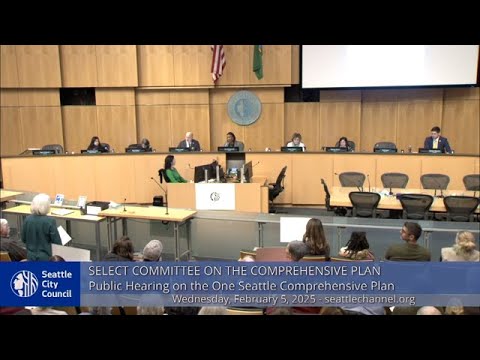
The Select Committee on the Comprehensive Plan heard more than three hundred public comments Wednesday evening on the mayors proposed "1 Seattle" comprehensive plan, with residents split between expanding housing and protecting the citys tree canopy and neighborhood character.
The hearing, chaired by Councilmember Joy Hollingsworth, opened with procedural remarks and a warning about inclement weather. Committee staff said hundreds were registered to speak in person and remotely; chairs paused the meeting shortly before midnight because of worsening weather conditions.
Why it matters: Seattle faces a shortage of homes, rising rents and an urgent state mandate (House Bill 1110) to allow more housing types. Supporters of the mayors plan said it is an overdue step to allow missing-middle housing and new neighborhood centers across the city. Opponents said the draft plan and a 2023 tree ordinance would permit large-scale removal of mature trees, worsen heat islands and shift costs to neighborhoods already at risk of displacement.
Housing advocates and developers told the committee that the city must increase capacity now. Patience Malaba, identified as leading the Housing Development Consortium, urged council members to "be bold with this comprehensive plan" and to avoid watering it down, saying Seattle is in a "deep housing crisis." Ryan Donahue, chief advocacy officer at Habitat for Humanity Seattle-King-Kittitas Counties, said supply is central to improving affordability and called the plan "a big step in the right direction."
Opponents emphasized trees, stormwater and neighborhood impacts. Don McFarland, speaking for Maple Leaf residents, cited a volunteer tree survey that counted 784 trees in a proposed neighborhood-center zone and said large trees provide benefits that take decades to replace. Multiple speakers charged that the citys tree ordinance and recent data on protected trees are inadequate and that the environmental review understates impacts to canopy and runoff.
Specific disagreements were common: several neighborhoods asked that particular proposed neighborhood centers be removed or relocated (Maple Leaf, parts of Madrona, West Green Lake and north Magnolia were mentioned repeatedly), and some speakers urged the council to meet only the state HB 1110 requirements rather than the broader changes in the mayors plan.
Quotes: "The only way we get out of this crisis is if we build more housing," Patience Malaba said. "We can build with trees," Dinko DeForest, a 20-year-old speaker, said. "Please amend this plan now to include trees for everyone," Tree Action Seattles Sandy told the committee.
What the committee heard about process: multiple speakers complained about outreach timelines and asked the council to slow parts of the plan, or to prototype new zoning before broad adoption. Others urged urgency, saying delays would worsen displacement. Several speakers urged the council to expand the plans affordability tools, to eliminate parking minimums, and to allow stacked flats on smaller lots.
Next steps: No formal actions or votes were taken at the hearing. Committee members will continue deliberations; the council and staff indicated further public comment opportunities and meetings will be scheduled. Chair Hollingsworth asked people to submit written comments online.
Ending note: Speakers represented a wide range of neighborhoods and interestsfrom disability-rights advocates and teachers to business groups, architects and neighborhood coalitions. The continued split over housing scale, tree canopy and displacement foreshadows contentious council debate as members consider amendments before final votes.