Get Full Government Meeting Transcripts, Videos, & Alerts Forever!
Get email alerts on the Communications Technology Policy topic
No spam. Unsubscribe anytime.
Communications Technology and Innovation Committee reports three communications bills, including AI oversight, text opt-out and emergency resource system
Summary
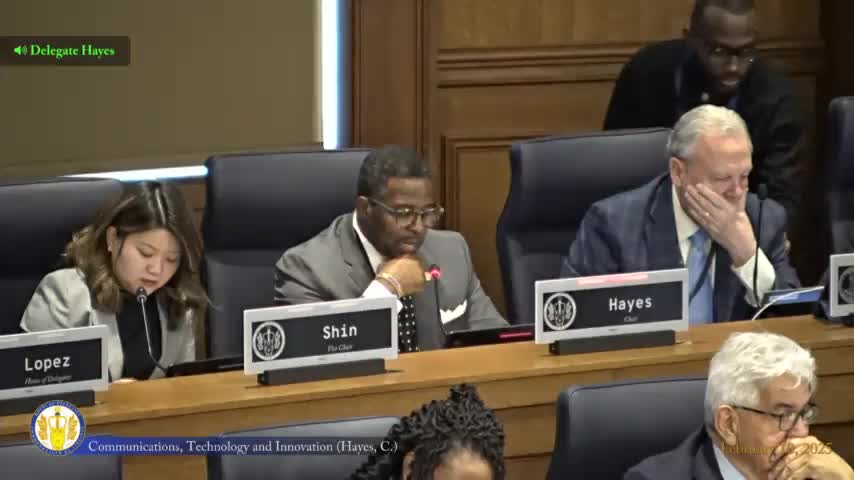
The Communications Technology and Innovation Committee reported three bills out of committee on Monday in February: a measure imposing requirements on state use of high‑risk artificial intelligence systems, a text‑message solicitation opt‑out requirement, and a bill to develop a statewide emergency resource management system.
The Communications Technology and Innovation Committee reported three bills out of committee on Monday in February, including a measure that would impose requirements on state agencies’ use of so‑called high‑risk artificial intelligence systems, a text‑message solicitation opt‑out provision, and a bill to create an emergency resource management system for declared states of emergency.
The AI bill, Senate Bill 12‑14, would require state bodies to follow defined standards for development, deployment and use of high‑risk artificial intelligence systems and directs the Chief Information Officer of the Commonwealth to develop and maintain related policies and procedures. The bill also directs the Chief Information Officer to convene a working group to examine the impact of the bill’s requirements on the ability of local governments to comply. The committee record shows the communications subcommittee reported the bill by a vote of 8 to 2; the full committee reported the bill by a recorded vote of 11 to 7.
Senate Bill 13‑35 (identified in the transcript as originating with Senator Marjan) would allow a person receiving a telephone solicitation via text message to reply with the word “UNSUBSCRIBE” or “STOP” to request not to receive further telephone solicitations. The bill would require the telephone solicitor to honor such a request for at least 10 years from the date the request is made. The subcommittee recommended reporting the bill by a vote of 8 to 0. The transcript records the full committee result as “reported by 17 with 1,” with the surrounding audio unclear; the committee discussion did not include further debate on the floor.
Senate Bill 13‑87 (patron: Senator Fobola in the transcript) directs the Chief Information Officer, working with the Virginia Information Technologies Agency and the Department of Emergency Management, to develop an emergency resource management system for use by the Commonwealth during declared states of emergency. The transcript states this bill was a recommendation of the joint subcommittee to study pandemic response and preparedness. The subcommittee recommended reporting the bill 8 to 0, and the full committee reported the bill by a recorded vote of 18 to 0.
Votes at a glance
- Senate Bill 12‑14 (patron: Senator Ayred) — Reported out of committee. Subcommittee recommendation: 8–2; full committee: 11–7. - Senate Bill 13‑35 (patron: Senator Marjan, transcript) — Text‑message opt‑out for telephone solicitations. Subcommittee recommendation: 8–0; full committee: reported with a transcript notation of “17 with 1” (audio/record unclear). - Senate Bill 13‑87 (patron: Senator Fobola) — Emergency resource management system. Subcommittee recommendation: 8–0; full committee: 18–0.
No additional testimony was taken on these bills at the full committee after they were reported out of the communications subcommittee, according to the committee chair. Clerk and committee staff conducted roll call and vote administration during the meeting. The committee chair concluded by noting that several additional communications‑related bills will begin in the communications subcommittee and be considered at the full committee at a future meeting.