Get Full Government Meeting Transcripts, Videos, & Alerts Forever!
Get email alerts on the Zoning Land Development Regulations topic
No spam. Unsubscribe anytime.
Charleston County commissioner proposes ZLDR changes on lighting, off‑site parking, traffic studies and PD workshops
Summary
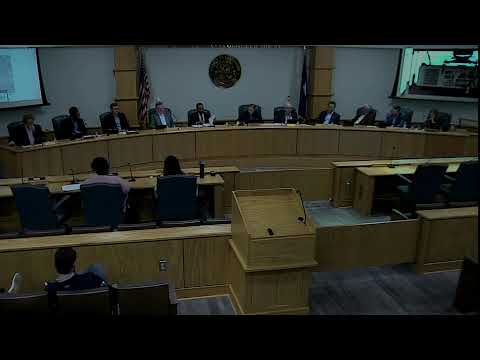
Commissioner Luke Morris asked the Charleston County Planning Commission to ask staff to study four proposed amendments to the Zoning and Land Development Regulations, covering site lighting, off‑site parking distance, traffic impact study standards and mandatory conceptual workshops for planned developments.
Commissioner Luke Morris introduced four proposed amendments to the Charleston County Zoning and Land Development Regulations (ZLDR) during a Planning Commission meeting, asking staff to study changes to site lighting standards, the allowable distance for off‑site parking, the scope of traffic impact studies and the requirement for conceptual planned‑development workshops.
The proposals are intended to update the ZLDR language to reflect current lighting technology, provide more flexibility for shared parking within the county's urban growth boundary, emphasize pedestrian and bicycle connectivity in traffic studies, and require early conceptual workshops for all planned developments so access and connectivity can be discussed before detailed design begins.
Morris, a commissioner, said the first proposal would revise site lighting requirements that currently require shielding of the light source or bulbs. "The first 1 was, ZLDR, site lighting requirements. So, essentially, they require shielding of, you know, the light source or bulbs," he said, adding that modern LED fixtures do not always meet the ordinance's current description. "With, the way that lights are now with LEDs, that's not really always provided that way, especially Dominion provided site lighting." He asked staff to study an "a la carte" menu of lighting options Dominion provides or to find new wording that accommodates current LED site lighting while meeting the ordinance's intent.
Joel Evans, director of zoning and planning, told the commission staff already is working on the lighting language. "Correct. We've been working on that and we know that there is a need to amend the ordinance for that," he said, adding that lighting has been a repeated source of confusion in site plan reviews.
Morris's second proposal would change section 9.3.4.b to double the allowable distance for off‑site parking used to satisfy on‑site parking requirements from 600 feet to 1,200 feet, limited to properties inside the urban growth boundary. Morris said 600 feet is "roughly the distance of 1 downtown block" and that doubling it would "give a little bit more play" and encourage consolidated parking rather than sprawl.
His third proposal targets section 9.6.3.F.1, the traffic impact study standards, asking staff to rework language that Morris described as "very car centric" and written more as goals than measurable objectives. He urged the commission to direct staff to consider wording that explicitly prioritizes pedestrian and bicycle connectivity and safety within the urban growth boundary so traffic studies better account for nonmotorized users.
The fourth proposal would amend section 4.25 on planned development zoning districts to require a conceptual plan workshop for all planned developments regardless of size and to include a standardized list of discussion items, with points of access among the priorities. Morris said the goal is earlier dialogue with applicants so street connectivity and perimeter access can be addressed before detailed design. He said he initially suggested a prescriptive metric "like 600 feet where you have to have a road access every 600 feet," but staff recommended using the workshop to evaluate connectivity on a case‑by‑case basis.
Commission staff said the workshop requirement and the lighting changes are likely to appear sooner than other items. The commission did not take a vote on any ZLDR amendments at the meeting; Morris asked only that staff study the suggested changes and return with proposed language for future consideration.
Votes at a glance: The commission approved the minutes from the Jan. 13, 2025 meeting and workshop. A member moved and another seconded. Roll call recorded affirmative votes from Commissioner Logan Davis; Commissioner Gary Lassane; Chair Cindy Floyd; Commissioner Warwick Jones; Commissioner David Kent; Commissioner Adam McConnell; Commissioner Luke Morris; Vice Chair Pete Pilotis; and Commissioner Susan Cox. The motion carried.
The commission was reminded that a conceptual plan development workshop will begin immediately after the meeting. The commission's next regular meeting is scheduled for March 10, 2025.