Get Full Government Meeting Transcripts, Videos, & Alerts Forever!
Get email alerts on the Criminal Justice topic
No spam. Unsubscribe anytime.
Senate approves ban on added jail time for failing to appear on low-level municipal charges
Summary
The Colorado Senate passed Senate Bill 62, which prevents municipal courts from imposing additional jail time (contempt) solely for failing to appear on low-level municipal offenses; the measure drew debate over local control and public safety before passage.
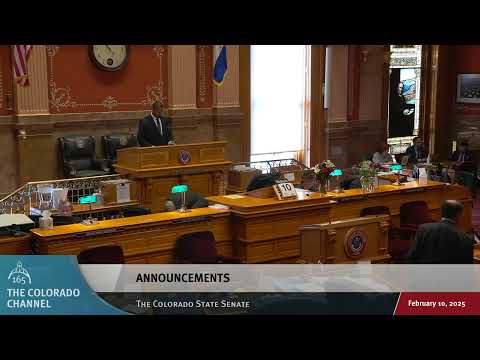
Senators on the Colorado Senate passed Senate Bill 62 on second reading and final action, adopting a committee report and approving the measure that bars municipal courts from treating failure to appear as a separate contempt offense that carries additional jail time for low-level municipal offenses.
The bill’s sponsor, Senator Wiseman, moved the committee report and framed the legislation as narrowly targeted. Senator Hendrickson said, “What it says is that there cannot be a contempt of court charge for failure to appear.” Hendrickson and other supporters said the practice was being used in a small number of municipalities to convert petty offenses — which carry a statutory maximum of roughly 10 days in jail and a $300 fine — into cases that exposed defendants to much larger penalties.
Opponents said the bill removes a tool some municipalities use to respond to persistent nonappearance and could limit local flexibility. Senator Fezal said the measure “broad brushes what is a very complex issue and puts the state once again in the driver's seat when it comes to policy for local government entities.” Senator Liston asked whether the bill would prevent judges from imposing more significant penalties in appropriate cases.
Sponsor Senator Weitzman responded that the bill is limited to low-level municipal offenses and does not change contempt powers exercised by judges in state court; she argued the bill preserves bench warrants, the ability to revoke a PR bond, and other court tools. She said, “we are really only trying to say one thing. If you do not show up in court, that cannot be the basis for further jail time, in the municipal code or per the municipal code.” Weitzman and other supporters also cited jail-bed limits and due-process litigation in some municipalities.
Senator Rich said he would vote no, expressing concern that the change could encourage some people to forgo court appearances. After debate, the committee report was adopted and the bill was approved by the Senate.
The measure leaves in place existing procedures such as issuance of bench warrants, revocation of PR bonds, and the court’s ability to set new conditions on release when a defendant is arrested on a bench warrant; it also preserves a judge’s contempt power where explicitly referenced as unchanged by supporters of the bill.
Implementation steps and next actions were not specified on the Senate floor beyond the bill’s passage.