Get Full Government Meeting Transcripts, Videos, & Alerts Forever!
Get email alerts on the Air Pollution Code Update topic
No spam. Unsubscribe anytime.
Cleveland officials outline major overhaul to 1977 air-pollution code, propose fees and neighborhood protections
Summary
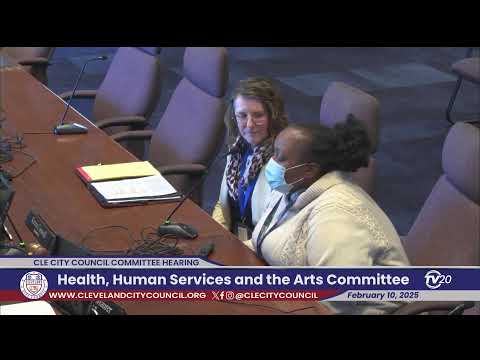
Cleveland City Council health committee members on Tuesday heard a presentation from City of Cleveland public‑health staff on a proposed update to the city’s air pollution code, last substantively revised in 1977.
Cleveland City Council health committee members on Tuesday heard a presentation from City of Cleveland public‑health staff on a proposed update to the city’s air pollution code, last substantively revised in 1977. The presentation described new requirements for cumulative‑impact assessments, stronger permit information for projects in the city’s most impacted neighborhoods, an expansion of indoor‑air services and a proposed increase in annual operation fees that would funnel revenue into a city fund for emission‑reduction activities.
The proposed code changes are meant to give the city tools that complement federal and state regulations, officials said. “This code has not been updated since 1977,” Christina Yoca, chief of air quality outreach for the Division of Air Quality, told the committee. “It has been 50 years since there’s been a major revision to the local air pollution code.”
City staff said the revisions respond to continuing health disparities across neighborhoods. Yoca noted pediatric asthma rates in Cleveland of “23 to 25 percent,” compared with a cited national average of about 8 percent, and said the update aims to target the neighborhoods with the worst outcomes. The proposal would require a health‑impact report to be produced every five years and, if the legislation passes, the first report within one year of adoption.
Key proposals and how staff described them
Cumulative impacts and neighborhood ranking: The code would add a definition of “cumulative impacts” and use a ranking map developed under the Clean and CLE project to identify neighborhoods with the highest combined environmental stressors and vulnerable populations. For the neighborhoods ranked at the top of that list, facilities seeking installation or modification permits would have to submit more detailed information, including vehicle and traffic data.
Health‑impact assessments and permit triggers: Staff said only the largest sources in the worst‑off neighborhoods would need a full health‑impact assessment, including air‑dispersion modeling and direct responses to community concerns. Yoca said the requirement would apply to high‑emitting facilities in classifications the staff referenced as “synthetic minors, FEPTOs and Title V” facilities (the transcript spelling varied) and would not apply to all permit applications.
Fees, fund and grants: The proposal would raise operation fees — staff said fees have not been updated since 2003 — and set a minimum fee of $100 per facility where some pay as little as $12.50 today. Staff estimated current revenue from fees at about $140,000 a year and projected roughly $300,000 a year under the proposed structure. The additional revenue would be placed in a city fund earmarked for emission‑reduction activities, such as grants to facilities to upgrade equipment, community mitigation projects (for example, tree barriers) and home mitigation such as air purifiers.
Indoor air quality and outreach: The update would formalize the Division of Air Quality’s indoor‑air program, including authority to enter residences if invited by the resident and eligibility of indoor‑air work for mitigation funds. Staff described ongoing outreach: over the past two years the division said it spoke with about 10,000 residents and analyzed roughly 500 unique complaints submitted between February 2021 and 2024; odors, open burning and indoor air were among the most commonly reported problems.
Vehicle idling and enforceability: Staff proposed shifting responsibility for managing on‑site idling to facility owners (their work trucks and vendors). Christina Yoca acknowledged enforcement challenges but said the change would allow targeted enforcement when inspectors observe repeat violations after complaints. “This gives us regulatory authority,” she said, while also noting an educational rollout would precede enforcement.
Emergency episodes and operations: The draft would require city departments to prepare emission control action plans for emergency episodes (for example, large fires) that protect both workers and residents and permit departments to alter normal routines (for example, virtual meetings or prioritizing inspections) during such events.
Monitoring: Staff noted the city has added approximately 30 additional community sensors under the Clean and CLE project; the resulting localized sensor data are available via the city’s open data portal. Staff said the federally regulated monitoring network remains in place and the sensors provide more granular neighborhood information.
Committee and public questions
Council members and residents pressed staff on practical enforcement and cross‑jurisdictional issues. Several members asked how the city would address vehicles or emissions originating outside Cleveland’s boundaries (for example, East Cleveland or other suburbs). Yoca said the Division retains authority through its Ohio EPA grant and staff expressed willingness to coordinate with neighboring jurisdictions and Ohio EPA but emphasized that the proposed code applies specifically to the City of Cleveland.
Several council members urged the city to consider incentives as well as fees. “The first incentive is that the lower your emission levels are, then the lower your fees,” Yoca said, and she agreed the division is open to additional incentive structures. Council members also raised open burning and backyard fire pits as an enforcement and public‑relations issue; staff said open burning can include hazardous materials (for example treated wood) and that they have issued violations for illegal burning.
Staffing and next steps
The outreach team currently has seven staff (Yoca, Yvette Mitchell and five others), and staff said they have requested an additional health outreach specialist in the 2025 budget to expand community work. They also said an additional administrative position may be needed to operate the proposed fee‑funded programs.
The Division expects to submit the formal proposal to Council in March, staff said, and to return to committee after budget hearings for further discussion. Council members encouraged staff to provide outreach materials — including materials for newsletters and schools — and to keep working with community groups and neighboring jurisdictions.
Ending
City staff requested written comments and follow‑up questions from council members and residents while they finalize the draft. No formal vote or ordinance adoption occurred at the committee meeting.