Get Full Government Meeting Transcripts, Videos, & Alerts Forever!
Get email alerts on the Criminal Records Sealing topic
No spam. Unsubscribe anytime.
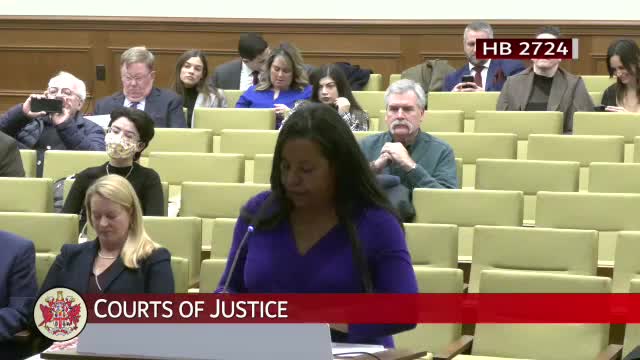
Committee moves criminal‑records sealing measure to finance after debate on scope of eligible offenses
Summary
The committee heard House Bill 27 23 addressing expanding eligibility and process for sealing criminal convictions. Sponsors said the bill would streamline sealing eligibility; some senators pressed for clarity about exclusions for financial exploitation and employer background checks. The bill was reported and referred to finance.
Delegate (House patron) described House Bill 27 23 as the product of prior legislative work to expand and streamline eligibility to seal certain criminal records. "This bill is intended to make eligible for sealing certain misdemeanors and low‑level felonies after set waiting periods and with judicial review," the patron said, noting the bill sets periods and a petition process.
Committee members pressed staff and witnesses about specific exclusions and employer access. Senator McDougall asked whether financial exploitation of a vulnerable adult (code §18.2‑1178.1) would be eligible; witnesses explained the statute as drafted makes certain offenses eligible but does not automatically include all financial crimes on the exclusion list. Counsel and witnesses said sealing is "eligible" not mandatory; a judge must find the petitioner meets the statutory tests, and specific employers and categories may have statutory authority to look behind sealed records.
Members also discussed whether embezzlement or crimes involving financial trust would be visible to prospective employers in sensitive positions; witnesses said the bill preserves limited exceptions allowing some employers to access sealed records under narrow circumstances and that the Department of Criminal Justice Services (DCJS) could issue regulations defining employer categories.
The committee voted to report House Bill 27 23 and re‑refer it to finance (roll call recorded "Ayes 10, Noes 5"). The bill now heads to finance for fiscal review and further consideration.
Ending: Committee members said several issues would be revisited on the floor and in conference; the bill advances to the finance committee for additional review.