Get Full Government Meeting Transcripts, Videos, & Alerts Forever!
Get email alerts on the Education Data And Funding topic
No spam. Unsubscribe anytime.
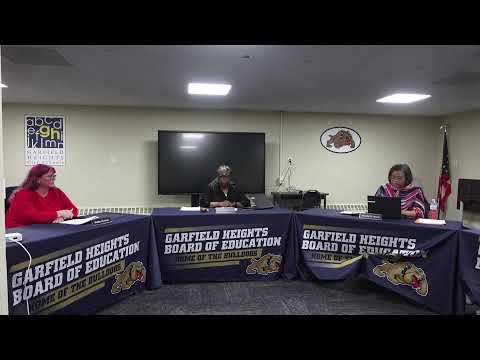
Garfield Heights board hears plan to audit student data after system conversion; officials warn of potential multi‑million dollar funding gap
Summary
District leaders told the board they uncovered years of enrollment and coding errors after moving to Infinite Campus, will run an internal student-by-student audit with ITC/Connect support, and cautioned a possible 350‑student shortfall that could cost about $3.3 million if not corrected.
Garfield Heights City School District leaders told the Board of Education on Feb. 10 that a multi‑year conversion to Infinite Campus revealed extensive data and coding errors that must be corrected to protect state funding.
The board heard that the district discovered students who were “hidden” after a ProgressBook-to-Infinite Campus migration, open‑enrolled students whose codes never updated on return, and more than 400 withdrawals recorded since July 1 that require review. Dr. Reynolds (district administrator) said the district will run an internal, student‑by‑student audit and asked for help from Connect (the ITC consortium) to do the work.
Why it matters: Ohio school funding is tied to full‑time‑equivalent (FTE) enrollment reporting. A district staff member warned the board that a roughly 350‑student swing could represent about $3.3 million in annual funding differences and has already triggered inquiry from the Ohio Department of Education, which asked the district if it was “okay.” The district has until the midyear collection close (stated in the meeting as April 25) to resolve many reporting changes that would affect this school year’s payments.
District staff described two simultaneous efforts: ongoing day‑to‑day data maintenance and a focused cleanup audit. Miss Owens (EMS supervisor) outlined technical steps including FC overrides the state requires before the district can remove some long‑rolled students from its system. The district reported approximately 2,600 students currently linked to the SIS in some capacity and said that some students who attend elsewhere still must be attached to the district’s SIS so funding flows correctly.
Board members pressed for a timeline and resources. Dr. Reynolds said the data team has created a “road map” and expects to start the audit within about two weeks, but that the pace depends on state turnaround on overrides and the scale of cleanup. Several board members recommended pursuing outside audit support so the district’s small data staff are not overextended; Dr. Reynolds and Miss Owens said they welcome outside help and will pursue Connect/ITC personnel to perform hands‑on audits in buildings.
District technical staff explained how state funding adjustments work: the state’s level‑2 FTE report reconciles headcounts and apportions FTE (for example, a CVCC student may count as 0.2 FTE). If students’ start dates and coding can be corrected back to the beginning of the school year, the state can retroactively adjust payments; if corrections start now, the district receives only prospective adjustments.
The board directed staff to reach out to Connect and to update the board promptly on available support and an action timeline. No formal motion or vote was taken on contracting outside auditors during the work session.
Board members said they want accurate, transparent reporting even if a cleaned count shows lower enrollment than prior forecasts. Dr. Reynolds said the district will notify parents and principals as the audit progresses and will use ADM‑week checks (verifying who is physically in seats) alongside the technical audit to validate in‑building attendance.