Get Full Government Meeting Transcripts, Videos, & Alerts Forever!
Get email alerts on the Stormwater topic
No spam. Unsubscribe anytime.
Monmouth holds first reading of ordinance to curb illicit stormwater discharges
Summary
City council conducted a first reading of Ordinance 14-19, part of the city—s stormwater TMDL plan, introducing prohibitions on pollutant discharges, linking to an internal enforcement policy and scheduling a final reading at the next meeting.
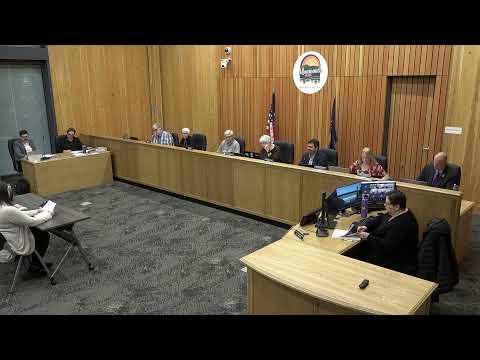
Monmouth City Council conducted the first reading of Ordinance 14-19 on Jan. 21, a local measure intended to regulate illicit discharges and connections to the city storm-drain system as part of the city—s stormwater TMDL plan.
City staff said the ordinance—s purpose is to protect residents— health, safety and general welfare by establishing methods to control pollutants entering the storm drain system. "The purpose and intent of the ordinance is to provide for the health, safety and general welfare of the residents of Monmouth through the regulation of [stormwater] discharges," a staff member identified as Russ said during the meeting.
The draft ordinance incorporates edits councilors suggested in a prior work session, and attachments circulated with the packet show tracked changes, including language proposed by Mr. Lang Shetterly. Staff said the measure references — but does not include — the city—s enforcement policy because that policy is internal. "That is an internal policy and not included [in the ordinance]," Russ said, noting the enforcement approach is referenced in the ordinance text but kept separate from the code language.
Councilors asked for practical clarifications about routine sources of water that might flow to storm drains. Councilor Ridgeway asked whether pool and spa drain water is covered; staff advised a commonly recommended approach is to let treated pool or spa water sit 24 to 48 hours (to allow chlorine to dissipate and the water to cool) before discharging and emphasized the ordinance—s concern about warm water entering storm drains because temperature increases can harm downstream water bodies. "The main thing is not allowing warm water to get into the storm drains that will eventually ... raise water temperatures," Russ said.
Council members also asked about guidance for do-it-yourself car washing. Staff said the city—s stormwater brochure on the city website includes a recommended "recipe" and lists two manufactured soaps considered safe; staff said they will make that guidance more prominent on the city site.
Staff described the ordinance as an early step in broader stormwater oversight. "As the industry and regulations around stormwater evolve ... I think we're moving toward more oversight or more regulations related to stormwater," Russ said, characterizing the ordinance as part of those early steps toward protecting local water bodies.
The council did not take a final vote on the ordinance at the Jan. 21 meeting. The mayor conducted the first reading and said the ordinance will return at the next council meeting for a final reading and adoption.
Councilors and staff did not provide a specific enforcement schedule or include the enforcement policy text in the ordinance packet; staff said enforcement procedures will remain an internal policy document.
The council scheduled the ordinance for a final reading at the next regular meeting.